Career Overview
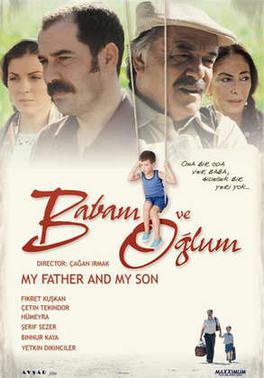
Çağan Irmak has cemented his place in contemporary cinema as a director of profound emotional resonance and challenging structural ambition. Emerging within the context of international drama, his trajectory is heavily defined by his seminal work My Father and My Son. The film positions Irmak as an auteur who bridges historical trauma with intimate family dynamics. While his filmography in this database is anchored by this single defining feature, it establishes him as a filmmaker deeply invested in the intersection of political upheaval and domestic life.
Irmak utilizes the backdrop of 1980s Turkey to explore the enduring scars of political imprisonment, creating a deeply personal narrative of return and reconciliation. Critics often note how his work navigates a delicate balance between a specific cultural milieu and universally resonant themes of generational conflict. His narratives function as both historical documents and intimate character studies, allowing audiences to engage with the broader sociopolitical history of Turkey through the lens of a single, fractured family unit.
His position in cinema history is that of a provocateur of the heart, utilizing intense emotional experiences to probe the limits of familial duty and ideological divide. By channeling the fierce religious critiques often found in radical international cinema, Irmak has carved out a unique space that melds the sociopolitical with the deeply personal. He stands as a crucial figure for film students analyzing the ways in which national trauma can be translated into universal parables of forgiveness and understanding.
Thematic Preoccupations
The most prominent obsession in Irmak's cinematic universe is the complex, often fraught nature of the father-son relationship. Through My Father and My Son, he constructs a labyrinthine exploration of parent-child dynamics, framed by imposing familial expectations and dreams of independence. The protagonist Sadık returning to his rural hometown becomes a vessel for examining the tension between progressive political ideals and deeply entrenched traditionalism.
Irmak frequently elevates these domestic disputes into mythological realms, deliberately invoking comparisons to the biblical story of Abraham and Isaac to underscore the sacrificial nature of paternal authority. This thematic preoccupation with religious devotion and oppressive atmospheres transforms what could be a simple family drama into an intense, painful, and somber philosophical inquiry. Furthermore, the director is fascinated by the interplay between political reality and personal liberation. The liberating journey of independence is constantly weighed against a fierce religious critique, highlighting how macrocosmic societal pressures trickle down to suffocate individual identity.
Even as he integrates comedy-drama elements to provide fleeting sweet moments, the overarching elegiac tone reveals an artist obsessed with the burdens inherited from previous generations. Dreams serve as a critical framing device in his narrative structure, suggesting that true reconciliation may only be possible within the subconscious mind. Irmak continually returns to the question of whether a fractured family can ever truly heal under the weight of historical and religious dogmas.
Stylistic Signatures
Irmak's cinematic style is frequently described by critics as a moving musical canvas, characterized by gorgeous visual storytelling that defies conventional dramatic pacing. His approach to mise-en-scene in My Father and My Son is both austere and lush, utilizing a beautifully shot cinematography that captures the oppressive yet breathtaking landscapes of rural Turkey. The visual language heavily relies on contrasting the claustrophobic interiors of the family home with the expansive, albeit intimidating, natural world outside.
This dichotomy reflects the protagonist's internal struggle between the comfort of familial bonds and the suffocating weight of tradition. The narrative structure of his work is notably challenging, deliberately utilizing dream sequences to bookend his features. This framing choice forces the audience to navigate a fluid reality, blurring the lines between memory, trauma, and present action. Critics have drawn stylistic parallels to a variety of disparate works, noting an ambition akin to immersive, single-take historical epics, yet grounded in the intimacy of a domestic parlor.
Despite some critiques labeling certain moments as dramatically inert, the overarching editing rhythms prioritize mood and atmospheric tension over rapid plot advancement. The sound design and musical score further amplify the intense emotional experience, creating an auditory landscape that perfectly complements the visual elegy of a fractured family attempting to heal. Irmak's signature lies in his ability to make silence and stillness feel as imposing as any dialogue.
Recurring Collaborators
While the database identifies no recurring cast members across multiple films, the ensemble assembled for My Father and My Son represents a crucial element of Irmak's artistic execution. The director's ability to extract imposing performances from his actors is a defining hallmark of his process. Assi Dayan is frequently singled out by critics for his powerful portrayal of an authoritative patriarch, bringing a terrifying yet deeply human weight to the film's fierce religious critique.
Dayan's presence grounds the film in a stark realism, serving as the perfect counterweight to the more ethereal, dreamlike sequences. Furthermore, the inclusion of actors like Sharon Hacohen as Esther and the surprising involvement of writer-star Paul Reiser introduce a multifaceted texture to the cast. Reiser's contributions add subtle comedy-drama elements that provide necessary, albeit brief, levity to an otherwise austere narrative.
These collaborative choices suggest Irmak is a director who values a diverse array of performance styles, blending comedic timing with intense dramatic heft. By working with such a varied group of performers, Irmak ensures that the imposing familial expectations depicted on screen are realized through a complex, deeply engaging chorus of voices. His casting decisions elevate the screenplay, allowing the intense parent-child dynamics to resonate with authentic friction.
Critical Standing
The critical standing of Çağan Irmak is marked by passionate, sometimes polarized, discourse. Reviewers universally acknowledge the bravery and emotional intensity of his work, frequently praising My Father and My Son as a beautifully shot intimate parable. Critics from prominent publications have lauded the film's challenging narrative structure and its fierce attack upon oppressive traditions. His reputation is heavily built on his ability to craft an intense emotional experience, with many critics comparing his thematic ambition to profound religious texts and major works of international cinema.
However, his standing is not without its detractors. Some segments of the critical community have pointed to underdeveloped character arcs and moments that feel dramatically inert, suggesting that the intricate blend of tones can occasionally misfire. Comparisons drawn to lighter television fare highlight a perception that his writing can sometimes lack the sharpness required to sustain its lofty philosophical ambitions.
Nevertheless, the prevailing critical consensus views Irmak as an important, uncompromising voice in contemporary cinema. His integration of an elegiac tone with potent political and familial commentary ensures that his work remains a vital subject of analysis for film students and art critics alike. Ultimately, his willingness to tackle the most painful aspects of the human condition solidifies his reputation as a fearless chronicler of generational trauma and familial devotion.