Career Overview
Asghar Farhadi has established himself as a preeminent voice in contemporary international cinema, crafting narratives that intricately untangle the moral complexities of modern Iranian life. Emerging from a background in theater, Farhadi transitioned into filmmaking with a deep appreciation for character-driven storytelling. His trajectory is marked by a rigorous commitment to exploring the nuanced tensions that exist beneath the surface of domestic life. In the pantheon of global cinema, he occupies a unique space, bridging the neo-realist traditions of his Iranian predecessors with a gripping, structurally meticulous approach to narrative that resonates globally.
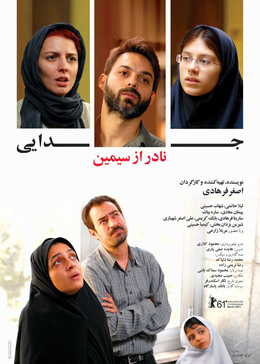
The global recognition of his work, most notably encapsulated in A Separation, signaled a pivotal moment in Iranian cinema. While filmmakers like Jafar Panahi and Mohammad Rasoulof often engaged in direct political critique, Farhadi carved a distinct path by examining societal fault lines through the intimate lens of familial discord. His background in stage direction is evident in his masterful handling of spatial dynamics and actor performances, resulting in a body of work that feels simultaneously sprawling in its societal implications and claustrophobic in its personal stakes.
Farhadi continues to build upon a cinematic legacy that challenges audiences to confront uncomfortable truths. His films are not merely reflections of contemporary tragedy but are profound inquiries into the universal human condition, set against the specific backdrop of a society bound by intricate cultural and religious constraints. By presenting dilemmas where every character is driven by justifiable human motivations, he refuses easy categorizations of hero and villain, solidifying his status as a master of psychological realism.
Thematic Preoccupations
At the core of Farhadi's filmography is a relentless examination of political and social constraints, manifested through the prism of the family unit. He constructs contemporary tragedies in Iranian society where personal and social fault lines inevitably rupture. His narratives frequently pivot on the concept of fractured relationships within families, utilizing domestic disputes as microcosms for broader societal divisions. The clash between traditional values and modern aspirations forms a recurring ideological battlefield. In A Separation, for instance, the agonizing choice between emigrating for a better future or remaining to fulfill filial duties serves as a catalyst for a thrilling examination of social dynamics.
Farhadi is particularly obsessed with the politics of sex and class, exploring how these intersecting identities dictate one's agency within a rigid social hierarchy. The status of wives, the heavy burden of domestic rule, and the persistent barriers that encase his characters are scrutinized with a forensic gaze. His characters often find themselves trapped in webs of secrets and lies, driven by a desperate need to preserve honor and secure justice in modern contexts.
Furthermore, Farhadi investigates the limitations of truth and the subjectivity of morality. He presents dilemmas where cultural constraints and religious constraints blur the lines of absolute right and wrong, forcing the audience into a state of continuous moral recalibration. By rendering his stories totally foreign and achingly familiar, he achieves a powerful exploration of human motivations that transcends geographical borders.
Stylistic Signatures
Farhadi's visual language is characterized by a transparent portrayal of personal struggles, eschewing overt stylistic flourishes in favor of a gripping, naturalistic aesthetic. His artistic and absorbing storytelling relies heavily on a restless, documentary-like camera that tracks the kinetic energy of his characters. This handheld approach creates an immersive, sometimes suffocating atmosphere, mirroring the psychological entrapment of the individuals on screen. The camera frequently positions the spectator as an active witness to the unraveling domestic crises, navigating tight interior spaces that amplify the claustrophobia of their situations.
The mise-en-scène is meticulously constructed to emphasize persistent barriers in society, utilizing doorways, windows, and glass partitions to visually separate characters and underscore their emotional and social divides. These physical barriers serve as potent metaphors for the invisible divisions in contemporary Iranian society. Farhadi constructs his frames to capture the intersecting trajectories of his ensemble, ensuring that the spatial relationships between characters reflect their shifting power dynamics and moral alignments.
In the editing room, Farhadi orchestrates compelling and intense narratives through precise, breathless pacing. He avoids traditional cinematic score to manipulate emotion, relying instead on the diegetic sounds of urban life and the cacophony of overlapping dialogue to build tension. This approach echoes modern cinematic influences and draws frequent comparisons to Michael Haneke's techniques, particularly in the way both directors employ clinical observation to dissect bourgeois anxieties. The resulting rhythm is organic yet relentlessly propulsive, driving his superb and complex character studies toward their inevitable tragic conclusions.
Recurring Collaborators
While Farhadi's overarching vision remains the defining force of his cinema, his artistic success is inextricably linked to his exacting approach to casting and performance. The database identifies no singularly recurring cast members across multiple films, yet a hallmark of his directorial method is the cultivation of a dedicated ensemble that operates with remarkable cohesion. His reliance on rigorous rehearsal periods, drawn from his theatrical roots, allows actors to internalize the complex psychological landscapes of their characters. This collaborative intensity is vital to rendering the dense, layered screenplays for which he is celebrated.
In films like A Separation, the performances of actors such as Leila Hatami and Sareh Bayat are instrumental in exploring the status of wives and the pervasive politics of sex and class. Farhadi directs his actors to deliver naturalistic, lived-in performances that ground the high-stakes moral dilemmas in relatable human emotion. The actors become co-authors of the psychological tension, translating written social constraints into palpable, onscreen anxiety.
Behind the camera, Farhadi's frequent collaborations with skilled cinematographers and editors are crucial in executing his specific visual and rhythmic demands. These technicians work in service of his naturalistic ethos, ensuring that the camera movements and cuts never distract from the central human drama. By maintaining a consistent network of creative technicians who understand his preference for transparent, unvarnished realism, Farhadi guarantees that his stylistic signatures remain cohesive. This tight-knit collaborative process is what allows his films to function as seamless, absorbing character studies.
Critical Standing
Asghar Farhadi occupies a formidable position within the critical establishment, celebrated as one of the preeminent architects of the contemporary moral thriller. Critics consistently laud his ability to approach tricky material with a great deal of deserved confidence, resulting in works that are recognized as superb dramas. Early in his career, he was often contextualized within the Iranian New Wave, drawing inevitable comparisons to Jafar Panahi and Mohammad Rasoulof. However, critics quickly noted that while Panahi and Rasoulof confronted theocracy and state power directly, Farhadi adopted a more oblique strategy.
He takes a scalpel to his bourgeois homeland, examining domestic rule through an intimate, socio-psychological lens. Over time, the critical discourse surrounding Farhadi has broadened to acknowledge his mastery of universal narrative structures. Reviewers frequently cite modern cinematic influences and invoke masters of suspense and psychological depth, comparing his structural rigor to Alfred Hitchcock and his forensic examination of familial angst to Ingmar Bergman and Jean Renoir.
His method of exposing societal fault lines through clinical observation has also drawn notable parallels to Michael Haneke, specifically the 2005 film Hidden. Ultimately, Farhadi's critical reputation rests on his unparalleled capacity to construct narratives that are simultaneously culturally specific and universally resonant. By laying bare the divisions throughout Iranian society, he challenges global audiences to grapple with their own moral ambiguities, securing his legacy as a vital, challenging voice in twenty-first-century cinema.