Career Overview
Bong Joon Ho stands as one of the preeminent auteurs of contemporary world cinema, seamlessly bridging the gap between rigorous formalist filmmaking and accessible genre entertainment. Emerging as a leading figure in the New Korean Cinema wave of the early 2000s, Bong quickly established a reputation for crafting meticulously structured narratives that subvert traditional cinematic conventions. His trajectory from regional critical darling to global cinematic icon represents a fascinating evolution of a highly idiosyncratic artistic voice.
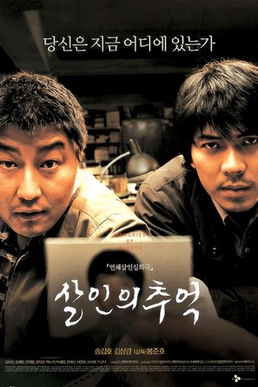
His 2003 breakout feature, Memories of Murder, firmly cemented his status as a director of profound vision and technical mastery. By filtering the standard police procedural through the specific historical lens of 1980s South Korea, Bong proved his unique ability to marry gripping narrative pacing with incisive historical critique. The film signaled the arrival of a filmmaker who could manipulate genre frameworks to explore deep seated societal anxieties, a defining characteristic that would shape his entire career arc.
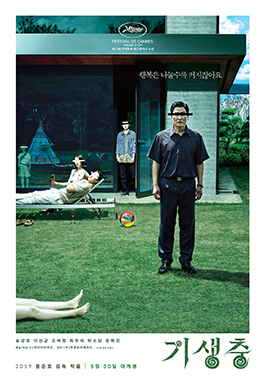
Following a decade of increasingly ambitious international projects and ecologically minded fables such as Snowpiercer and Okja, Bong returned his focus entirely to his native South Korea for his 2019 masterwork, Parasite. This pivot represented a conscious scaling back of globe trotting, high concept ambitions in favor of a microscopic examination of contemporary domestic spaces. The result was a crowning achievement that unified his longstanding thematic preoccupations into a singular, universally acclaimed cinematic statement, securing his place in the highest echelons of film history.
Thematic Preoccupations
A central preoccupation traversing the filmography of Bong Joon Ho is the inescapable gravity of class division and the brutal realities of late stage capitalism. His narratives frequently orbit around marginalized individuals striving for survival within ruthlessly hierarchical societies. In Parasite, this obsession manifests as a devastating examination of social inequality and materialism, depicting a financially struggling family infiltrating the domestic sphere of the affluent elite. The resulting class warfare serves as a searing critique of a dehumanizing social culture, exposing the deep chasms between the haves and the have nots.
In exploring these social stratifications, Bong consistently centers his focus on the nuclear family as a microcosm of broader societal dysfunction. He avoids uncomplicated heroes and easy villains, opting instead to populate his worlds with deeply flawed, desperate characters who are pushed to grotesque extremes by their circumstances. The tight knit family dynamics in his work, reminiscent of the central clan in The Host, reveal how individuals do whatever is necessary to navigate a cold, indifferent world. These families become both the victims and the perpetrators of systemic violence, creating a complex web of moral ambiguity.
Furthermore, Bong is fascinated by institutional failure and the pervasive shadow of historical trauma. Memories of Murder utilizes a frustrating serial killer investigation to highlight profound police incompetence and the fractured state of 1980s South Korea. The unsolved crimes and flawed justice system function as metaphors for a nation grappling with its own authoritarian past. Bong frequently employs darkly comedic elements to underscore the absurdity of these systemic failures, using humor as a sharp scalpel to dissect the political and social ailments of modern life.
Stylistic Signatures
The visual language of Bong Joon Ho is characterized by an exacting control over mise en scene and an extraordinary capacity for building a tense atmosphere. Critics often highlight his fluid camera work, particularly his ability to move organically through large, open spaces while capturing the chaotic rhythms of his characters. In Memories of Murder, his masterful direction turns bad police work into a choreographed dance of ineptitude, utilizing a muted palette that echoes the stylized violence and atmospheric dread often associated with the work of David Fincher.
Equally crucial to his stylistic signature is his unprecedented mastery of tonal shifts. Bong weaves together an extraordinary tapestry of moods, oscillating between gripping thrills, grotesque imagery, and bizarre dark comedy within a single sequence. No moment in his films is accorded conventional weight, resulting in an unpredictable narrative rhythm that constantly keeps the audience off balance. This deft manipulation of tone prevents his genre driven narratives from feeling formulaic, elevating conventional frameworks into profound metaphorical patterns.
Contrasting visual textures also define his cinematic approach, often serving as physical manifestations of his thematic concerns. While his earlier procedural work relies on a gritty, atmospheric realism to convey historical rot, his later work embraces a more pristine aesthetic to critique immense wealth. The breathtaking cinematography and sumptuous visuals of Parasite present an elegant style that masks the underlying rot of the affluent household. By juxtaposing pristine, modern spaces with claustrophobic, impoverished environments, Bong visualizes class disparity with devastating precision.
Recurring Collaborators
The most crucial creative partnership in the career of Bong Joon Ho is undeniably his enduring collaboration with the acclaimed actor Song Kang-ho. Starring in both Memories of Murder and Parasite, Song serves as the vital human anchor for the complex tonal balancing acts of the director. His remarkable ability to seamlessly transition from bumbling physical comedy to profound, soul crushing despair embodies the very essence of the cinematic universe Bong creates. Song operates as an everyman avatar, grounding the increasingly bizarre storytelling in deep psychological realism.
This symbiotic relationship allows Bong to push his narratives to extreme limits without losing their emotional resonance. The dazzling performances delivered by Song often act as a focal point for the broader social critiques of the films. Whether portraying a frustratingly incompetent rural detective grappling with a horrific reality or a downtrodden patriarch desperately trying to secure his family survival, Song translates the intellectual and political themes of the director into deeply affecting, lived in human experiences.
Beyond his primary leading man, the meticulous execution of these films relies on brilliant collaborations in production design and cinematography. The sumptuously designed environments crucial to the narrative mechanics of his recent work demonstrate a seamless coordination between the director and his artistic departments. These partnerships ensure that the elegant style and breathtaking visuals never merely serve as background decoration, but rather function as active, storytelling participants that articulate the profound class disparities at the heart of the text.
Critical Standing
The critical standing of Bong Joon Ho has evolved from immense respect within the sphere of Asian cinema to universal acknowledgment as one of the defining masters of the medium. His 2003 effort, Memories of Murder, was immediately recognized as a groundbreaking piece of cinema, frequently drawing favorable comparisons to iconic procedurals like Zodiac, Se7en, and Silence of the Lambs. Critics praised his visual prowess and his ability to turn a standard slice and dicer procedural inside out, establishing his reputation for producing compelling thrills interwoven with sharp social commentary.
This trajectory of critical acclaim reached its absolute zenith with the release of Parasite. The film achieved a rare, historic consensus, earning raves as an unquestionable masterpiece of modern filmmaking. It successfully conquered the global cinematic landscape, famously capturing the Palme d'Or before making history as the first South Korean film to dominate the Academy Awards. Reviewers were captivated by his dazzling formal invention, noting that the film constantly threatened to unravel under its own convoluted twists, yet was held together by undeniably masterful direction.
Today, Bong occupies a unique space in critical discourse, celebrated equally for his intellectual rigor and his immense entertainment value. He is frequently discussed alongside fellow Korean visionaries like Park Chan-wook, whose film The Handmaiden shares a similar sumptuously designed, class conscious DNA. Furthermore, Western critics often identify shadows of David Fincher in his atmospheric tension and shades of Steven Spielberg in his precise visual blocking. Ultimately, his excoriation of dehumanizing social structures has solidified his legacy as a cinematic visionary whose work demands relentless, exhaustive critical engagement.