Career Overview
Christopher Miller, often operating in tandem with creative partner Phil Lord, has carved out a unique space in contemporary Hollywood by transforming seemingly unpromising intellectual property into vital, critically acclaimed cinema. Moving from subversive animation and meta-comedic live-action, his trajectory reveals a filmmaker adept at balancing mainstream appeal with formal audaciousness. His distinct authorial voice has consistently challenged industry norms, proving that commercial viability need not come at the expense of artistic integrity.
Initially gaining traction with television animation and irreverent feature comedies like Cloudy with a Chance of Meatballs and 21 Jump Street, Miller demonstrated an early capacity for blending rapid-fire humor with genuine emotional stakes. These foundational works established his reputation for overturning audience expectations, a skill that paved the way for more ambitious projects. By subverting genre tropes while maintaining a deep affection for his characters, he built a cinematic foundation based on sincerity masking as irony.
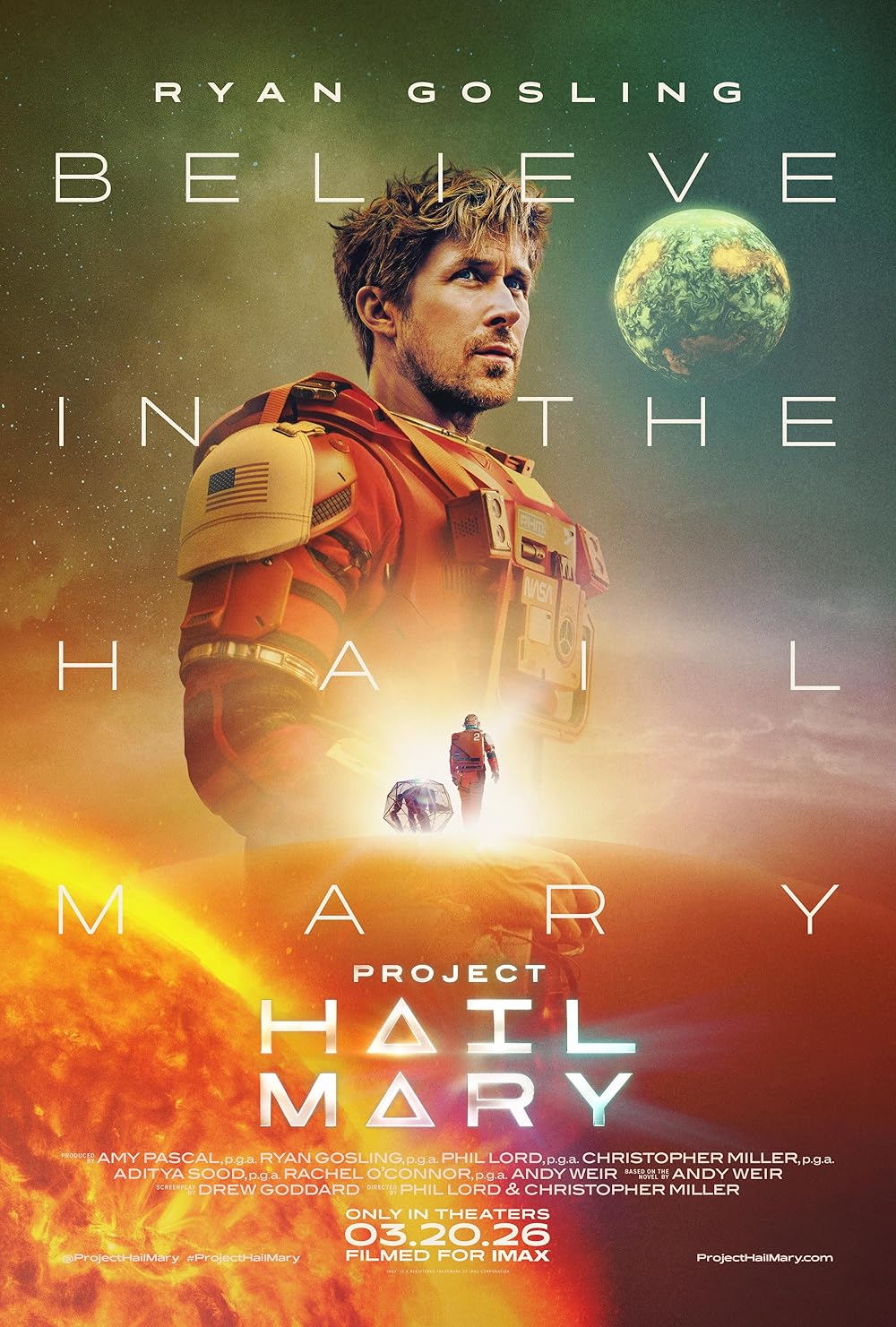
His recent foray into hard science fiction with Project Hail Mary represents a significant evolution in his career. Adapting the work of novelist Andy Weir, Miller navigates the logistical complexities of the blockbuster survival narrative while retaining his signature comedic undertones. This shift toward large-scale, environmentally conscious storytelling cements his position as a versatile auteur capable of maneuvering through various genres without losing his humanistic touch.
Thematic Preoccupations
A pervasive optimism anchors the thematic architecture of Miller's filmography. Even when confronting apocalyptic scenarios or profound isolation, his narratives consistently reject nihilism in favor of human resilience and the triumph of the human spirit. In Project Hail Mary, this is expressed through a deep conviction that scientific curiosity and collaborative problem-solving can overcome catastrophic environmental threats, positioning optimism as a practical tool for survival.
The tension between profound loneliness and the necessity of connection forms another central pillar of his work. Miller often isolates his protagonists, placing them in unfamiliar or hostile environments that test their psychological fortitude. The lone astronaut trope, frequently compared to survival narratives like Cast Away or Gravity, serves as a crucible for character development, ultimately revealing that survival is rarely an isolated achievement but rather a product of unexpected friendships.
Furthermore, Miller exhibits a recurring fascination with the intersection of the mundane and the extraordinary. He grounds his high-concept premises in recognizable human fallibility, casting heroes who are rarely traditional stoic figures. Instead, they are unassuming, quietly brainy, and slightly rumpled individuals who must rise to the occasion. This focus on the everyman grappling with monumental challenges allows his films to remain remarkably intimate despite their expansive canvases.
Environmentalism and the fragility of human existence also permeate his recent output. The impetus for space exploration in his narratives is not mere conquest but desperate preservation. By framing scientific discovery as a moral imperative to save a dying planet, Miller infuses his blockbuster spectacles with thought-provoking ethical questions regarding humanity's stewardship of its home world, transforming space adventure into a desperate plea for ecological preservation.
Stylistic Signatures
Visually, Miller's directorial approach is characterized by a dynamic integration of large-scale spectacle and intimate character-driven framing. He favors kinetic camera movements and a vibrant color palette that injects a sense of playfulness into otherwise dire scenarios. This visual buoyancy acts as a counterweight to the heavy thematic material, ensuring that the visual language supports the inherent optimism of the narrative rather than descending into bleakness.
His editing rhythms are notably sharp, often utilizing a fast-paced, comedic timing that betrays his origins in animation. Even in dramatic sequences, Miller employs rhythmic cutting to heighten suspense or deliver a punchline, maintaining an engaging and accessible tempo. This technique allows him to synthesize the tense atmosphere of a thriller with the lighthearted tone of a buddy comedy, creating a hybrid rhythm that feels entirely his own.
The mise-en-scene in Miller's cinematic universe often emphasizes tactile, lived-in environments. Spaceships and futuristic settings are not presented as sterile, pristine environments but rather as cluttered, functional workspaces. This grounded production design grounds the high-concept science fiction, making the technological elements feel accessible and tethered to a recognizable reality, much like the analog aesthetics praised in Alien or 2001: A Space Odyssey.
Sound design and musical scoring play a crucial role in regulating the emotional temperature of his films. Miller uses aural cues to oscillate between the oppressive silence of the void and the warm, comforting noise of human activity. The score frequently swells to underscore moments of scientific discovery or emotional realization, amplifying the heartwarming elements of the story and guiding the audience toward the intended emotional catharsis without resorting to pure melodrama.
Recurring Collaborators
The most vital and defining collaboration in Christopher Miller's career is his enduring partnership with co-director and writer Phil Lord. Operating as a unified creative entity, the Lord and Miller duo has cultivated a shared cinematic syntax that seamlessly blends earnest emotionality with irreverent silliness. Their joint stewardship of projects allows for a complex layering of tones, where Miller's structural sensibilities are perfectly complemented by Lord's comedic instincts.
In the realm of performance, Miller demonstrates a keen ability to cast actors who can navigate the delicate balance between dramatic weight and comedic lightness. His work with Ryan Gosling in Project Hail Mary exemplifies this talent. Gosling, playing an unassuming science teacher thrust into a cosmic crisis, anchors the film's spectacular visuals with an effortlessly charming, highly relatable performance. The actor's capacity for quiet intelligence and subtle humor aligns perfectly with Miller's vision of the unconventional blockbuster hero.
Behind the camera, Miller frequently collaborates with a trusted team of visual effects supervisors and production designers who understand his mandate for blending the spectacular with the absurd. While specific individual collaborators vary across his transition from animation to live-action, the consistent output points to a director who fosters a highly collaborative set. This team-oriented approach behind the scenes mirrors the thematic emphasis on teamwork and friendship that is so prevalent within his narratives.
Critical Standing
Christopher Miller's critical standing has undergone a fascinating evolution, shifting from a purveyor of disposable commercial entertainment to a highly respected cinematic voice. Initially, critics viewed his early comedies and animated features with cautious amusement, often surprised by the emotional depth smuggled into seemingly juvenile premises. Works like 21 Jump Street and the Spider-Verse franchise forced a reevaluation of his talents, establishing him as a master of meta-textual storytelling and formal innovation.
The release of Project Hail Mary marked a significant turning point in his critical reception, cementing his ability to orchestrate a massive, live-action blockbuster. Reviewers have praised the film as a lavishly scaled, feel-good environmental thriller, noting his skill in adapting Andy Weir's hard science fiction without sacrificing the necessary cinematic momentum. Critics frequently compare this work to modern sci-fi touchstones like The Martian and Gravity, elevating Miller into the upper echelon of contemporary commercial filmmakers.
However, this mainstream success is not without its detractors. Some critics describe his approach as overly wholesome or akin to TV-dinner sci-fi, suggesting that his preference for optimism and lightheartedness can sometimes sand down the rougher, more complex edges of the science fiction genre. These voices argue that his reliance on charm and sincerity occasionally borders on puppyish silliness, which can detract from the existential dread inherent in deep space exploration.
Despite these reservations, the critical consensus positions Miller as a vital and unique force in modern cinema. He is widely celebrated for his ability to inject genuine warmth and humanity into the often cold, clinical realm of the big-budget spectacle. In an era dominated by cynical franchise filmmaking, Miller's steadfast commitment to joyful, optimistic storytelling has earned him a dedicated following among critics and audiences alike, securing his legacy as a filmmaker who consistently finds the heart within the machine.