Career Overview
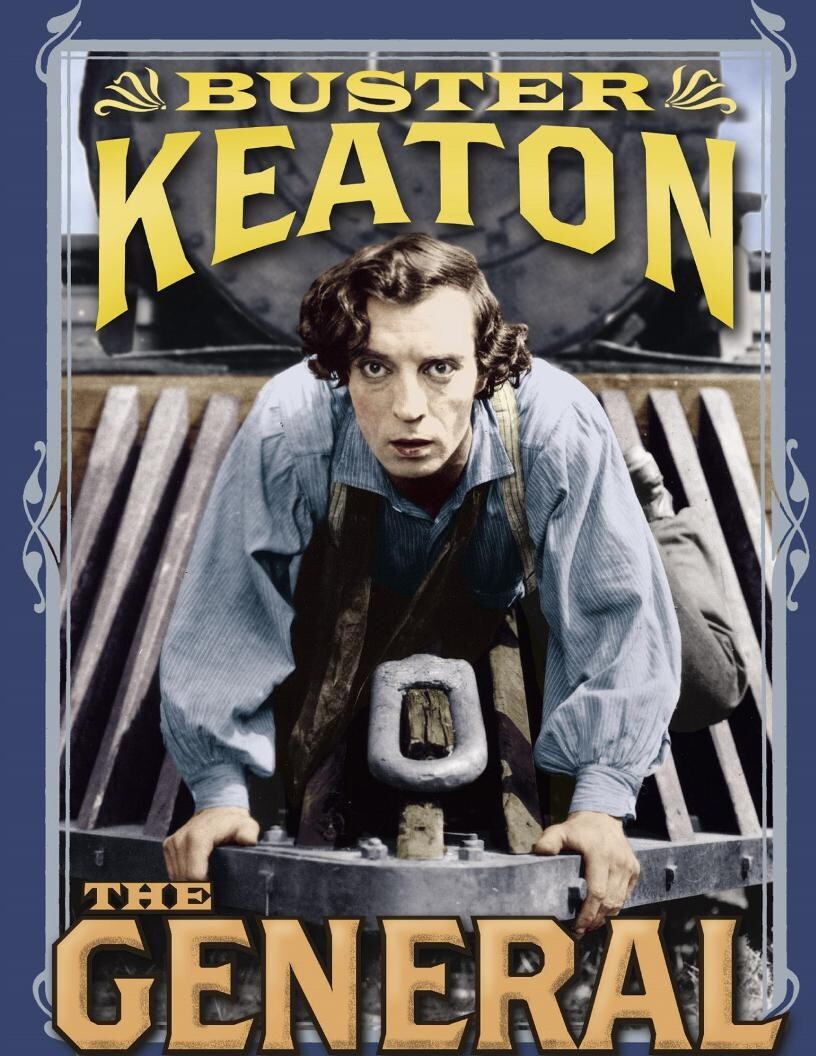
Clyde Bruckman holds a uniquely vital position in the history of cinema, standing as a foundational architect of the silent comedy and the early action film. While often discussed in tandem with his legendary on screen collaborators, Bruckman was an ambitious filmmaker who helped elevate physical comedy from rudimentary gag sequences into sweeping narrative epics. His crowning achievement remains The General, a 1926 masterpiece that successfully bridged the gap between whimsical storytelling and massive historical spectacle.
During the height of the silent era, Bruckman pushed the boundaries of the medium by integrating an ambitious production effort with intimate character arcs. He moved away from the simple studio bound routines of his predecessors, choosing instead to stage his narratives against sprawling, authentic backdrops. This ambition redefined what audiences expected from comedic cinema, proving that laughter and awe inspiring scale were not mutually exclusive.
His trajectory reflects a remarkable evolution in comedic structure. By pioneering what modern critics identify as the action movie origins, Bruckman demonstrated an unparalleled ingenuity. His work required immense logistical coordination, blending athletic stunt work with intricate plotting to create a seamless cinematic experience that felt far ahead of its time.
Today, Bruckman is recognized not merely as a director of comedies, but as a visionary who established the grammatical foundations of the modern blockbuster. His ability to marshal enormous resources while maintaining a focus on human vulnerability cemented his legacy. He remains a crucial figure for film scholars studying the transition from early novelty shorts to the sophisticated feature length storytelling that defines classical Hollywood.
Thematic Preoccupations
A dominant preoccupation across the work of Clyde Bruckman is the intersection of romantic heroism and overwhelming historical chaos. By utilizing a sprawling Civil War backdrop, he isolates his protagonists within conflicts that are vastly larger than themselves. These historical settings are never mere window dressing, as they act as antagonistic forces that test the limits of human endurance and ingenuity.
This exploration frequently manifests as a romantic pursuit story. However, Bruckman strips away the conventional melodrama of his contemporaries. His characters are driven by simple, personal desires, such as reclaiming a stolen locomotive or rescuing a reluctant sweetheart, yet their quests force them to navigate massive logistical nightmares. The resulting narrative reveals an optimistic undertone, suggesting that ordinary individuals can impose order upon an indifferent, chaotic world.
Another recurring theme is the delicate relationship between human fragility and mechanical power. Critics often note his thematic obsession with man versus machine dynamics. In these scenarios, the protagonist must maintain complete composure in the center of mechanical failure and explosive warfare. This stoicism highlights a melancholic resilience, positioning the hero as a modern visitor attempting to survive an absurd and dangerous landscape.
Ultimately, Bruckman questions the nature of heroism itself. His films consistently subvert traditional macho heroics in favor of accidental bravery and physical survival. Where his peers might lean into pure sentimentality or surrealism, Bruckman grounds his themes in the physical reality of the historical context, creating a unique blend of high stakes action and grounded character driven comedy.
Stylistic Signatures
The visual language of Clyde Bruckman is defined by an absolute commitment to cinematography excellence and objective framing. He favors wide, expansive shots that capture the lavish spectacle of his historical settings without losing sight of the intricate physical gags unfolding within them. This deep focus approach allows audiences to appreciate the perilous reality of the stunt work, ensuring that the visual surprises are earned through genuine physical peril rather than cinematic trickery.
A hallmark of his directorial style is his extraordinary comic timing, achieved largely through meticulous choreography and extended takes. Rather than relying on quick cuts to manufacture energy, Bruckman trusts the inherent dynamism of his subjects. This creates a rhythm of graceful perfection, where the escalating chaos of an action sequence unfolds with the precision of a mechanical ballet. The camera remains a stoic observer, enhancing the realism of the unbelievable feats captured on screen.
The pacing of a Bruckman picture anticipates the structure of the modern action comedy. He constructs his narratives around massive, sustained setpieces, most notably the legendary, prolonged train chases that define The General. This relentless forward momentum generates a kinetic energy that pulls the audience along, yet he always leaves room for quiet, character focused beats that ground the explosive spectacle.
When compared to contemporaries like Charlie Chaplin, Bruckman exhibits a distinct lack of overt theatricality. His mise en scene leans heavily into historical realism, utilizing authentic locations, dusty landscapes, and functioning antique machinery. This grounded aesthetic provides a stark contrast to the whimsical, laws of physics defying bodily movements of his performers, resulting in a stylistic signature that is simultaneously authentic and miraculously absurd.
Recurring Collaborators
Although the immediate database highlights a limited cross section of recurring cast members, the creative identity of Clyde Bruckman is inextricably linked to his monumental collaboration with Buster Keaton. Together, they forged a cinematic partnership that redefined the possibilities of silent comedy. Keaton served as both the physical anchor and the emotional core of their shared projects, executing perilous stunts that required an absolute trust in the directorial vision orchestrating the surrounding mayhem.
As the protagonist Johnnie Gray in The General, Keaton perfectly embodied the stoic resilience that Bruckman sought to capture. Keaton provided a uniquely modern screen presence, characterized by an unyielding composure amidst literal explosions and crashing trains. This dynamic allowed the director to escalate the lavish spectacle to unprecedented heights, knowing his leading man could ground the overwhelming scale with a single, deadpan expression.
Marion Mack, portraying the reluctant sweetheart Annabelle, represents another vital collaborative element within this cinematic universe. Her performance provides a necessary human catalyst for the sprawling action, offering a counterpoint to the relentless mechanical focus of the narrative. Her interactions with the protagonist inject crucial emotional stakes into the whimsical storytelling.
Behind the camera, the ambitious production efforts required an army of uncredited cinematographers, engineers, and stunt performers. The seamless integration of physical gags and massive setpieces speaks to a highly synchronized creative team. Their collective ingenuity allowed for the execution of sequences so complex that modern critics frequently compare their scale and ambition to contemporary digital epics like Peter Jackson's King Kong.
Critical Standing
The critical reputation of Clyde Bruckman has undergone a fascinating and dramatic evolution since the initial release of his most ambitious projects. During the ritzy premieres of the late 1920s, characterized by cautious optimism at venues like the California Theatre and the Sainte Claire Hotel, audiences were occasionally baffled by the scale of his work. The synthesis of historical poesy and silent comedy defied the contemporary expectations of viewers accustomed to straightforward, studio bound slapstick.
In the modern critical landscape, however, his standing is unequivocally monumental. Prestigious outlets from The Guardian to The A.V. Club routinely celebrate his pioneering contributions, frequently crediting his work as the literal invention of the action movie genre. Contemporary reviewers marvel at how well the massive setpieces continue to hold up, praising the seamless blend of characterization and stunt work that feels entirely modern.
Within purist cinematic circles, his work sometimes incites spirited debate. As Slant Magazine notes, the heavy reliance on historical context and ambitious production values positions The General as a unique outlier in the comedy canon, diverging from the more intimate storytelling championed by filmmakers like Charlie Chaplin. Yet, it is precisely this structural ambition that secures Bruckman his revered place in critical discourse.
Today, Clyde Bruckman is recognized as a visionary architect of the cinematic spectacle. His ability to direct laws of physics defying action within a framework of graceful perfection has cemented his legacy. He remains a touchstone for filmmakers and scholars alike, celebrated for creating an enduring blueprint for the action comedy that continues to influence the cinematic arts nearly a century later.