Career Overview
Curtis Hanson operates within a distinct lineage of American cinema, one that seeks to demystify the glittering facade of his native environment. Born and raised in Los Angeles, Hanson cultivated a cinematic vision rooted in an ambivalent love for the perennially denigrated metropolis. This deep-seated connection to the geography and mythology of Southern California heavily informs his crowning achievements, establishing him as a native son willing to dissect the myths of his own home.
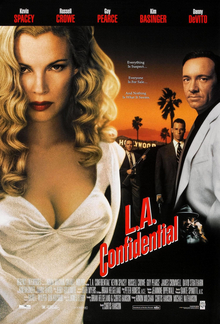
Hanson's trajectory is characterized by a gradual mastering of genre mechanics. By the time he directed L.A. Confidential, he had evolved from a capable craftsman into a visionary interpreter of crime fiction. He demonstrated a rare capacity to distill a lengthy narrative into taut, seductive storytelling without sacrificing the complex character dynamics required by hardboiled traditions. His ability to navigate the labyrinthine structures of these stories marked a significant maturation in his career.
In the broader context of film history, Hanson occupies a space between classical studio directors and New Hollywood revisionists. His approach is often described as a throwback, honoring the structural integrity of a traditional narrative while injecting it with a thoroughly modern sense of moral ambiguity. Through this synthesis, Hanson secures his legacy as an essential architect of modern neo-noir, positioning his cinematic contributions alongside the definitive works of the genre.
Thematic Preoccupations
The central preoccupation of Hanson's most celebrated work is the pervasive moral ambiguity that infects institutional power and individual psychology. His films obsessively explore how characters adjust their moral codes in response to corrupt environments. In L.A. Confidential, the traditional concept of heroism undergoes a rigorous deconstructive approach, revealing protagonists who are deeply flawed, cynical, and twisted by the very mean streets they police. This constant negotiation between duty and corruption drives his narrative engine.
This exploration of heroism is intricately bound to his fascination with Los Angeles lore. Hanson treats the city not merely as a backdrop but as a living, breathing entity characterized by fundamental ambivalence. The metropolis is presented as an alluring but toxic environment, a place where seductive storytelling masks rot and degradation. This dual nature reflects the broader thematic tension in his work between surface glamour and subterranean corruption.
Furthermore, Hanson frequently interrogates crime fiction tropes, utilizing them to dissect the nature of justice and ambition. By anchoring his narratives in cynical perspectives, he questions the viability of absolute morality. Yet, even within these twisted frameworks, heroic elements emerge, suggesting that redemption is possible only when individuals strip away the comforting illusions of their society and confront the darkness head-on, effectively challenging any superficial bashing criticism of his characters.
Stylistic Signatures
Hanson's visual language and stylistic signatures are defined by a meticulous commitment to throwback elements that evoke the golden age of studio filmmaking. Rather than relying on flashy, self-conscious camera movements, he favors a traditional narrative style that prioritizes clarity, pacing, and spatial geography. This classicism allows the gripping plot and complex character interactions to take center stage, creating a seductive and beautiful aesthetic that deliberately contrasts with the ugly realities depicted on screen.
A defining element of his directorial technique is his translation of James Ellroy's unique literary style into a cinematic grammar. Hanson captures the staccato rhythm and dense, lengthy narrative of the source material through propulsive editing and layered dialogue. This deconstructive approach to the language of Raymond Chandler and other hardboiled pioneers results in a pace that feels both epic and breathless, keeping the audience immersed in a labyrinthine web of deceit without sacrificing comprehension.
The physical production design in Hanson's cinema is heavily steeped in authentic period detail, utilized not for mere nostalgia but as a tool for profound thematic resonance. His framing often isolates characters within the vast, sun-drenched expanses of Los Angeles, emphasizing their moral isolation. The integration of meticulous sound design and period-appropriate music further amplifies this mean streets vibe, creating a palpable atmosphere of dread and seduction that permeates every frame of the picture.
Recurring Collaborators
While the current database of Hanson's filmography does not highlight a stable repertory of recurring cast members across multiple projects, his approach to casting and actor collaboration remains a cornerstone of his directorial success. He is renowned for his ability to identify and cultivate raw talent, often guiding actors into star-making roles that define their subsequent careers. By surrounding relatively unknown leads with established veteran performers, he creates a dynamic tension on screen that perfectly serves his ensemble-driven narratives.
The true recurring collaborators in Hanson's creative process are arguably the literary voices he brings to the screen. His intensive engagement with the specific vernacular of authors like James Ellroy serves as a virtual co-authorship. Hanson works closely with screenwriters and authors to distill massive, complex manuscripts into cohesive, traditionally structured scripts, ensuring that the distinctive voice of the original text translates into a gripping cinematic experience.
Behind the camera, Hanson surrounds himself with artisans capable of executing his throwback aesthetic with precision. This includes cinematographers and production designers who understand how to light and dress sets in a manner that honors classic Hollywood while simultaneously exposing its darker underbelly. The synergy between Hanson and his technical crew results in a cohesive visual and auditory experience that elevates the crime genre to the level of high art, ensuring that his technical collaborations are just as vital as his casting choices.
Critical Standing
Curtis Hanson's critical standing rests heavily on his masterful rejuvenation of the neo-noir genre, a feat that has consistently earned him comparison to the cinematic milestones of the previous decades. Reviewers frequently align his work with the thematic depth of Roman Polanski's Chinatown, noting how Hanson successfully captures the same pervasive sense of institutional rot and existential dread. His ability to synthesize epic crime fiction into a highly praised, culturally significant cinematic event cemented his reputation as a premier filmmaker of his era.
Early in the release cycle of his most prominent work, Hanson faced the challenge of translating notoriously difficult, denigrated figures and complex literary properties into accessible cinema. Critics champion L.A. Confidential as one of the best films of the year, lauding its seductive, beautiful, cynical, and twisted execution. This widespread critical acclaim underscored his talent for taking what might be perceived as a bashing criticism of Los Angeles and turning it into a nuanced, tragic love letter to his native city.
Over time, Hanson's legacy within critical discourse has only deepened. Scholars and critics continually reexamine his deconstructive approach to traditional crime fiction tropes and his adept handling of moral ambiguity. As modern cinema increasingly shifts toward fractured and non-linear storytelling, Hanson is celebrated for proving that a traditional narrative, when executed with intellectual rigor and absolute stylistic control, remains one of the most powerful tools in the cinematic arsenal.