Career Overview
Darren Aronofsky emerged in the late 1990s as a vital voice in American independent cinema, establishing himself as a filmmaker of relentless intensity and psychological extremity. His trajectory reveals a steadfast commitment to exploring the darkest corners of human experience, prioritizing subjective immersion over traditional narrative comfort. By rejecting conventional commercial sensibilities, he carved out a distinct and challenging position within modern film history.
His breakthrough arrived with the independent feature Pi, a project that established his formally adventurous approach and his deep fascination with obsessive characters. This debut signaled a director willing to push stylistic boundaries to mirror mental unraveling. Critics quickly aligned his audacity with the ambition of Orson Welles, noting his desire to manipulate cinematic form to its absolute limits and his refusal to sanitize complex emotional realities.
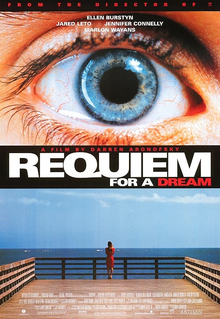
It was his sophomore effort, Requiem for a Dream, that solidified his reputation in contemporary cinema. The film demonstrated a fully realized, fearless vision that refused to look away from the devastating realities of its subjects. By tackling themes of addiction and desperation with an uncompromising perspective, Aronofsky created a template for visceral impact that would echo through his later works like The Fountain and The Wrestler, proving his enduring capacity to provoke an agonising emotional response from his audience.
Thematic Preoccupations
At the core of Aronofsky's filmography is a profound examination of self destruction and the human capacity for obsession. His narratives frequently orbit individuals consumed by their desires, whether those compulsions manifest as chemical addiction, artistic perfection, or the pursuit of an unattainable ideal. In Requiem for a Dream, this thematic preoccupation takes center stage as the characters navigate their own personal descents into hell, driven by dreams that ultimately precipitate their complete unraveling.
The exploration of mental health struggles serves as another primary pillar of his thematic architecture. Aronofsky is not merely interested in the external consequences of psychological deterioration but is deeply invested in the internal, subjective experience of mental decay. His work often portrays a grim atmosphere where reality and hallucination bleed into one another, reflecting the fractured and vulnerable psyches of his protagonists as they lose their grip on the waking world.
Family dynamics also play a crucial role in his thematic tapestry, often serving as the emotional bedrock that his characters systematically destroy. The disintegration of familial bonds frequently parallels the personal disintegration of the individuals involved. In depicting these relationships, Aronofsky highlights the collateral damage of addiction and obsession, illustrating how desperation ripples outward to affect those closest to the epicenter of the trauma, thereby cementing the devastating impact of his narratives.
Stylistic Signatures
Aronofsky is celebrated for a formally adventurous style that seeks to visually replicate the turbulent psychological states of his characters. He is deeply fascinated by the way in which the camera can be used to suggest how his protagonists perceive their reality. This subjective visual approach often employs extreme closeups, rapid editing sequences, and distorted lenses to plunge the viewer directly into a suffocating miasma of despair, creating a deeply immersive cinematic space.
The integration of hallucinatory elements remains a defining characteristic of his visual language. Aronofsky frequently constructs complex sequences that blur the line between objective reality and subjective nightmare, creating a lyrical quality within an otherwise grim and unforgiving environment. This technique not only amplifies the emotional intensity of his work but also contributes to the gripping storytelling that keeps the audience in a state of constant, unrelenting tension.
His formally pleasing presentation often belies the gut wrenching nature of his subject matter, establishing a potent contrast between beauty and horror. By pairing meticulously crafted imagery with devastating narrative developments, he heightens the melodramatic tone of his films. This juxtaposition forces the audience to confront the horrific realities on screen while remaining captivated by the sheer audacity of the filmmaking, resulting in an agonising yet unforgettable sensory experience.
Recurring Collaborators
While many modern auteurs rely on a steady repertory company of familiar actors, Aronofsky has largely avoided establishing a recurring ensemble cast across his filmography. Instead, his approach to casting is defined by a rigorous search for performers capable of enduring the intense, often grueling psychological demands of his isolated narratives. This strategy allows him to mold different actors to the specific, self destructive contours of each unique project without relying on audience familiarity.
In films like Requiem for a Dream, the lack of recurring character actors emphasizes the profound isolation of the protagonists. Aronofsky demands extraordinary vulnerability from his casts, pushing them toward gut wrenching moments of emotional extremity. By working with different performers from project to project, he ensures that the audience carries no preconceived comfort into the viewing experience, a tactic that significantly enhances the grim atmosphere of the work.
Though specific actors rarely return across multiple films, the collaborative process between Aronofsky and his performers is consistently defined by a shared commitment to uncompromising character studies. Critics often note the devastating impact of the performances he directs, highlighting a dynamic where actors are pushed to their absolute psychological and physical limits. This methodology results in fully realized, fearless characterizations that serve as the vital emotional anchors within his formally adventurous visual experiments.
Critical Standing
The critical reception of Aronofsky's work is characterized by intense admiration frequently coupled with philosophical polarization. Reviewers consistently praise his uncompromising perspective and undeniably accomplished technique, often comparing his early formal audacity to legendary figures like Orson Welles. His films are widely celebrated as extraordinary achievements in presentation, admired for their unflinching, courageous portrayals of desperation and human frailty.
However, this relentless intensity has also drawn its share of critical reservations over the years. Some detractors argue that his steadfast focus on a miasma of despair can veer into a preachy sub genre, occasionally resulting in predictable outcomes for his doomed characters. Critics have sometimes described the viewing experience as incredibly depressing or empty headed, noting that the sheer weight of the melodramatic tone can occasionally overshadow narrative nuance, leaving the audience completely drained by the unrelenting descent into hell.
Despite these polarizing debates, his standing in cinematic history is firmly cemented by his willingness to confront challenging subject matter without hesitation. The controversy surrounding the initial restrictive rating of Requiem for a Dream highlights his absolute refusal to sanitize his vision for mainstream consumption. By consistently drawing critical comparisons to grim touchstones like Midnight Cowboy or the escalating tension of The Birds, critics acknowledge Aronofsky as a vital modern purveyor of the agonising cinematic experience, securing his legacy as a fearless architect of psychological cinema.