Career Overview
David Lynch occupies a singular space in the cinematic landscape, often operating at the intersection of the avant-garde and mainstream narrative. While heavily associated with surrealism and psychological horror, his trajectory reveals a filmmaker capable of profound classical restraint. The critical discourse surrounding his early studio work highlights a pivot from midnight-movie provocation to a more measured, humanist approach to biography and drama. This evolution cemented his reputation not merely as a provocateur, but as a masterful cinematic storyteller.
The foundation of his critical acclaim in traditional narrative cinema is inextricably linked to his approach to historical biography. By tackling Victorian London and the true story of John Merrick, Lynch demonstrated a remarkable ability to navigate complex studio productions while retaining his distinctive atmospheric sensibilities. His direction in this era is frequently described as atypical for his larger canon, yet it remains foundational to understanding his broader cinematic project. Critics often point to this period as proof of his versatile directorial acumen.
Furthermore, Lynch's integration of high-art concepts into deeply affecting narratives allowed him to bridge the gap between art-house cinephiles and general audiences. His transition from the independent surrealism of Eraserhead to mainstream prestige cinema illustrates a deliberate expansion of his artistic vocabulary. By grounding his haunting atmospheres in historical reality, Lynch proved that his visionary style could elevate the standard biographical drama into a profound exploration of the human condition.
Thematic Preoccupations
At the core of Lynch's thematic preoccupations is a multifaceted exploration of identity, particularly concerning society's marginalized figures. His work obsessively interrogates the boundaries between monstrosity and humanity, often revealing the shining humanity hidden beneath unconventional or challenging exteriors. This thematic resonance is anchored by a deep compassion for those subjected to exploitation. The director constantly asks the audience to evaluate where true monstrosity lies, contrasting the innocence of the outcast with the cruelty of the supposed civilized world.
A recurring philosophical concern in his narrative construction is the tension between exploitation and medical or societal salvation. Through characters who function as societal anomalies, Lynch explores the wild child archetype, drawing thematic parallels to works like Francois Truffaut's The Wild Child. He questions the inherent paternalism in saving a marginalized figure, interrogating whether assimilation into polite society is a form of rescue or merely a more sophisticated type of sideshow exhibition. This layered storytelling complicates the traditional inspirational narrative.
Ultimately, resilience in difficult circumstances emerges as a paramount theme in his drama. Despite the haunting and melancholic atmospheres he crafts, his narratives are fundamentally heartbreaking and inspiring. Lynch employs subtly ironic themes to critique societal norms, finding profound emotional engagement in the survival and dignity of the oppressed. His ability to balance the horrific aspects of exploitation with immense sensitivity results in a deeply affecting portrait of human endurance.
Stylistic Signatures
Lynch's visual language is characterized by a haunting and moving atmosphere that seamlessly blends grounded reality with touches of surrealism. Even when working within the confines of a period piece, his mise-en-scene is heavily textured, utilizing shadow and stark contrasts to evoke the grime and industrial dread of Victorian London. This beautiful and measured direction relies on a sensitive, poignant approach rather than aggressive stylization, allowing the inherent tragedy of the narrative to dictate the visual rhythm.
A hallmark of his cinematic approach is his assured storytelling, which eschews traditional melodrama in favor of a subtle, superb execution. His editing rhythms are deliberate, creating a contemplative pacing that demands heightened emotional engagement from the viewer. By holding on quiet moments of vulnerability, Lynch constructs an atmosphere of creeping dread that gradually gives way to profound empathy. The visual and sonic landscape is meticulously crafted to reflect the internal psychological state of his protagonists.
The stylistic echoes of his earlier, more experimental works are subtly integrated into his classical dramas. Reviewers frequently note the thematic resonance of Eraserhead bleeding into his historical pieces, where the juxtaposition of bodily distortion and innocent consciousness creates a striking visual dichotomy. This blending of reality and surrealism is never allowed to overwhelm the central humanist message. Instead, the grotesque elements are carefully calibrated to elevate the layered character development, resulting in a unique visual signature that is unmistakably his own.
Recurring Collaborators
While this particular phase of Lynch's filmography does not highlight a sprawling ensemble of recurring actors across multiple films, his collaborations with specific lead performers have been crucial to the emotional efficacy of his work. The critical data strongly emphasizes the pivotal role of cast members who are willing to completely submerge their identities into challenging, physically demanding roles. A prime example is his work with actors requiring extensive prosthetics, where the performance must transcend the heavy layers of makeup to communicate raw, vulnerable humanity.
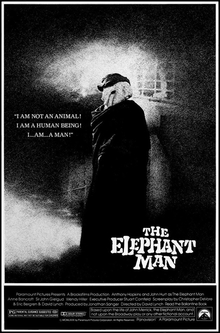
The creative partnership with John Hurt on The Elephant Man stands as a defining collaboration in Lynch's career. Hurt's portrayal is universally recognized as a masterful performance, providing the emotional anchor that allows the film to transcend its period setting. Hidden almost entirely by makeup, Hurt relies on subtle vocal modulations and expressive body language to deliver a heartbreaking and inspiring narrative. Critics note that this specific performance gives the biopic a poignancy that sets it apart from the rest of the director's work.
Beyond the actors, Lynch's narrative collaborations often involve the adaptation of complex source material. By engaging with texts such as the theatrical plays detailing John Merrick's life, Lynch forms a dialogue with existing interpretations of historical events. This cross-comparative approach to storytelling enriches the final film, as the director synthesizes theatrical, medical, and historical perspectives into a singular, haunting vision. The synergy between his uncompromising directorial eye and performers capable of immense pathos remains a cornerstone of his cinematic success.
Critical Standing
David Lynch's critical standing in the realm of biographical drama is overwhelmingly positive, characterized by deep respect for his humanity and compassion. Early reviews from major publications consistently lauded his transition from underground surrealist to a master of prestige cinema. Critics from the Los Angeles Times to Variety uniformly praised his superb and subtle execution, noting that his approach forced a reevaluation of what a period piece could achieve. His reputation is thus cemented as a filmmaker who can navigate both the bizarre and the profoundly moving with equal dexterity.
Over time, the discourse surrounding his more classical narratives has deepened, with writers frequently engaging in a cross-comparative analysis of his films. Critics like Roger Ebert have highlighted how his work forces audiences to question the meaning of a marginalized life and the ways in which cinema employs such narratives. The juxtaposition of his mainstream successes with his avant-garde origins, particularly the thematic echoes of Eraserhead, continues to fascinate film scholars. His work in this genre is often cited as a benchmark for empathetic, layered storytelling.
Today, his foray into historical biography remains a deeply affecting touchstone in his broader filmography. Publications such as IndieWire and The A.V. Club continue to celebrate the haunting and deeply moving nature of his cinematic vision. The consensus remains that his beautiful, measured direction in these projects provides a necessary counterpoint to his more abstract films. By proving his mastery of traditional narrative arcs while maintaining his unique atmospheric signatures, Lynch secures his place as one of the most versatile and essential voices in modern cinema history.