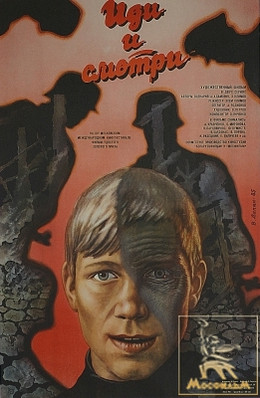
Career Overview
Elem Klimov stands as a monumental figure in the history of Soviet cinema, occupying a rarefied space among filmmakers who confronted the darkest chapters of human history with uncompromising rigor. His career trajectory reflects a deep engagement with the cultural and political realities of the Soviet Union, culminating in his definitive masterwork, Come and See. Though his filmography contains various explorations of Russian life and history, it is his final feature that cemented his legacy as a director capable of capturing the apocalyptic terror of war. Klimov developed his craft within the rigid structures of the Soviet film industry, yet he consistently pushed the boundaries of permissible artistic expression. His evolution as a filmmaker reveals a trajectory toward increasing psychological depth and sensory immersion. By the time he embarked on the production of Come and See, he had honed a cinematic language uniquely suited to depicting the sheer scale of human evil unleashed during the German occupation of Belarus. This period of his career marks a transition from conventional narrative forms to a more radical, experiential mode of storytelling. The director occupies a vital position in international film history, often discussed alongside his contemporary Andrei Tarkovsky. While Tarkovsky leaned heavily into spiritual abstraction, Klimov anchored his profound metaphysical questions in visceral historical realities. His ultimate retirement from filmmaking following the release of his 1985 war epic speaks to the exhausting, all consuming nature of his artistic process. Klimov remains a filmmaker who looked into the abyss of human cruelty and forged a cinematic testament that continues to influence global cinema today.
Thematic Preoccupations
The cinema of Elem Klimov is defined by a relentless interrogation of human evil and the psychological disintegration brought about by extreme trauma. Across his work, and most intensely in Come and See, the director obsesses over the complete collapse of civilization in the face of mechanized brutality. He does not treat war as a theater of heroism or strategic maneuvering, but rather as an apocalyptic event that strips away the veneer of humanity. The theme of survival is paramount, yet it is rarely depicted as a triumphant victory. Instead, survival becomes a devastating burden, a process of bearing witness to unspeakable horrors that permanently fracture the human psyche. A recurring philosophical concern in Klimov's work is the corruption of innocence. By anchoring his narratives to the perspectives of vulnerable subjects, such as the young boy Flyora, he amplifies the sheer unnaturalness of the atrocities unfolding around them. This preoccupation with shattered youth allows Klimov to explore the broader moral decay of society. As young protagonists witness the systematic destruction of their communities, their physical transformation mirrors a deep internal death. The director suggests that exposure to such absolute cruelty erases the boundaries between youth and old age, leaving behind only the hollowed out shell of a survivor. Furthermore, Klimov's narratives are steeped in apocalyptic themes that elevate historical events to the level of cosmic tragedy. The brutalities inflicted upon the Byelorussian people are framed not merely as specific wartime atrocities but as manifestations of an eternal, terrifying darkness within the human soul. This philosophical framework demands that audiences confront the very nature of evil. Klimov crafts a damning critique of violence, using the medium of film to issue an urgent moral imperative. His work serves as a permanent memorial to the victims of war, driven by a deeply seated compassion that never softens its unsparing depiction of historical reality.
Stylistic Signatures
The stylistic signatures of Elem Klimov rely on a masterful synthesis of stark authenticity and hallucinatory expressionism. His visual language is characterized by an unsparing depiction of historical reality, yet it is frequently overlaid with a muted nightmarish exaggeration. In Come and See, this approach results in a highly subjective cinematic experience, where the camera functions almost as an organic entity. Critics have noted that his lens often mimics the point of view of a wild animal skulking for its prey, plunging the audience directly into the chaotic and disorienting environment of the combat zone. Klimov draws heavily upon the traditions of Soviet cinematic techniques and rigorous visual poetry, but he weaponizes these methods to induce visceral discomfort. His editing rhythms are notoriously relentless, creating an inescapable narrative momentum that traps the viewer alongside the characters. This driving pace is occasionally punctuated by beatific moments of haunting beauty, a jarring contrast that only serves to amplify the surrounding horrors. The juxtaposition of lyrical imagery with graphic violence generates a profound psychological tension, making the inevitable return to brutality feel all the more devastating. The director's use of sound is equally vital to his nightmarish aesthetic. Klimov constructs dense, chaotic auditory landscapes that mirror the internal trauma of his protagonists. Ringing tinnitus, distorted dialogue, and the mechanical roar of machinery blur the lines between objective reality and subjective terror. When combined with a highly controlled mise en scene that emphasizes dirt, decay, and the physical degradation of the human body, this sonic approach results in a deeply immersive experience. Through these rigorous stylistic choices, Klimov bridges the gap between documentary realism and feverish psychological horror.
Recurring Collaborators
A defining characteristic of Elem Klimov's production methodology is his deliberate departure from traditional repertory casting. Rather than relying on a stable ensemble of recurring actors across multiple films, the director frequently sought out fresh, untethered faces to inhabit his grueling cinematic worlds. This approach was essential to maintaining the profound authenticity that anchors his work. By avoiding recognizable stars in key roles, Klimov ensured that audiences would project no prior cinematic associations onto his characters, allowing the raw, unfiltered humanity of his subjects to take center stage. The casting of the young protagonist Flyora in Come and See serves as the ultimate testament to this philosophy. Klimov required a performer capable of undergoing an intense, visible physical and psychological deterioration. By casting a young, relatively unknown actor, he was able to capture a terrifyingly genuine transformation. The director demanded absolute commitment from his performers, pushing them to the very limits of emotional endurance. Consequently, the actors in his films function less as traditional performers and more as physical vessels for the immense suffering depicted on screen. Behind the camera, Klimov operated within the robust, highly structured environment of the Soviet film industry, collaborating with skilled technicians to realize his massive apocalyptic visions. While specific artistic partnerships varied from project to project, his crews were consistently tasked with executing some of the most logistically complex and physically demanding sequences in cinema history. The collective effort required to stage the intricate battle scenes and village burnings speaks to a unified collaborative spirit, all organized under Klimov's exacting, singular directorial authority.
Critical Standing
The critical standing of Elem Klimov is anchored by an overwhelming consensus regarding the sheer cinematic power of his most famous work. Reviewers consistently describe his filmmaking as an unshakably damning critique of human violence, noting its place as one of the most powerful and disturbing war movies ever made. Upon the release of Come and See, critics immediately recognized the film as a monumental achievement in the antiwar genre. Over the decades, its reputation has only grown, with many contemporary scholars praising it as the most harrowing and imagistic war film in the history of the medium. Within critical discourse, Klimov is frequently placed alongside the heavyweights of international cinema. Critics routinely draw comparisons between his work and Francis Ford Coppola's Apocalypse Now, noting how both directors utilize a nightmarish atmosphere to explore the psychological descent brought about by combat. Furthermore, his thematic explorations of shattered youth invite frequent comparisons to Andrei Tarkovsky's Ivan's Childhood. Yet, reviewers are quick to point out that Klimov's approach is distinctly his own, substituting Tarkovsky's poetic melancholy with an unsparing, horrifyingly relentless narrative momentum. Today, Elem Klimov is revered not just as a master of Soviet cinema, but as an artist of great cinematic influence whose legacy extends far beyond his native country. His unique ability to balance realistic brutality with beatific moments of artistry has inspired a generation of filmmakers who tackle themes of historical trauma. Critics celebrate his work for its deeply seated compassion and devastating insights into human nature. Ultimately, his critical reputation rests on his profound moral courage, as he demanded that audiences madly, truly, and deeply witness the darkest depths of the human experience.