Career Overview
Ertem Egilmez occupies a uniquely polarizing position in the history of satirical cinema. While initially operating within the boundaries of conventional comedy, his work quickly mutated into a far more confrontational art form. He is widely recognized today as a provocateur who dismantled the traditional structures of the boarding school narrative to expose the darkest facets of human nature. His cinematic voice is characterized by a refusal to coddle his audience, choosing instead to present a world devoid of traditional moral compasses.
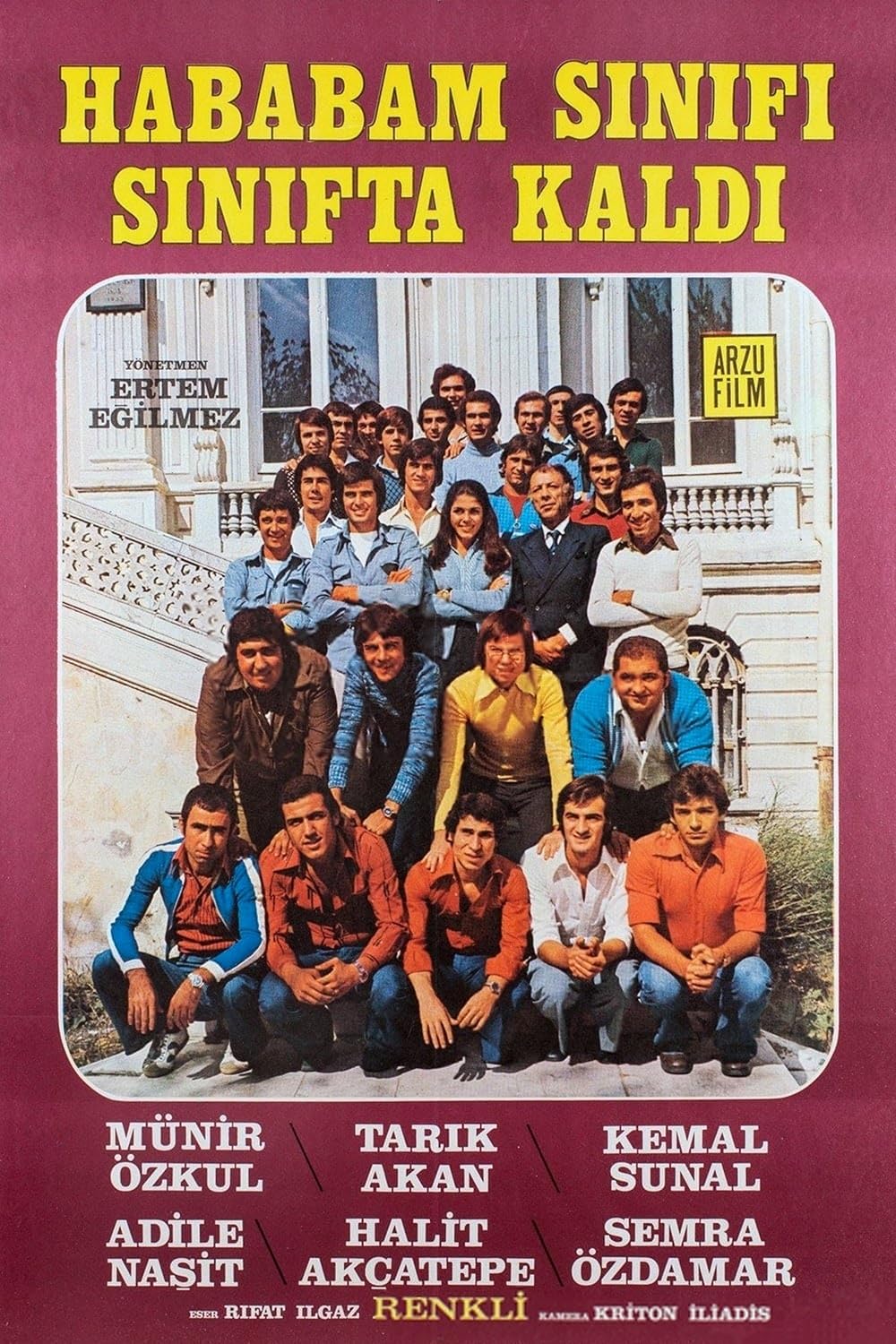
His defining work, The Chaos Class Failed the Class, released in 1975, serves as the ultimate distillation of his pessimistic worldview. The film centers on a group of young men in their twenties who are trapped in an endless cycle of academic failure. By focusing on adults lingering in an adolescent environment, Egilmez created a grotesque microcosm of societal stagnation. This specific timeline marks a departure from lighthearted collegiate comedies, pivoting sharply into an arena of relentless hostility.
Ultimately, Egilmez remains a figure of intense fascination for film scholars and art critics. His willingness to subvert audience expectations established him as a fearless, if controversial, auteur. He weaponized the trappings of comedy to deliver a bleak commentary on institutional decay, cementing his legacy as a director who prioritized ideological provocation over mainstream entertainment.
Thematic Preoccupations
The overarching thematic preoccupation of Egilmez is the absolute breakdown of institutional authority, particularly within the realm of education. He utilizes the classroom not as a space of enlightenment, but as a battleground characterized by violence in education and severe educational challenges. In The Chaos Class Failed the Class, the concept of poor behavior is elevated from mere mischief to a destructive force that literally prevents teachers from teaching. This educational discourse forms the spine of his philosophical inquiry into societal collapse.
A pervasive sense of nihilism permeates his narrative structures. Reviewers frequently note the nihilistic themes that drive the actions of his characters, who exhibit a profound cruelty in narratives that nominally belong to the comedy genre. The young men in the Chaos class are depicted without the redemptive arcs typical of the genre. Instead, they operate within cruel dynamics that strip away any sentimentality, leaving an experience that critics have described as profoundly ugly and bleak.
The dynamic between instructors and students further underscores this bleak vision. The arrival of a young female literature teacher in The Chaos Class Failed the Class acts as a catalyst for examining toxic teacher-student dynamics. Egilmez interrogates the societal demand for "zero tolerance" policies, framing the classroom chaos not as a problem to be solved, but as an inevitable symptom of a decaying social order. His films continually ask whether any system of authority can withstand the inherent cruelty of human nature.
Stylistic Signatures
The visual language of Egilmez is stark, unpolished, and deliberately abrasive. He strips away the glossy cinematography usually associated with comedies oriented toward youth to reflect the underlying ugliness of his subjects. His camera observes the classroom chaos with a detached, almost forensic objectivity, refusing to glamorize the misbehavior of the students. This visual austerity forces the viewer to confront the cruelty of the narrative without the comfort of stylized aesthetic distancing.
His approach to pacing and editing further amplifies the sense of exhaustion inherent in his educational environments. Rather than utilizing the swift, rhythmic cuts typical of satire, Egilmez allows scenes of hostility to linger uncomfortably long. The editing rhythms mimic the agonizing crawl of a deeply dysfunctional school day. By dragging out these moments of conflict in classroom management, he traps the audience in the same suffocating environment experienced by the educators on screen.
Most strikingly, his tonal execution borders on the horrific, leading to jarring stylistic dissonance. The visual composition often resembles that of exploitation cinema rather than a boarding school romp. Critics have drawn direct comparisons between his work and films like Last House on the Left, highlighting how his framing and sound design evoke visceral dread. This aggressive subversion of comedic conventions stands as his most defining stylistic signature.
Recurring Collaborators
Ertem Egilmez is notably isolated in his creative process, standing apart from auteurs who rely on a steady repertory company of actors. Critical analysis of his filmography reveals no recurring cast members or ensemble troupes that span multiple projects. This distinct lack of familiar faces prevents audiences from developing comforting parasocial bonds with his performers. The isolation of his casting process perfectly mirrors the alienated, nihilistic themes present within his narratives.
The absence of a continuous artistic partnership forces viewers to engage exclusively with the overarching vision of the director himself. In The Chaos Class Failed the Class, the actors function less as collaborative stars and more as specific avatars for cruelty and classroom chaos. Because he does not bring a trusted troupe from film to film, each ensemble must build the required hostility from the ground up, resulting in performances that feel distinctly raw and untethered from previous cinematic associations.
This solitary approach appears to extend to his technical crew as well. The critical record highlights no legendary partnerships with specific cinematographers, editors, or composers. Egilmez seemingly demands complete, uncompromising control over his deeply pessimistic output. By working without a safety net of recurring collaborators, he maintains a singular, uncompromised artistic voice that answers only to his own bleak view of institutional dynamics.
Critical Standing
The critical reception of Egilmez is intensely polarized, characterized by a rare level of visceral repulsion from mainstream reviewers. Prominent voices in film criticism have frequently struggled to stomach the sheer hostility embedded in his narratives. Notably, RogerEbert.com condemned The Chaos Class Failed the Class in the harshest possible terms, describing it as an ugly, nihilistic, and cruel experience while explicitly urging audiences to avoid the picture entirely. This level of critical revulsion highlights his status as a genuinely transgressive filmmaker.
Despite this outright rejection from traditional critics, sociological and educational analysts have found significant value in his abrasive discourse. Outlets such as The Guardian have engaged deeply with the thematic weight of his work, utilizing it to question systemic educational failures. They have debated whether the poor behavior depicted onscreen is the root cause preventing teachers from teaching, while examining the societal fever pitch surrounding "zero tolerance" policies. This dual reception places Egilmez at the center of serious cultural debate.
In contemporary critical evaluations, Egilmez is often removed from the comedy genre entirely and analyzed alongside directors of extreme cinema. The startling critical comparisons to exploitation horror films, most famously Last House on the Left, solidify his reputation as a filmmaker who weaponized cinematic form. While he may never achieve universal acclaim, his standing as a fearless architect of cinematic cruelty remains unshakeable among scholars of transgressive art.