Career Overview
Ethan Coen represents a vital pillar of contemporary American cinema, operating within a deeply idiosyncratic space that bridges genre filmmaking and rigorous existential inquiry. Emerging in the late twentieth century alongside his brother Joel, he helped redefine the independent film landscape. His career arc demonstrates a fascinating evolution from stylish neo-noir homage to profound meditations on American mythology. By continually subverting audience expectations, he has established a position as a premier chronicler of the nation's dark underbelly.
Early in his career, Ethan Coen laid the groundwork for his cinematic universe with tightly wound crime narratives. Critics frequently identify this foundational period as the crucible for his later masterpieces, establishing a distinct voice characterized by moral complexity and dark levity. These early successes proved that American genre tropes could be repurposed to explore weighty philosophical themes, setting a high standard for the independent film movement of the era.
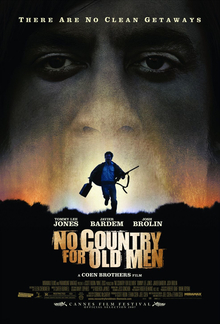
The release of No Country for Old Men marked a definitive zenith in his artistic development. Critics hailed the picture as a major return to form and an exceptional return to his cinematic roots, drawing direct evolutionary lines from Blood Simple and Fargo. This mature phase of his career showcases a director operating at the height of his powers, stripping away earlier ironic detachment to confront the bleak realities of a vanishing moral order with unyielding precision.
Thematic Preoccupations
At the core of Ethan Coen's filmography is a relentless human nature exploration, characterized by a deep fascination with moral ambiguity. His narratives frequently center on ordinary individuals who stumble into extraordinary circumstances, usually driven by greed, pride, or simple happenstance. These characters find themselves trapped in complex webs of cause and effect, forcing the audience to grapple with the unpredictable dynamics of good versus evil in a universe devoid of clear ethical boundaries.
The intertwining concepts of justice and retribution form another foundational pillar of his thematic obsessions. Unlike conventional Hollywood thrillers where morality is neatly codified, his films present a world where justice is elusive and violence and its consequences ripple outward with terrifying randomness. The exploration of violence and morality suggests that retribution is rarely proportional to the crime, painting a bleak picture of a society governed by chaotic forces rather than divine providence.
Furthermore, his work is deeply preoccupied with fate and destiny, particularly within the context of the changing American West. Themes of nostalgic regret pervade his examination of a vanishing landscape, where older moral codes are rendered obsolete by an implacable, incomprehensible evil. The characters often confront an unyielding environment that offers no solace, underscoring a philosophical viewpoint where human agency is ultimately dwarfed by the grand, indifferent machinery of fate.
Stylistic Signatures
The visual language of Ethan Coen is defined by masterful storytelling and a famously tense atmosphere. He constructs cinematic spaces that feel simultaneously vast and oppressively claustrophobic, utilizing the natural landscape to emphasize the isolation of his subjects. His framing is meticulous and spare, often employing wide shots that dwarf characters against an unforgiving horizon, thereby rendering the environment as an active, menacing participant in the narrative.
A defining characteristic of his auditory and textual approach is the reliance on laconic dialogue juxtaposed with startling, carnage-filled sequences. Characters speak with a regional rhythm that avoids unnecessary exposition, creating a cool, detached tone. This deliberate suppression of melodrama ensures that when violence does erupt, it carries a chilling and unforgettable impact. The silence between words becomes as important as the dialogue itself, generating a haunting quality that lingers long after the scene concludes.
In terms of pacing and editing, his rhythmic choices prioritize escalating dread over traditional action beats. The deliberate, methodical progression of scenes mirrors the inescapable nature of fate that plagues his protagonists. By eschewing conventional musical cues in favor of ambient soundscapes and prolonged silences, he strips away the comforts of typical cinematic catharsis. This stripped-down aesthetic renders his explorations of human cruelty both pitiful and profound, cementing his signature style as an exercise in rigorous restraint.
Recurring Collaborators
The fundamental collaboration of Ethan Coen is his lifelong creative partnership with his brother, Joel Coen. Operating virtually as a single artistic entity for decades, they share responsibilities across writing, directing, and producing. This symbiotic relationship provides the structural bedrock for their films, allowing for a seamless integration of their notoriously precise screenplays with their highly controlled visual execution. The dual perspective guarantees a singular, unified cinematic vision that defines every frame of their work.
While their ensemble casts often shift, the directors rely heavily on actors capable of internalizing their unique tonal frequencies. Performers must navigate the delicate balance between bleak existentialism and dark levity. In No Country for Old Men, Javier Bardem embodies this necessity perfectly. His portrayal of a relentless hitman is widely recognized as chilling and unforgettable, demonstrating exactly how vital specialized, highly disciplined acting is to the realization of the director's exacting standards.
Additionally, the collaboration extends to the source material itself, particularly when adapting the work of formidable literary figures. Translating a bleak novel by Cormac McCarthy demands a profound synthesis of two distinct artistic voices. The ability of the director to respect the nostalgic regret of the original author while imposing his own mastery of cinematic tension highlights a collaborative approach that elevates both the source text and the resulting film.
Critical Standing
Ethan Coen occupies a highly venerated position within contemporary film criticism. Reviewers consistently praise his capacity to elevate pulp genre mechanics into profound philosophical treatises. His standing as an auteur is secured by a filmography that critics describe as masterful exercises in tension and atmosphere. He is widely regarded not merely as a storyteller, but as a rigorous intellectual voice in American cinema who continually challenges audiences with his unyielding vision.
The critical discourse surrounding his career often frames his mature projects as a brilliant synthesis of his past experiments. Critics frequently analyze his trajectory by comparing his later achievements to his earlier triumphs, specifically citing works like Blood Simple and Fargo. These comparisons underscore a critical consensus that his career represents a continuous refinement of core obsessions, resulting in a mature cinematic voice that is spare, cool, and remarkably self-assured.
Furthermore, his reputation is cemented by his placement in the lineage of great American revisionist filmmakers. Critics frequently draw parallels between his output and landmark films such as The Wild Bunch, The Searchers, and A History of Violence. By documenting the changing American West and examining the terrifying intersections of human nature and implacable evil, Ethan Coen is celebrated for delivering unforgettable experiences that resonate deeply within the broader canon of modern film history.