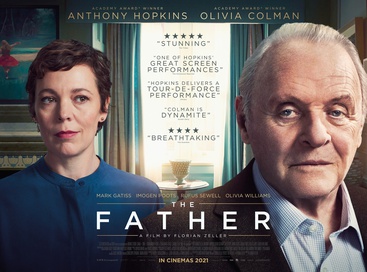
Career Overview
Florian Zeller transitioned from an acclaimed French playwright to a formidable cinematic voice, cementing his position in modern cinema with his directorial debut. Before entering the realm of film, he was recognized globally for his theatrical trilogies, establishing a foundation built on psychological complexity and spatial confinement.
His move to filmmaking was not merely an adaptation of stage plays but a complete reimagining of theatrical constraints into a cinematic grammar. By choosing to direct the adaptation of his 2014 chamber piece, he demonstrated a rare intuition for the visual medium. This pivot showcased his ability to translate internal psychological landscapes into external visual realities.
With his debut feature, Zeller immediately established himself as a mature filmmaker capable of orchestrating intense emotional experiences. He bypassed the typical developmental arc of a new director, arriving with a fully formed aesthetic sensibility. His arrival signaled a new approach to the psychological drama, merging the immediacy of live performance with the manipulative potential of the camera.
Thematic Preoccupations
At the core of Zeller's cinematic inquiry is the fragile nature of human cognition and the subjective experience of reality. His work explores the reality perception theme, questioning how memory constructs our understanding of the world. In The Father, the dementia theme serves not just as a medical condition but as an existential lens through which to examine the disintegration of identity.
The family dynamics motif is another central obsession, particularly the tension between familial duty and personal survival. He investigates family relationships under extreme duress, highlighting the emotional toll on caregivers and the complex guilt associated with witnessing a loved one decline. These interpersonal conflicts are portrayed without sentimentality, resulting in a brutal and tough examination of domestic life.
Furthermore, Zeller is preoccupied with the concept of a memory impaired perspective. Critics frequently draw comparisons to works like Memento or the films of Christopher Nolan, noting how Zeller uses memory loss as a narrative engine rather than a mere plot device. The mind is depicted as an unreliable narrator, constantly betraying the protagonist and leaving the audience to navigate a profoundly disorienting experience.
Stylistic Signatures
Zeller's stylistic approach is defined by his extraordinary storytelling, which often employs a discontinuous structure to mimic cognitive decline. Instead of objective reality, he locks the camera into a subjective, unreliable viewpoint. This technique forces the audience to share the protagonist's confusion, creating a quietly terrifying atmosphere that feels both frighteningly slippery and deeply immersive.
His visual composition is deceptively simple, often utilizing confined domestic spaces that subtly shift and alter around the characters. By changing production design elements like furniture, color palettes, and architectural layouts between scenes, Zeller creates trippy visuals that are grounded in a naturalistic setting. This visual strategy mirrors the internal collapse of reality, making the familiar feel inauspicious and alien.
In terms of pacing and editing, Zeller relies on disorienting time slips and powerful theatrical effects translated for the screen. The editing rhythms are intentionally jarring, cutting between contradictory scenes to evoke a sense of continuous present tense anxiety. Coupled with intelligent writing, his stylistic signatures elevate the chamber drama into a psychological thriller, drawing comparisons to the surreal interior logic seen in Charlie Kaufman projects or an I'm Thinking of Ending Things comparison.
Recurring Collaborators
While Zeller's cinematic filmography is still expanding and he has not established a lengthy roster of recurring cast members across multiple films, his collaborative philosophy is crucial to his success. He builds his projects around central, titanic performances, demanding actors capable of navigating extreme psychological vulnerability. His debut relied heavily on a singular, celebrated Academy Award winning performance that anchored the entire narrative experiment.
The dynamic between the director and his leading actors is foundational to his process. By placing veteran actors in roles that strip away their usual authority, Zeller orchestrates a Wagnerian opera of emotion based entirely around an old man in a flat. The cast must balance the technical demands of a nonlinear script with the raw, moving emotional reality of their characters.
Behind the camera, Zeller partners with key technical collaborators to achieve his specific vision of psychological destabilization. His work with production designers and editors is essential in executing the dramatic perspective shifts that upend audience expectations. These partnerships ensure that the intelligent performances are supported by a rigorous, meticulously constructed visual and temporal framework.
Critical Standing
Zeller burst into the cinematic consciousness with an unprecedented level of critical acclaim, instantly securing a reputation as a master of the psychological drama. Reviewers praised The Father not as a mere play adaptation, but as a purely cinematic triumph that did not behave at all like a movie for television. His debut earned him a position among the most exciting new voices in contemporary cinema.
Within critical discourse, his work is frequently analyzed through ambitious literary comparisons, with critics likening his narratives to King Lear for their tragic scope and themes of patriarchal decline. The critical consensus highlights his ability to craft a heartbreaking narrative that avoids melodrama, noting that the most heartbreaking moments are often found in quiet resignation rather than explosive outbursts. He is lauded for proving he is a natural filmmaker capable of profound emotional resonance.
As his career progresses, Zeller's standing has evolved from a celebrated playwright testing the cinematic waters to an established auteur with a distinct, uncompromising vision. Critics admire how his films merge domestic realism with psychological horror, leaving theatergoers in a state of alarm over the apparent collapse of reality. His work continues to be studied for its structural ingenuity and its deeply empathetic, though unsparing, gaze upon human frailty.