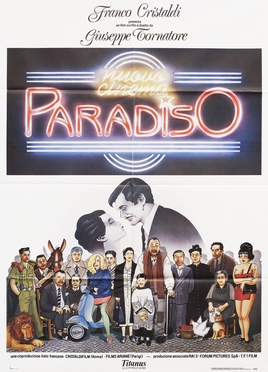
Career Overview
Giuseppe Tornatore emerged as a defining voice in contemporary Italian cinema by crafting deeply personal narratives that celebrate the medium of film itself. Born in Sicily, his early life experiences deeply informed his cinematic worldview, establishing a foundation built on regional specificity and universal emotional resonance. He stepped into the international spotlight with Cinema Paradiso, a monumental work that cemented his status as a director capable of weaving intricate tales of memory and cultural history.
His career trajectory represents a significant pivot in Italian filmmaking. Moving away from the gritty political realities of the decades prior, Tornatore embraced a more sentimental, retrospective approach. He found profound success by exploring the intersection of personal growth and collective cinematic memory. This approach allowed his work to transcend regional boundaries and connect with global audiences on an intimate level.
Today, Tornatore is recognized as a vital bridge between classic Italian cinema and modern international arthouse sensibilities. His ability to synthesize deep emotional storytelling with rigorous formal homage secures his position as a custodian of the medium. Through his focused lens, he has managed to capture the wondrous and impure ways that movies enrapture the public imagination.
Thematic Preoccupations
The foremost preoccupation of Tornatore is an unabashed cinephilia. His narratives frequently interrogate why people love movies, exploring how the moving image possesses the power to both break hearts and lift them up again. He treats the local movie theater not merely as a setting, but as a sacred communal space where public life and private fantasy intersect. This thematic obsession results in stories that function as shining valentines to the cinematic art form.
Coupled with his love for the medium is a profound exploration of loss and the relentless passage of time. Tornatore utilizes coming-of-age frameworks to dissect how childhood innocence yields to adult melancholy. His protagonists often embark on journeys of reflection, looking back at their formative years through a lens of heavy nostalgia. This nostalgic tone serves as a vehicle for understanding how the past shapes present identity.
Friendship dynamics and surrogate family structures also form the emotional bedrock of his storytelling. He maps the intricate bonds formed between unlikely individuals, often pairing a mentor figure with a young disciple. These relationships are marked by heartfelt emotions and a shared passion that transcends generational divides. Through these interpersonal connections, Tornatore grounds his sweeping romantic narratives in recognizable human truths.
Ultimately, his thematic canvas is defined by sentimental themes that celebrate human endurance and the enduring power of art. He does not shy away from grand romantic gestures or deep emotional storytelling. Instead, he leans into the messy reality of love, loss, and memory, ensuring that his thematic concerns always prioritize emotional honesty over cynical detachment.
Stylistic Signatures
Tornatore employs a visual language that is steeped in emotional storytelling, utilizing light and composition to evoke a profound sense of memory. His mise en scène often blends lived-in realism with a slightly heightened, magical quality that reflects the subjective nature of remembrance. A central motif in his visual vocabulary is the literal and metaphorical projection of light. Critics often highlight brilliant set pieces, such as a projector beam reflecting moving images out into a town square, as definitive examples of his ability to craft glorious, open-air cinematic experiences.
His cinematographic approach frequently incorporates collages and homages to classic cinema. Tornatore embeds visual references to foundational works, prompting critics to draw comparisons to films like Day for Night, City Lights, and Guys and Dolls. These intertextual nods are never mere mimicry; they are carefully integrated into the fabric of his own scenes to deepen the thematic resonance of his cinephilia explorations.
The editing rhythms in a Tornatore film are designed to mirror the ebb and flow of memory itself. He transitions fluidly between different eras of a character's life, using associative cuts that link past trauma or joy to present-day reflection. This structural fluidity allows the nostalgic tones of the narrative to wash over the audience, creating an immersive, sentimental journey.
Soundscapes play a crucial role in his stylistic signature. The diegetic sounds of whirring projectors, audience reactions, and old film strips running through gears are meticulously crafted to build an authentic auditory environment. These elements work in tandem with the score to wrap the viewer in a tender embrace, transcending language barriers to deliver universally understood emotional beats.
Recurring Collaborators
While Tornatore has worked with a wide variety of actors across his career without establishing a singular, repetitive acting troupe, his most crucial creative partnership exists behind the camera. His collaboration with the legendary composer Ennio Morricone is arguably the most defining relationship of his filmography. The synergy between the director's visual nostalgia and the composer's auditory emotionalism is central to the impact of his cinema.
Morricone provided the swooningly romantic music that elevates Tornatore's emotional storytelling from mere sentimentality to transcendent art. Critics frequently note that the musical score acts as a secondary narrative voice, communicating the profound sense of loss, joy, and cinephilia that words alone cannot capture. This musical partnership is essential to the heartfelt emotions that characterize the director's most celebrated work.
In terms of casting, Tornatore has historically favored performers who can seamlessly embody both regional authenticity and universal archetypes. Although specific actors may not recur across multiple database entries, the director relies on casting faces that convey deep wells of lived experience. He excels at directing child actors alongside seasoned veterans, anchoring the critical friendship dynamics that drive his coming-of-age narratives.
Critical Standing
The critical reputation of Giuseppe Tornatore is anchored by widespread admiration for his ability to craft universally moving cinema. Reviewers frequently note that anyone who loves movies is likely to love his work, highlighting its broad appeal and deeply relatable themes. His crowning achievement, Cinema Paradiso, is widely regarded as a masterpiece of international arthouse cinema, celebrated for transcending cultural boundaries and wrapping audiences in a deeply tender embrace.
However, his standing within critical discourse is not without its polarizing elements. While populists and mainstream critics laud his heartfelt emotions, some formalist reviewers have argued that his heavy reliance on nostalgic tones can cross the line into the cloying. Detractors have occasionally confessed to finding his work a bit sugary or his characters occasionally grating. This divide underscores his position as a filmmaker who prioritizes unironic sentiment over detached intellectualism.
Despite occasional critiques regarding his sentimental themes, Tornatore maintains a secure place in the pantheon of filmmakers who have successfully created movies about movies. His rigorous homages to the medium have earned him favorable comparisons to François Truffaut and Charlie Chaplin. Critics recognize that his work captures the messy, wondrous essence of why audiences are enraptured by the silver screen.
As his career has evolved, his legacy as a master of the emotional epic has only solidified. He remains a beloved figure among film students and cinephiles who value sincere, sweeping romantic narratives. His ability to navigate the complex intersection of personal memory and cinematic history ensures that his contributions to the art form remain both studied and cherished.