Career Overview
Guillermo del Toro occupies a unique space in contemporary cinema, bridging the gap between esoteric genre filmmaking and high art auteurism. His career trajectory reveals a director constantly negotiating between personal, culturally specific narratives and broader, studio driven franchise spectacles. This duality has defined his evolution from a cult figure in Mexican cinema to an internationally celebrated auteur.
His early development demonstrates a deliberate oscillation between independent passion projects and mainstream assignments. He began his feature career with Cronos, an unusual Mexican vampire narrative that established his foundational interest in monstrous empathy and clockwork mechanics. He then transitioned to the Hollywood studio system with Mimic, a conventional American creature feature that provided him with the technical grammar of large scale production while challenging his authorial control.
Seeking greater creative autonomy, del Toro returned to his Spanish language roots with The Devil's Backbone, a deeply personal ghost story set against the backdrop of the Spanish Civil War. This oscillation continued as he took on populist franchise assignments like Blade II and comic book adaptations like Hellboy. These commercial ventures allowed him to refine his visual effects sensibilities and creature designs, which he would later deploy with devastating emotional resonance in his defining cinematic achievements.
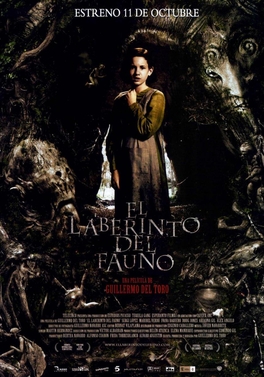
This pendulum swing of career choices culminated in the release of Pan's Labyrinth, a film that synthesized his disparate creative impulses into a singular, cohesive vision. Critics universally recognized this work as a more than worthy companion piece to his earlier Spanish film, cementing his status as a master filmmaker working at the absolute peak of his craft. Through this meticulously constructed career arc, del Toro has proven that pulp genre conventions can serve as potent vehicles for profound historical and psychological inquiry.
Thematic Preoccupations
A central preoccupation of the cinematic universe crafted by del Toro is the perilous intersection of fantasy and reality. He consistently explores the coexistence of disparate realms of existence, often grounding magical realism within deeply traumatic historical contexts. In works like Pan's Labyrinth, this dynamic is not merely escapist but profoundly political, juxtaposing the subterranean dreamscapes of fairies and monsters against the brutal fascist realities of Francoist Spain. The boundary between these two worlds remains fiercely rigid, creating a pathological exploration of how human beings process systemic violence through mythology.
Childhood serves as the ultimate crucible for these thematic explorations. Del Toro views the innocence of youth not as a shield, but as a heightened state of vulnerability that invites both wonder and danger. The young protagonists in his narratives often face imposing sets of rules dictated by both the mystical and the mortal realms. Failure to navigate the demands of either world frequently results in mortal peril, suggesting that the cruelty of mythical beasts is simply a mirror reflecting the tyranny of authoritarian adults.
Furthermore, del Toro engages in a rigorous interrogation of monstrosity, frequently inverting traditional moral alignments. His films suggest that the true monsters are rarely the visually grotesque creatures lurking in labyrinths or shadowy corners. Instead, human authoritarianism, militarism, and ideological fanaticism represent the ultimate cinematic terrors. This bold thematic approach allows him to reconnect the adult imagination to the primal thrill and horror of childhood fables, echoing the dark moral lessons of original fairy tales before they were sanitized by modern pop culture.
The political dimension of his storytelling operates concurrently with his mythical allegories. By anchoring his elaborate fantasies so firmly in the reality of war, del Toro creates a striking commentary on the destructive nature of fascism. The juxtaposition of a young girl's quest with a tyrannical military officer's obsession highlights the fundamental clash between creative imagination and destructive order. This dialectic remains a cornerstone of his thematic architecture, ensuring his genre exercises always carry a heavy, resonant philosophical weight.
Stylistic Signatures
The visual language of del Toro is characterized by a meticulously crafted, dark, and surreal atmosphere. His mise en scene is famous for its aesthetic coherence, blending practical creature effects with evocative set design to create an immersive, tactile world. Reviewers often note a distinct division in his production design, where the surface world of human history feels intentionally clogged and oppressive, while the subterranean dreamscapes burst with sheer visual energy. This visually inventive style operates as a storytelling device in its own right, mapping the psychological states of his characters onto their physical environments.
Despite the fantastical elements at play, his aesthetic remains highly structured and deliberately contained. Some critics have observed that his approach is so tidy and discreetly alluring that it borders on the bourgeois. Unlike the chaotic surrealism of his cinematic predecessors, del Toro favors a lush, sensualist presentation characterized by warm amber tones, deep crimsons, and cold, authoritarian blues. His cinematography relies on fluid, roving camera movements that treat magical creatures and fascist soldiers with the same objective cinematic weight, forcing the audience to accept both as equally real.
Intertextuality and visual homage form another crucial pillar of his stylistic signature. His visual framing frequently invokes classical archetypes, drawing implicit comparisons to the cinematic poetry of Jean Cocteau and the expressionist shadows of F.W. Murnau. Furthermore, his narrative rhythms borrow heavily from literary traditions, structuring his screenplays with the episodic, perilous logic found in classic fables. The pacing is deliberately challenging, demanding that the viewer navigate sudden tonal shifts between terrifying bodily violence and quiet, melancholic beauty.
Sound design and musical scoring in his films serve to heighten the sensualist shocks embedded in his narratives. The auditory landscape is carefully designed to emphasize the visceral reality of both worlds, from the creaking bones of a mystical entity to the mechanical ticking of a fascist officer's pocket watch. This synthesis of sight and sound solidifies his reputation as a master craftsman, one who builds lavish cinematic puzzles where every visual and auditory element is precision engineered for maximum emotional impact.
Recurring Collaborators
While traditional repertory casting is not the primary defining feature of the selected database entries for del Toro, his approach to collaboration is nevertheless essential to his artistic success. Instead of relying on a recurring troupe of on screen actors, the director frequently populates his films with fresh faces and archetypal performers who can effectively embody the innocence or cruelty required by his fables. This strategy allows individual protagonists to stand as isolated, singular figures navigating overwhelmingly hostile environments without the comfort of familiar cinematic allies.
The most crucial recurring partnerships in the career of this filmmaker occur behind the camera, specifically within the realms of practical effects, makeup, and creature design. The fantastical beings that populate his narratives are essentially his most enduring collaborators. Del Toro relies on a dedicated cadre of artisans to bring his sketchbook monsters to life, preferring tactile, physical creations over sterile digital effects. This ongoing collaboration with unseen technicians ensures that his cinematic universe maintains its signature tactile dread and aesthetic coherence across different production environments.
Beyond physical collaborators, the director maintains a profound spiritual and intellectual partnership with historical artists and storytellers. His work is in constant dialogue with literary figures like Lewis Carroll and the authors of traditional European folklore. Critics frequently point out that his narratives function as modern translations of classic tales, filtering the innocent wonder of Alice in Wonderland or the cautionary dread of Little Red Riding Hood through the lens of twentieth century political trauma.
Similarly, his cinematic collaborations extend backward through time to engage with legendary auteurs. Reviewers often place his work in direct conversation with the cinematic traditions established by Luis Buñuel and David Cronenberg. By synthesizing the bourgeois subversion of the former with the pathological body horror of the latter, del Toro curates a unique intertextual company of creative influences. These foundational inspirations serve as silent collaborators, providing the narrative and visual scaffolding upon which he constructs his lavish, uncompromising cinematic worlds.
Critical Standing
The critical standing of Guillermo del Toro has evolved from an appreciation of his cult genre sensibilities to a widespread acknowledgment of his status as a master of modern cinema. Early in his career, he was often categorized as a talented but niche director of horror and comic book adaptations. However, the release of works like Pan's Labyrinth forced a massive reevaluation within critical circles. Reviewers universally hailed the film as a masterpiece, recognizing its awesome beauty and potent storytelling, which firmly established him among the best filmmakers working at the top of their game.
Within critical discourse, del Toro is highly regarded for his ability to elevate the fantasy genre into the realm of serious art house cinema. Critics often praise his bold thematic juxtaposition of real and unreal worlds, noting that he creates some of the greatest fantasy films by anchoring them securely in the brutal reality of war. His ability to reconnect the adult imagination to the primal thrill and horror of childhood stories has earned him comparisons to legendary directors and classic literary masters alike. The overarching consensus is that his films possess a rare emotional resonance that transcends standard genre categorization.
However, this enthusiastic critical reception is not entirely without analytical debate. Some rigorous critics suggest that while his work is exceptionally smart, it lacks the true subversive chaos of pure surrealism. Publications like Slant Magazine have pointed out that his aesthetic can be almost too tidy and discreetly alluring, suggesting that a true provocateur like Luis Buñuel might have viewed his meticulous formalism as somewhat bourgeois. Additionally, some reviewers note an asymmetry in his storytelling, arguing that the surface world of history can sometimes feel clogged compared to the sheer, unbridled energy of his subterranean dreamscapes.
Despite these nuanced critiques, his overall reputation remains unassailable. He is celebrated as a visionary auteur who possesses a great imagination and an unyielding commitment to his distinctive aesthetic. The recurring critical vocabulary used to describe his work, terms like masterpiece, visually inventive, and powerful, reflects a deep and enduring respect from the global film community. Ultimately, del Toro is recognized as an indispensable cinematic voice, one who has successfully proven that the monsters of our childhood are essential tools for understanding the traumas of our shared human history.