Career Overview
Gus Van Sant occupies a singular space in contemporary American cinema, frequently bridging the gap between independent arthouse sensibilities and mainstream dramatic resonance. His career arc reflects a steady progression from the margins of society to the center of Hollywood prestige, always maintaining a keen eye for the complexities of youth and the burdens of unfulfilled potential. By focusing his lens on characters caught between their innate abilities and their restrictive environments, he has cemented his position as a crucial chronicler of the modern American experience.
His background as an independent filmmaker profoundly informs his approach to more commercial projects. Van Sant continually gravitates toward protagonists who exist as societal outsiders, navigating rigid structural hierarchies while seeking personal authenticity. This thematic consistency highlights a directorial vision that refuses to compromise its emotional integrity, even when working within the conventions of the studio system. His trajectory demonstrates a unique capacity to balance rigorous intellectual engagement with accessible, deeply felt human drama.
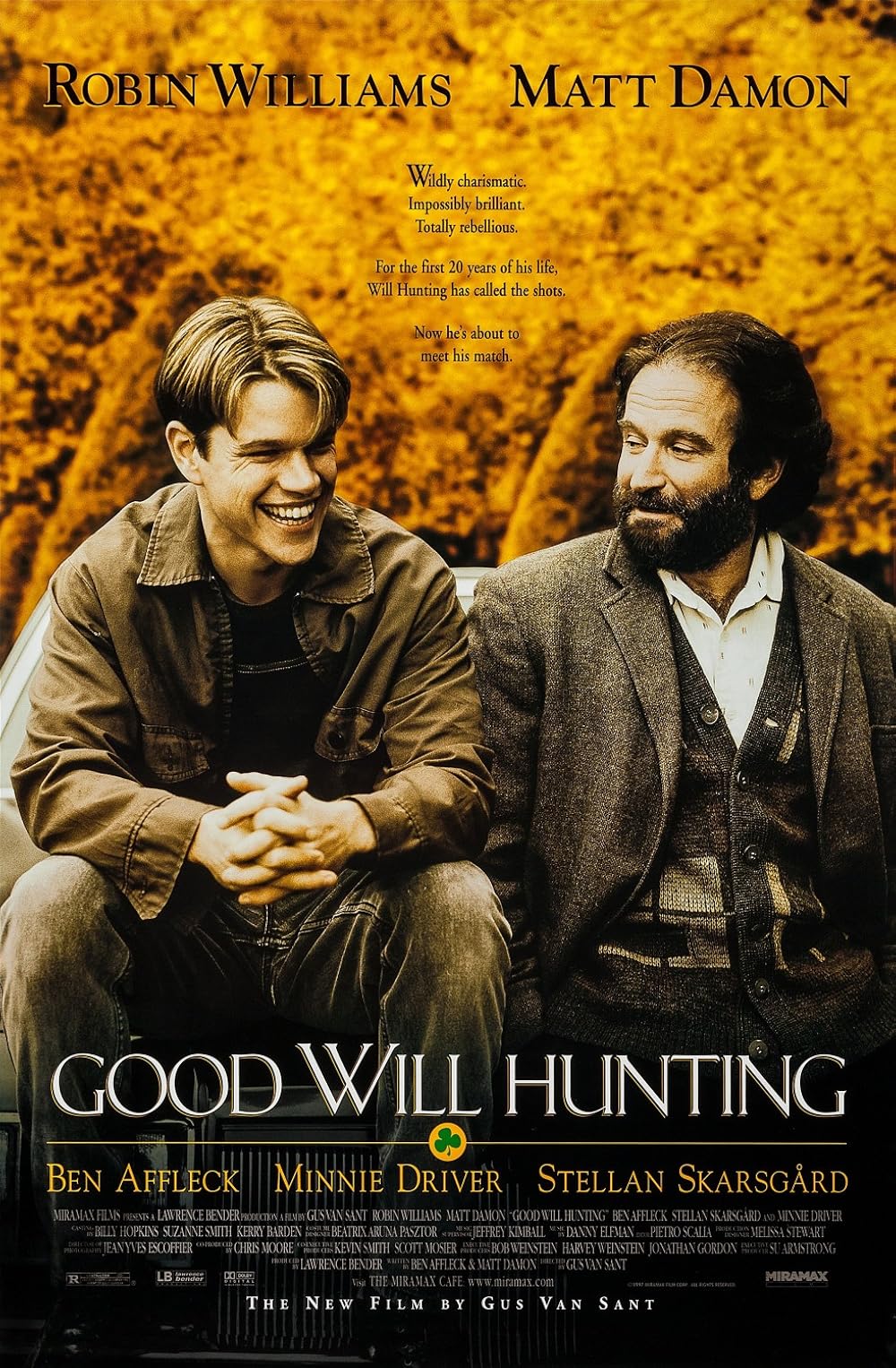
In the broader context of cinema history, Van Sant is celebrated for his ability to elevate traditional character studies into profound cinematic and psychological explorations. The monumental success of films like Good Will Hunting underscores his talent for capturing the raw, unvarnished realities of the working class against austere institutional backdrops. He remains a vital figure for cinephiles and scholars alike, offering a filmography that meticulously charts the painful, albeit necessary, journey toward selfhood and emotional liberation.
Thematic Preoccupations
At the core of Gus Van Sant's cinematic obsessions lies a rigorous interrogation of class struggle and the navigation of personal identity. He consistently returns to the theme of the marginalized genius, exploring how profound intellectual gifts often mask deep psychological trauma. His protagonists are frequently trapped by social hierarchies, forced to confront the systemic barriers that dictate their societal mobility. This tension between innate capability and environmental restriction serves as the primary engine for his complex narratives.
The pursuit of self discovery is invariably linked to the cultivation of meaningful relationships and nuanced friendships. Van Sant posits that true inner growth through challenges cannot occur in isolation. Instead, it is the shared experiences between flawed individuals that catalyze emotional and spiritual healing. The dynamic between a mentor and a pupil, or between fiercely loyal childhood friends, becomes the crucible within which his characters must confront their deepest fears and insecurities.
Furthermore, his work is steeped in themes of resilience in adversity and the mechanics of conflict and resolution. While there is an undeniable undercurrent of tragic storytelling and heartbreaking realism in his films, Van Sant ultimately offers a vision of hope rooted in introspection and reflection. He asks how individuals can reconcile their past traumas to forge a viable future, suggesting that emotional intelligence is ultimately more vital for survival than mere academic brilliance.
Stylistic Signatures
The visual language of Gus Van Sant is characterized by a patient, observational camera that prioritizes intense character development over kinetic spectacle. His mise en scene frequently contrasts the gritty, textured reality of working class neighborhoods with the sterile, imposing architecture of elite academic institutions. This spatial dichotomy underscores the internal conflicts of his protagonists, creating symbolic parallels between the physical environments and their psychological states.
An essential component of his stylistic signature is his deep reliance on emotional intelligence in both performance and pacing. The editing rhythms in a Van Sant film are dictated by the natural cadence of conversation and the silent pauses between thoughts. Critics consistently praise his remarkably authentic auditory landscapes, noting that his films possess a flawless ear for the way everyday people actually speak. This commitment to linguistic realism grounds his intellectually ambitious narratives in a palpable, lived reality.
Van Sant also utilizes complex narratives that seamlessly blend profound philosophical inquiries with intimate character beats. His approach balances rigorous intellectual engagement with raw emotional resonance, resulting in works that are described as both incredibly smart and deeply involving. The cinematography often lingers on the faces of his subjects during moments of profound vulnerability, forcing the audience to share in the immediate, unfiltered emotional reality of the scene.
Recurring Collaborators
While the available database focuses on a highly concentrated selection of his filmography, Gus Van Sant's collaborative ethos is defined by his extraordinary ability to cultivate career defining performances from his actors. His directorial approach necessitates an immense bond of trust on set, allowing performers the freedom to explore devastating emotional terrain. This environment of safety and mutual respect is essential to achieving the heartbreaking sincerity that characterizes his finest work.
His partnership with brilliant, improvisational actors frequently yields the most memorable moments in modern cinema. For instance, Robin Williams delivers a masterclass in subtlety and emotional depth under Van Sant's guidance. The director provides the space for such performers to strip away their typical affectations, leading to raw, iconic exchanges that resonate long after the credits roll. It is within these collaborative spaces that the tragic storytelling of his narratives finds its truest voice.
Beyond the actors, the interplay between Van Sant and his screenwriters functions as a vital co authorship of the film's psychological landscape. By fostering a creative atmosphere where the dialogue feels startlingly organic, the director ensures that the narrative voice perfectly matches the performative execution. This synthesis of writing and direction elevates the entire cinematic apparatus, resulting in films that feel less like scripted dramas and more like captured moments of authentic human struggle.
Critical Standing
Gus Van Sant occupies a distinguished and highly respected place within critical discourse. His work is frequently championed for its profound emotional depth and its unyielding commitment to exploring the nuances of human frailty. Critics consistently applaud his unique ability to merge the accessibility of a conventional romantic drama with the rigorous demands of a deeply smart character study. He is widely recognized as a filmmaker who never condescends to his audience, inviting them instead into complex spaces of intellectual and emotional engagement.
Reviewers often draw symbolic parallels between his films and other canonical works dealing with the burdens of exceptionalism and the necessity of emotional awakening, such as Rain Man. These comparisons underscore his reputation for crafting involving narratives that treat psychological healing and intellectual struggle with equal cinematic reverence. The critical establishment continues to honor his films as definitive explorations of class struggle and the difficult path toward conflict and resolution.
As his standing has evolved over the decades, his legacy has become intrinsically linked to his mastery of tone and atmospheric realism. His films remain touchstones for film students and scholars analyzing the intersection of societal barriers and personal identity. Van Sant endures as a pivotal figure for cinephiles who seek out cinema that provides not only aesthetic satisfaction but also a rigorous, compassionate testament to human resilience.