Career Overview
Haruo Sotozaki occupies a singular space in contemporary global cinema, standing at the intersection of traditional Japanese animation and monumental box office dominance. As the guiding directorial voice behind one of the most lucrative franchises in modern anime history, Sotozaki has redefined the commercial ceiling for theatrically released animated features. His career reflects a broader industry shift where episodic television narratives seamlessly transition into massive cinematic events.
The trajectory of Sotozaki is intrinsically linked to his tenure at the animation studio Ufotable. Rising through the ranks as an animator and episodic director, he developed a meticulous eye for fluid combat sequences and highly detailed character animation. This foundational experience allowed him to cultivate a unique visual rhythm that would eventually characterize his feature film efforts, earning him a reputation as a master of large-scale action choreography.
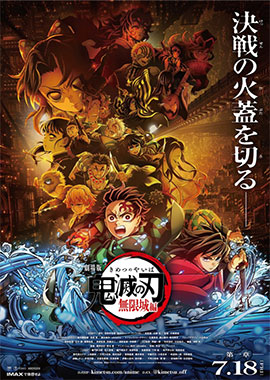
By the time Sotozaki helmed Demon Slayer: Kimetsu No Yaiba Infinity Castle, he had cemented his status as a titan of the international box office. The 2025 release demonstrated his unparalleled capacity to marshal global audiences, generating unprecedented ticket sales and outperforming established live-action Hollywood properties. Consequently, Sotozaki is now recognized not merely as a prolific anime director, but as a principal architect of the modern blockbuster landscape.
Thematic Preoccupations
A rigorous examination of Sotozaki reveals a persistent preoccupation with the burdens of duty, legacy, and the psychological weight of prolonged conflict. Through the lens of the Demon Slayer Corps, he explores themes of collective sacrifice and generational trauma. The characters are frequently caught in a desperate struggle against insurmountable odds, making their individual histories and emotional scars as crucial to the narrative as the physical confrontations themselves.
The integration of deep character backstories within high-stakes action anime is a hallmark of his thematic approach. Sotozaki refuses to treat combat as mere spectacle, opting instead to contextualize each clash within the tragic histories of his combatants. This method forces the audience to confront the human cost of violence, ensuring that the spectacular fight scenes are always anchored by evocative emotional undercurrents.
Furthermore, Sotozaki frequently interrogates concepts of spatial and existential dislocation. In Demon Slayer: Kimetsu No Yaiba Infinity Castle, the sprawling, reality-bending architecture serves as a physical manifestation of the chaotic and overwhelming nature of the antagonist, Muzan Kibutsuji. The confrontation with absolute evil is thereby mapped onto the environment itself, transforming the battlefield into a psychological labyrinth that reflects the inner turmoil of the heroes.
Stylistic Signatures
The visual vocabulary of Haruo Sotozaki is defined by frenetic kineticism and a masterful integration of traditional two-dimensional character art with complex three-dimensional digital environments. Critics frequently highlight his flashy visuals and dynamic storytelling, which are characterized by sweeping camera movements and aggressive editing rhythms. This synthesis creates a highly immersive visual spectacle that elevates the standard language of action anime into the realm of high art.
A defining stylistic signature in Demon Slayer: Kimetsu No Yaiba Infinity Castle is the manipulation of spatial geometry. Sotozaki constructs handsomely animated spectacles where corridors and hallways fold into one another like endless labyrinths. Critics have aptly compared these architectural illusions to the surrealistic art of MC Escher executed with a distinct Japanese flair, creating environments that are as disorienting as they are visually arresting.
This environmental manipulation also invites comparisons to monumental live-action cinema. The lamplit rooms, yawning wooden hallways, and endless shifting corridors echo the reality-warping Mirror Dimension of Scott Derrickson's Doctor Strange by way of the multi-dimensional Tesseract found in Christopher Nolan's Interstellar. Through these sophisticated visual techniques, Sotozaki establishes a cinematic universe that is exhilarating and spectacular, ensuring that the environmental design is as active a participant in the fight scenes as the characters themselves.
Recurring Collaborators
While individual voice actors are not highlighted as recurring figures across multiple standalone films in our database, the overarching creative success of Sotozaki is inextricably bound to his institutional collaborations. Chief among these is his enduring partnership with the animation powerhouse Ufotable. The synergy between his directorial vision and the technical prowess of the Ufotable animation team is the primary engine behind the handsomely animated spectacle that defines his work.
This collaboration has allowed Sotozaki to push the boundaries of contemporary animation production. The studio provides the necessary infrastructure to realize his complex aesthetic demands, particularly the seamless blending of traditional cel animation and advanced CGI. The resulting visual density, famously likened to the dense visual textures of properties like Fate/Zero, is a direct product of this long-term creative symbiosis.
Beyond the animation studio, the global reach of Sotozaki relies heavily on strategic distribution partnerships with entities like Sony Pictures and Crunchyroll. These collaborative distribution efforts have been essential in translating domestic anime popularity into massive international appeal. By working closely with these global distributors, Sotozaki has ensured that his highly stylized, action-packed narratives receive the broad theatrical platforms required to maximize their film industry impact.
Critical Standing
The critical reception of Haruo Sotozaki has undergone a fascinating evolution, tracking his rise from a reliable television director to a globally recognized cinematic force. Initial assessments of his work often categorized him within the specialized confines of action anime, but his recent box office successes have forced mainstream critical discourse to evaluate him as a major blockbuster auteur. His films are now routinely praised as spectacular treats that transcend the traditional boundaries of animated cinema.
The release of Demon Slayer: Kimetsu No Yaiba Infinity Castle marked a watershed moment in his critical standing. Earning a better-than-expected domestic opening of seventy million dollars, the film shattered records for anime features and comfortably outperformed major live-action releases. Critics noted this monumental box office success as a pivotal event, emphasizing his profound film industry impact and his ability to command international appeal on a scale previously reserved for Hollywood studio tentpoles.
Today, Sotozaki is championed for his ability to craft highly entertaining, action-packed cinema without sacrificing emotional resonance. Esteemed critical outlets point to his dynamic pacing and evocative themes as evidence of a filmmaker operating at the peak of his commercial and artistic powers. Ultimately, his legacy is being written as a galvanizing figure whose work has fundamentally expanded the global audience for theatrical anime, proving that traditional Japanese animation can dominate the highest-grossing echelons of global cinema.