Career Overview
Ingmar Bergman occupies an unparalleled position in the history of global cinema, widely regarded as the architect of the modern psychological film. His career trajectory represents a monumental shift in how the medium could address profound philosophical inquiries. Rising to international prominence during a defining period in the late 1950s, Bergman transformed personal anxieties into universal artistic statements. This breakthrough definitively established his reputation as a master auteur who could tackle the heavy existential weight previously reserved for literature or theater.
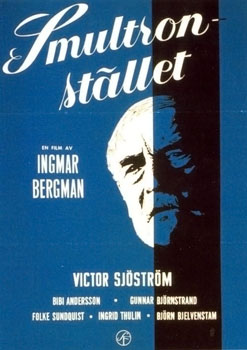
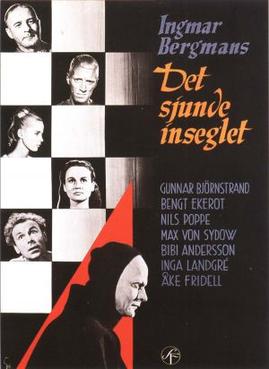
The year 1957 serves as the undisputed fulcrum of Bergman's career, highlighted by the miraculous dual release of The Seventh Seal and Wild Strawberries. These two films alone cemented his standing as a visionary capable of spanning historical epochs and intimate domestic spheres within months of each other. Critics often identify this period as the moment Bergman transitioned from his early melodramas into a mature, individual style. It was here that he began to synthesize his theatrical background with a purely cinematic language.
Throughout his storied career, Bergman remained obsessed with the spiritual condition of mankind. His background in Swedish theater and his strict religious upbringing deeply informed his cinematic worldview. By bringing rigorous intellectual debate and stark psychological realism to the silver screen, he forged a new path for art cinema. Audiences and critics alike were captivated by a director who refused to compromise his vision, ultimately leaving behind a legacy that continues to loom over practically all subsequent independent and arthouse filmmaking.
Thematic Preoccupations
The thematic bedrock of Bergman's filmography is a relentless exploration of existentialism, faith, and doubt. He constantly forces his characters to confront the silence of God and the terrifying finality of death. In The Seventh Seal, this is literalized through the iconic medieval allegory of a knight playing chess with Death. The game serves as a working meta-metaphor for Bergman's own cerebral analysis of mortality, showcasing pre-enlightenment souls grappling with questions of divine meaning in a plagued world.
Parallel to his theological inquiries is a deep fascination with memory exploration and the self-reflection journey. Bergman frequently uses the physical journey as a structural device to map the internal landscapes of his protagonists. In Wild Strawberries, an aging professor's road trip to receive an honorary degree becomes an introspective narrative laced with disappointment themes and a profound exploration of regret. Through these journeys, Bergman peels back the layers of his characters' defensive facades, revealing their core vulnerabilities.
Another recurring preoccupation is the ongoing warfare between intellect, emotion, and physical desire. His films meticulously dissect family dynamics and intimate character dynamics, often exposing the failure of intellectualism to provide emotional warmth. Characters like the aloof professor in Wild Strawberries or the cynical squire in The Seventh Seal represent different facets of this disconnect. Bergman's narratives ask whether hard-earned wisdom can bridge the gap between isolation and human connection.
Ultimately, Bergman balances his dark undertones with unexpected moments of grace, creating a complex emotional tapestry of gaiety and melancholy. He refuses to offer simple resolutions, instead leaning into a timeless quality that resonates across generations. Whether navigating the apocalyptic dread of medieval Sweden or the nostalgic atmosphere of modern memory, his work remains a definitive statement on the human condition.
Stylistic Signatures
Bergman's visual language is characterized by its lyrical craftsmanship and haunting atmosphere. He is a master of high-contrast black and white cinematography, utilizing stark lighting to externalize the internal turmoil of his characters. The opening nightmare sequence of Wild Strawberries is a prime example of his surrealist capabilities, featuring haunting visuals that blur the line between waking reality and subconscious dread. His imagery is deliberate, stripped of unnecessary ornamentation to present an undiluted essence of the psychological state.
A defining signature of his mise-en-scene is the extreme reliance on the human face. Bergman famously used the extreme close-up not merely as a reaction shot, but as a cinematic landscape in itself. By holding the camera on his actors as they deliver poetic dialogue, he creates an intense intimacy that traps the viewer in the emotional reality of the scene. This approach strips away the artifice of traditional staging, allowing the raw, poignant storytelling to take center stage.
Structurally, Bergman employs a fluid approach to time, memory, and reality. His editing rhythms often blend past and present without rigid demarcation. In Wild Strawberries, nostalgic flashbacks seamlessly intrude upon the present-day road trip, reflecting a stream of consciousness where the protagonist observes his younger self. This technique creates a profound narrative texture, simulating the unpredictable ways memory informs the present.
Furthermore, Bergman builds rich layers of intertextuality and homage into his styling. He frequently references scripture, classical literature, and the history of cinema itself. Casting silent film pioneer Victor Sjostrom in Wild Strawberries allowed Bergman to visually quote Sjostrom's own masterpiece, The Phantom Carriage. This brilliant use of casting as a stylistic tool bridges the gap between cinematic eras, deepening the thematic resonance of his work.
Recurring Collaborators
Bergman's remarkable consistency and depth were made possible by his reliance on a dedicated repertory company of actors and crew members. This tight-knit troupe functioned as a creative family, developing a shared shorthand that allowed them to tackle complex existential themes with nuance. By reusing the same ensemble across diverse historical and contemporary narratives, Bergman created a unified cinematic universe where the actors' familiar faces provided a comforting continuity amidst bleak subject matter.
Key among these frequent collaborators were Bibi Andersson and Gunnar Bjornstrand, both of whom delivered iconic performances in Wild Strawberries and The Seventh Seal. Andersson frequently embodied vitality, youth, and complex duality, capable of projecting both innocence and sharp modern cynicism. Bjornstrand often served as the worldly, pragmatic counterpart to Bergman's tortured dreamers, delivering dialogue with a biting, intellectual precision that grounded the films' lofty philosophical debates.
The dynamic of this ensemble was crucial to the intimate character dynamics that define Bergman's cinema. Because the actors trusted him and each other implicitly, they were willing to strip themselves bare emotionally. This trust allowed Bergman to push his cast into uncomfortable psychological territory, resulting in performances that are consistently hailed as masterpieces of naturalism and emotional courage.
Beyond his regular troupe, Bergman also engaged in deeply symbolic collaborations with cinematic legends. His partnership with Victor Sjostrom on Wild Strawberries is perhaps the most poignant example. By directing the man who had shaped early Swedish cinema, Bergman engaged in a cross-generational dialogue. Sjostrom's deeply vulnerable performance provided a profound anchor for the film, blending the director's radical storytelling with the foundational acting style of the silent era.
Critical Standing
Ingmar Bergman's critical standing is nearly peerless, universally recognized as a titan of global art cinema. The phenomenal reception of his 1957 releases catapulted him from a respected European director to an international cinematic icon. The Seventh Seal is routinely described by critics as a definitive statement, one that looms over practically all subsequent arthouse filmmaking. Publications like the Los Angeles Times and Variety have consistently praised his direction as masterful, highlighting the timeless classic quality of his profound narratives.
Historically, critics have heavily analyzed the religious and philosophical dimensions of his work, focusing on his heavily symbolic allegories of faith and doubt. Reviewers frequently compare his mid-career films to foundational texts, noting that his radical work of art reaches back to scripture, Cervantes, and Shakespeare. However, modern critical discourse, including perspectives from outlets like Slant Magazine, often emphasizes his self-awareness. Contemporary reviews praise films like Wild Strawberries for avoiding suffocating formality, celebrating instead the compassionate, intimate character dynamics that balance his cerebral analysis.
Throughout his career, Bergman invited masterpiece comparisons, with reviewers regularly ranking Wild Strawberries and The Seventh Seal alongside other monumental works like Fanny and Alexander, Smiles of a Summer Night, and silent classics like The Wind. His ability to vary his tone from melancholy to gaiety in deeply satisfying ways has earned him enduring respect. Critics view his work not merely as technical achievements, but as emotionally resonant explorations of the human condition.
Today, Bergman remains the definitive auteur of existentialism in film. His reputation has only solidified over time, with new generations of film students, filmmakers, and art critics turning to his filmography as an essential text. The cultural impact of his hauntingly beautiful imagery and dark undertones remains palpable, ensuring his place in the pantheon of cinema's most important and visionary artists.