Career Overview
James Kent has positioned himself within the landscape of contemporary cinema as a director interested in the dense, often unsettling intersection of history and human psychology. Although his filmography in this database highlights a singular major work, his approach to historical drama reflects a rigorous engagement with the past. His directorial vision is defined by an insistence on examining the darkest corners of human nature.
Kent focuses his lens on monumental events, choosing to explore them through intimately claustrophobic interpersonal conflicts. By narrowing the scope of grand historical narratives, he forces audiences to confront the psychological underpinnings of massive societal shifts. His work does not merely recount facts but rather interrogates the emotional and moral decay of his subjects.
Drawing comparisons to cinematic touchstones like Judgment at Nuremberg and Downfall, Kent occupies a specific niche in modern filmmaking. He bridges the gap between traditional historical epics and tightly wound psychological thrillers. His career trajectory suggests a filmmaker who is unafraid to tackle the weighty concepts of accountability and justice while maintaining a gripping narrative momentum.
Thematic Preoccupations
The thematic core of Kent's cinematic output is an obsessive inquiry into the nature of evil and the complex mechanics of justice. In Nuremberg, this preoccupation takes center stage through a rigorous examination of psychological manipulation. Kent repeatedly asks how ordinary human nature intersects with extraordinary monstrosity, stripping away the comfort of historical distance.
A prevailing sense of historical reckoning permeates his narrative structures. Kent refuses to let the past remain static, instead treating it as an active, volatile force that demands constant moral evaluation. The tension between institutional justice and personal accountability becomes a battleground where his characters must navigate their own complicity and trauma.
Furthermore, the dynamic of the psychological battle of wills is a recurring motif that drives his storytelling. Kent isolates his protagonists and antagonists, forcing them into intense ideological and emotional collisions. This cat-and-mouse framing serves as a microcosm for larger societal interrogations, making abstract concepts of guilt deeply personal and intensely claustrophobic.
Stylistic Signatures
Kent employs a visual language heavily reliant on claustrophobic intensity to mirror the psychological states of his characters. His mise-en-scene often traps individuals within rigid, oppressive spaces that visually articulate the historical weight of their circumstances. This confinement generates a relentless psychological tension that defines the pacing and rhythm of his work.
The cinematographic approach in Nuremberg is consistently described as visually compelling, utilizing tight framing and deliberate camera movements to emphasize the isolation of his subjects. Kent restricts the audience's perspective to amplify the intimate, often disturbing proximity to figures of historical infamy. This visual strategy demands an uncomfortable intimacy with the perpetrators of atrocities.
Beyond camera work, Kent orchestrates an atmosphere of gripping suspense through careful manipulation of tone and pacing. The editing rhythms favor prolonged, uncomfortable exchanges over rapid exposition, allowing the psychological manipulation between characters to unfold organically. This deliberate pacing ensures that the historical resonance of the narrative is felt viscerally rather than just understood intellectually.
Recurring Collaborators
Within the scope of his documented filmography, James Kent has not yet established a recurring ensemble of cast members across multiple projects. Instead, his approach to casting appears highly specialized, selecting actors capable of shouldering the immense historical weight of singular, monumental roles. This strategy demands performers who can navigate the complex psychological terrain of his narratives.
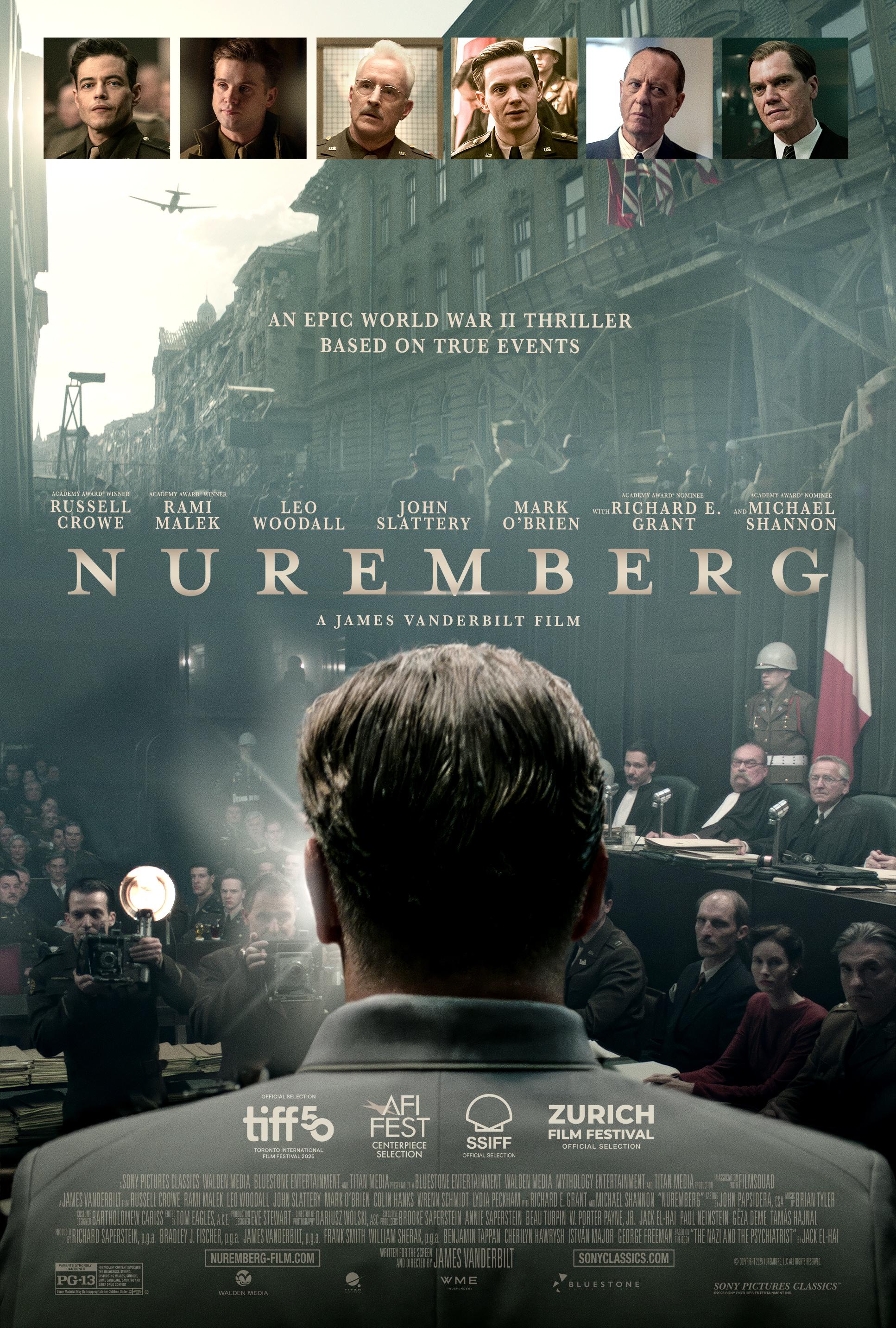
His collaboration with high-profile talent is marked by a focus on intense, character-driven performances that anchor his claustrophobic settings. In Nuremberg, Kent relies on the formidable screen presence of Russell Crowe, whose top-notch portrayal of Hermann Göring provides the necessary gravitational pull for the film's central conflict. Crowe's ability to project both menace and manipulation is central to executing Kent's vision of embodied evil.
However, this reliance on specific actor dynamics can sometimes yield disparate results. Kent's pairing of Crowe with Rami Malek illustrates a directorial willingness to experiment with contrasting performance styles, even when critics note an oddly passive contribution from the latter. The resulting cat-and-mouse dynamic remains central to his collaborative process, highlighting a directorial preference for casting contrasting temperaments to generate narrative friction.
Critical Standing
The critical reception of James Kent's work is characterized by deep respect for his ambitious subject matter and occasional reservations regarding execution. Critics frequently highlight his ability to generate genuine tension and praise his films as thought-provoking and historically resonant. His willingness to confront the darkest aspects of historical reckoning has earned him a reputation as a serious, intellectually rigorous filmmaker.
When compared to landmark films such as The Reader and Downfall, Kent is recognized for his commitment to examining the banality and complexity of evil. Reviewers consistently applaud his visually compelling execution and the gripping nature of his psychological thrillers. His films are often celebrated for their intense, claustrophobic atmospheres that successfully translate historical fact into visceral cinema.
Despite these accolades, Kent's critical standing is occasionally tempered by critiques of uneven performances and tonal inconsistencies. While some central performances receive widespread acclaim, others are noted as oddly passive, leading to a polarizing reception of his character dynamics. Nevertheless, Kent remains a significant voice in contemporary historical cinema, with his work continually sparking vital discourse on justice, accountability, and the complexities of human nature.