Career Overview
John Huston occupies a towering position in the history of American cinema. Operating within the classical Hollywood studio system, he distinguished himself as a filmmaker who favored uncompromising narratives over sanitized entertainment. His background as a writer deeply informed his directorial approach, allowing him to adapt complex literature into rigorous cinematic experiences. Huston possessed a singular talent for stripping away the artificial gloss of movie stars, revealing the flawed humanity underneath.
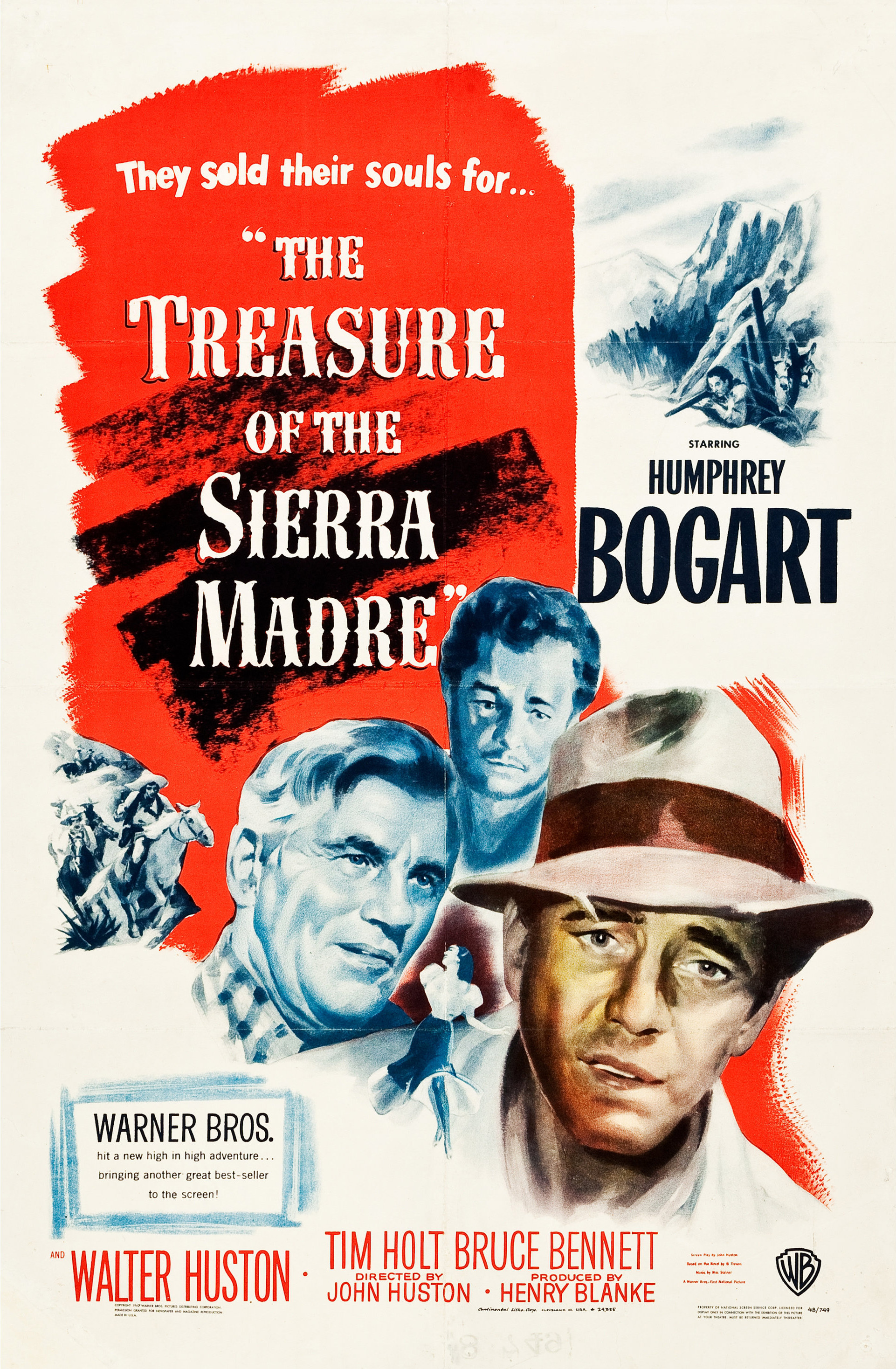
His development as a director is marked by a consistent migration toward stories of doomed quests and compromised morals. By the time he directed The Treasure of the Sierra Madre in the late 1940s, Huston had refined his authorial voice. He rejected the artificiality of soundstages, preferring to shoot in harsh locations that forced his actors to endure the physical realities of the environments they were meant to inhabit. This commitment to physical realism set a new standard for American film production.
Huston remains a central figure in cinematic history because he bridged the gap between classic Hollywood storytelling and the psychological complexity of modern cinema. He was a pioneer in demonstrating that audiences could remain riveted by deeply unlikable protagonists. His legacy is one of unwavering unsentimentality, securing his reputation as an architect of the American cinematic tragedy who consistently challenged the moral comforts of his era.
Thematic Preoccupations
The cinema of John Huston is fundamentally obsessed with the tragedy of the human condition, particularly as it is exposed under extreme pressure. He frequently constructs narratives where characters are thrust into desolate environments, both literal and psychological, to test the limits of their morality. His work asks a recurring philosophical question about what remains of human decency when civilization is stripped away. The pressure of circumstances serves as a crucible, revealing the innate flaws of his protagonists.
Foremost among these thematic preoccupations is the exploration of greed and its profoundly corrupting influence. Huston views avarice not merely as a character flaw but as a corrosive force that destroys comradeship and fractures the human soul. In works like The Treasure of the Sierra Madre, the pursuit of wealth is a doomed enterprise that inevitably leads to moral degradation. The treasure itself is often a psychological trap, a hollow prize that exposes the fragility of the men who chase it.
Huston also frequently returns to stories of loss and tragic character arcs, elevating pulp narratives to the level of classic literary tragedies. His films draw implicit comparisons to towering works of literature like King Lear, mapping out the inevitable downfall of men consumed by their own obsessions. He eschews traditional heroics, focusing instead on moral dilemmas and the unsettling realities of human suffering. In the Huston universe, failure is a constant, and the true measure of a person is how they face their inevitable defeat.
Stylistic Signatures
The stylistic signatures of John Huston are defined by a rigorous commitment to realistic portrayal and a rejection of artificial gloss. His visual language is grounded in capturing the physical toll of desolate settings on the human body. Huston favors location shooting in harsh, unforgiving terrains, utilizing the natural landscape as a physical manifestation of his characters internal moral decay. The desolate atmosphere is not merely a backdrop but an active participant in the psychological breakdown of the cast.
In his cinematic framing, Huston prioritizes realistic character development over empty cinematic spectacle. He routinely strips his actors of their traditional vanity, a technique notably applied to his work with established stars. His camera placement often isolates characters within a frame to emphasize their growing paranoia and the fracturing of their alliances. The editing rhythms in a Huston picture are methodical, allowing the suffocating tension of moral dilemmas to slowly suffocate the characters and the audience alike.
Huston frequently utilizes stark lighting and deep focus to emphasize the harshness of the environments and the grim realities of human suffering. His approach to sound and performance leans heavily into grit and exhaustion, forcing actors to externalize the psychological weight of their tragic arcs. By coaxing unvarnished performances from his cast, Huston creates an unsettling reality that lingers long after the final frame. The director builds a cohesive aesthetic of failure, visually mapping the descent of complex characters into madness and ruin.
Recurring Collaborators
While the specific database of his work may highlight a limited cross section of his filmography, John Huston built his cinematic legacy on a foundation of remarkable acting collaborations. His ability to draw career defining work from his performers is a hallmark of his directorial method. He frequently worked with actors who possessed an innate toughness, utilizing their established personas only to subvert them. Huston had a unique talent for coaxing gritty, uncompromising turns out of both established stars and reliable character actors.
One of the most significant collaborative dynamics in his career involved the legendary Humphrey Bogart. Under the direction of Huston, Bogart was encouraged to shed every ounce of star ego, allowing him to delve into deeply unlikable and morally compromised territory. Their partnership yielded performances of startling vulnerability and paranoia. Bogart became the perfect avatar for the quintessential Huston protagonist, a man whose cynical exterior masks a profound psychological fragility that fractures under the weight of greed.
Equally vital to his cinematic achievements was his collaboration with his own father, Walter Huston. Directing his father required a unique artistic trust, resulting in performances of incredible vitality and nuance. Walter Huston often functioned as the moral anchor or the seasoned voice of tragic prophecy in these narratives, famously executing memorable physical performances that grounded the heavy philosophical themes of the work. Together, this familial partnership resulted in cinematic moments of enduring cultural resonance that defined the golden age of American film realism.
Critical Standing
The critical standing of John Huston has remained exceptionally high since the peak of his career, with contemporary critics and film historians continually reappraising the depths of his cinematic pessimism. Early reviews recognized his technical mastery and his unflinching willingness to tackle mature, tragic themes within the confines of commercial Hollywood. Over the decades, his reputation has solidified as one of the premier architects of the American character study. Critics routinely celebrate his work as enduring classic cinema that has aged remarkably well due to its unsentimental core.
Within academic and critical discourse, Huston is frequently compared to other masters of cinematic realism and psychological torment. Analysts regularly draw parallels between his explorations of avarice and the classic silent film Greed. Similarly, his thematic focus on obsessive, doomed quests links his work to the darker western traditions seen in the film The Searchers, while his adventure narratives share dramatic DNA with works like The African Queen. These classic literary comparisons elevate Huston from a mere genre craftsman to a profound commentator on the spiritual rot of modern man.
Today, the critical consensus positions Huston as a crucial link between classical Hollywood and the New Hollywood movement of the decades that followed. His insistence that movies could be about complex character flaws rather than simple heroics paved the way for a generation of independent filmmakers. Critics continue to laud his unparalleled ability to seamlessly blend the gritty textures of adventure films with the intellectual rigor of classic tragedy. Ultimately, his legacy endures because his uncompromising vision of human nature under pressure remains as potent and unsettling today as it was upon its initial release.