Career Overview
Kristoffer Borgli has rapidly emerged as a distinct voice in contemporary cinema, carving out a space for himself alongside Scandinavian provocateurs like Ruben Östlund and Lars von Trier. The Norwegian filmmaker navigates the uncomfortable intersections of modern neuroses and interpersonal dynamics. His trajectory illustrates a swift ascent from European arthouse circuits to prominent American productions. While his earlier works and his previous feature Dream Scenario established his penchant for merciless satire, his 2026 film The Drama cements his position as a director uniquely capable of dissecting romantic and societal conventions. By migrating his distinctly Nordic brand of high-anxiety comedy to American settings, Borgli bridges the gap between European cynicism and Hollywood romantic comedy tropes. Borgli occupies a fascinating space in current cinematic history. He belongs to a generation of filmmakers who use high-concept premises not for spectacle, but for psychological excavation. His willingness to interrogate the darkest human impulses without sacrificing pleasurable engagement marks him as a crucial figure for contemporary film scholars studying the evolution of the modern dark comedy.
Thematic Preoccupations
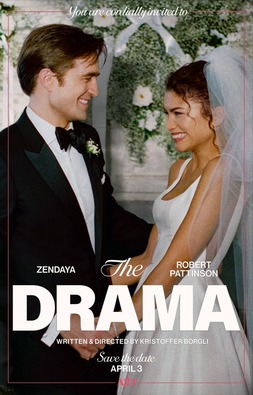
A pervasive theme in the cinema of Kristoffer Borgli is the fragility of the human ego when subjected to immense, often absurd, social pressure. His work operates as a merciless satire of modern relationship dynamics and moral hypocrisies. In The Drama, he explores the terrifying precipice of commitment, turning the impending chaos of a wedding into an interrogation of love and infatuation. He consistently asks how much of our civilized behavior is merely a thin veneer covering our darkest human impulses. Borgli is obsessed with the concept of humiliation as a transformative experience. His characters are frequently placed in high-concept, high-anxiety situations where their deepest flaws are laid bare for public consumption. This thematic preoccupation aligns his work with the uncomfortable comedy found in Thomas Vinterberg films like The Celebration, where family secrets and societal taboos erupt violently into the open. Yet, Borgli approaches these eruptions with a unique blend of detachment and genuine curiosity. Despite the violent themes and cynical observations that permeate his narratives, Borgli often subverts expectations by introducing moments of surprising vulnerability. His exploration of unconditional love is never straightforward, frequently complicated by bizarre impossible situations. Ultimately, he forces his audience to confront the messy realities of human connection, blending romantic comedy elements with an ominous undercurrent that refuses to offer easy answers.
Stylistic Signatures
Visually and tonally, Borgli’s films are characterized by a coldly amusing detachment that amplifies the inherent awkwardness of his narratives. His camera often operates as a passive, almost apathetic observer to the escalating humiliation of his subjects. This stylistic restraint serves to heighten the tension, creating a suffocating atmosphere of high anxiety that contrasts sharply with the seemingly mundane environments in which his characters exist, such as coffee shops or wedding venues. Borgli frequently employs a messy, intentionally disjointed mise-en-scène to mirror the psychological unraveling of his protagonists. While his setups may initially resemble conventional romantic comedies, he quickly subverts this aesthetic with jarring editing rhythms and sudden injections of violent themes. This edgy style prevents the audience from ever feeling entirely secure, ensuring that the pleasurable engagement of the comedy is always undercut by an ominous dread. The juxtaposition of sophisticated visual language with what some critics have termed juvenile humor is a deliberate stylistic choice. Borgli uses this friction to disorient the viewer, oscillating between highbrow cinematic homage and base, visceral shock. His sound design and musical cues often function contrapuntally, layering sweet or romantic melodies over scenes of profound discomfort, thereby reinforcing the overarching sense of merciless satire that defines his directorial signature.
Recurring Collaborators
While Kristoffer Borgli has yet to establish a lengthy roster of recurring on-screen collaborators across his filmography, his casting choices reveal a strategic approach to performance and persona. He frequently enlists actors with firmly established public images and systematically dismantles those personas on screen. In The Drama, the casting of highly recognizable stars like Zendaya and Robert Pattinson is crucial to the film's satirical project, leveraging their inherent charisma to ground an otherwise absurd premise. Pattinson and Zendaya are tasked with navigating a tonal tightrope, balancing believable emotional truth with the highly contrived, high-concept situations Borgli engineers. By placing established leading actors in states of profound vulnerability and humiliation, the director strips away the glamour typically associated with Hollywood romance. This approach requires actors willing to embrace an impudently funny and physically demanding style of performance. Behind the camera, Borgli has found a supportive home within the American independent studio system, particularly through collaborations with distribution companies like A24. These institutional partnerships are vital to his creative process, providing the necessary resources to attract widely recognized talent while protecting the messy, boundary-pushing elements of his artistic vision. This synergy between arthouse sensibilities and star-driven packaging has become a hallmark of his current cinematic phase.
Critical Standing
Kristoffer Borgli occupies a highly polarized but undeniably central position within contemporary critical discourse on cinematic satire. Critics frequently draw comparisons between his work and the films of Thomas Vinterberg and Lars von Trier, particularly citing the thematic echoes of The Celebration and Melancholia. Like those Scandinavian predecessors, Borgli is celebrated for his willingness to probe the limits of audience endurance, mastering the art of the mercilessly uncomfortable comedy. However, his critical reception is characterized by a sharp divide. Supporters praise his films as brilliant, bloody interrogations of human impulses, noting that beneath the aimless edginess lies a profound critique of modern life. Reviewers from Slant Magazine have commended his ability to unearth a believable truth within absurd, contrived situations, highlighting the pleasurable engagement of his narratives. For these critics, his work is a vital evolution of the high-concept dark comedy. Conversely, detractors frequently accuse Borgli of prioritizing provocation over substance. Reviews from outlets like RogerEbert.com have described his approach as smugly juvenile and characterized his high-concept premises as overworked. Some critics find his detached, apathetic tone alienating, arguing that his reliance on humiliation borders on the sadistic. Despite these varied reactions, the intensity of the debate surrounding his filmography confirms Borgli as a filmmaker who consistently challenges cinematic conventions and demands rigorous critical attention.