Career Overview
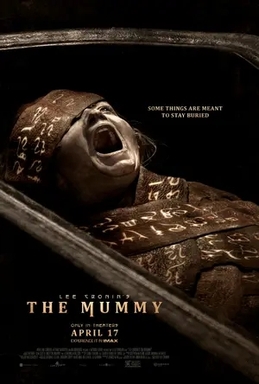
Lee Cronin emerged as a contemporary horror filmmaker whose career trajectory reflects the modern studio reliance on elevating genre specialists to franchise helmers. His work is characterized by a brutal approach to established intellectual properties and a willingness to subvert audience expectations through visceral spectacle. The database highlights his 2026 feature, Lee Cronin's The Mummy, which places him squarely in the lineage of filmmakers tasked with resurrecting dormant monster franchises for a modern audience.
Critical evaluations frequently position Cronin alongside horror heavyweights like Sam Raimi, Fede Alvarez, and William Friedkin, specifically invoking films like The Exorcist, The Ring, and Evil Dead Rise. These comparisons suggest a director attempting to bridge the gap between independent, practical splatter and massive studio grandiosity. His work attempts to elevate the supernatural procedural into an exploration of deep seated familial trauma, though this ambition is often contested by reviewers.
While his projects initially promise a revitalization of horror tropes through an intimate examination of domestic spaces, his execution frequently indicates a pivot toward expensive, spectacle driven cinema. Critics often view his career arc as one oscillating between genuine genre affection and programmatic studio mandates. Ultimately, Cronin stands as a highly visible yet critically divisive figure in the modern cinematic landscape, a director who continually wrestles with the tension between original vision and franchise exploration.
Thematic Preoccupations
Cronin consistently interrogates the vulnerability of family dynamics, often weaponizing the bonds of kinship against his own protagonists. In Lee Cronin's The Mummy, a joyous family reunion morphs into a nightmare, underscoring his preoccupation with the domestic unit as a site of ultimate betrayal and horror. For Cronin, the home and the family are not sanctuaries but inescapable traps where the uncanny takes root and flourishes.
Beyond the destruction of the family unit, Cronin explores profound themes of possession and bodily autonomy. His narratives often function as supernatural procedurals that inevitably devolve into visceral chaos. The violation of the human form serves as a central motif, with characters losing control of their own bodies to ancient or malevolent forces. This focus raises persistent questions about identity, the fragility of the human condition, and the sheer terror of physical corruption.
However, this thematic ambition is frequently overshadowed by a heavy reliance on violence as spectacle. Reviewers consistently note a sense of existential disappointment in his narratives, suggesting that the underlying philosophical concerns are often abandoned in favor of immediate shock value. The investigation of possession ultimately gives way to a body-horror extravaganza, prioritizing visceral thrills over sustained psychological inquiry.
Furthermore, Cronin engages with cultural anxieties, integrating contemporary fears into his horror frameworks. Critics have noted that his work sometimes reflects broader societal issues, such as the American tendency to stray into foreign deserts. Yet these allegorical elements often serve as mere background texture rather than fully developed theses, leading to narratives that feel programmatically upsetting rather than genuinely profound.
Stylistic Signatures
Visually, Cronin operates in a register of aggressive maximalism, often prioritizing stylistic excess over spatial coherence. His visual language is heavily indebted to the splatstick traditions of early Sam Raimi and Peter Jackson, characterized by brashly violent compositions and a lurid color palette. He frequently utilizes split diopter shots to artificially compress foreground and background, creating an inescapable, claustrophobic tension within the frame.
This reliance on ostentatious camera movements and stylized framing often manifests as an overcompensation for narrative thinness. Critics frequently cite his preference for squishy gore and visceral practical effects, noting that his films often become numbingly relentless. The camera is treated not merely as an observer but as an active, sometimes cruel participant in the degradation of the characters, lingering heavily on the physical destruction of the human body.
Pacing remains a highly contentious element of Cronin's stylistic signature. His editing rhythms tend to favor an overindulgent accumulation of schematic set pieces, barraging the audience with shock after shock. This approach creates a claustrophobic intensity, particularly during sequences confined to tight, squirm-inducing domestic spaces, but it also heavily risks exhausting the viewer.
The aural landscape of his cinema matches its visual aggression, marked by a clattery, oppressive sound design that heightens the physical impact of the violence. Yet beneath this cacophony, Cronin exhibits a surprisingly lurid sense of humor. This juxtaposition of intense bodily trauma with a dark, almost child-like cruelty distinguishes his aesthetic, even when the broader narrative architecture struggles to support the weight of his grand, gruesome visions.
Recurring Collaborators
Unlike many auteurs who cultivate a distinct ensemble of returning actors to ground their thematic obsessions, Cronin exhibits a highly fluid approach to casting. He famously lacks a fixed troupe of on-screen collaborators across his major studio efforts. The absence of a recurring ensemble in the provided database suggests a director who views his human subjects as transient vessels for his horror mechanics rather than enduring muses.
This lack of consistent on-screen partnerships reinforces the deeply isolating nature of his narratives. By continually introducing new faces to his cinematic universe, Cronin denies the audience a familiar anchor, heightening the sense of unpredictability and existential dread. The actors become isolated entities, parachuted into his punishing worlds only to face relentless, gory torment without the comfort of recognizable cinematic kin.
Behind the camera, Cronin's collaborations appear primarily driven by the specific demands of the franchise or intellectual property at hand. The shifting nature of his production teams reflects the realities of contemporary studio filmmaking, where directors are often slotted into pre-existing corporate structures to deliver a specific product. Consequently, the true constant in his filmography is not a human collaborator but rather the persistent, overbearing presence of the director's own stylistic excesses and his unwavering commitment to the spectacle of bodily destruction.
Critical Standing
Lee Cronin occupies a deeply polarizing space within modern film criticism, straddling the line between a visionary purveyor of grotesque thrills and a director symptomatic of franchise fatigue. While some critics champion his brash, unapologetic approach to genre cinema, celebrating his lurid humor and visceral intensity, the broader critical consensus points to a profound narrative emptiness at the core of his work. His efforts to elevate horror often result in minimal audience engagement due to uninspired storytelling.
Evaluators frequently invoke the legacies of Sam Raimi, Fede Alvarez, and William Friedkin when dissecting Cronin's output. However, these comparisons often highlight his shortcomings rather than elevating his status. While he shares the gleeful sadism of early Raimi or the grim tone of Bring Her Back, critics argue that Cronin lacks the foundational character drama that anchors the best works of his predecessors. Reviews of Lee Cronin's The Mummy repeatedly condemn the film as threadbare, noting that a numbing succession of set pieces quickly exhausts its welcome.
A recurring critique centers on his tendency toward stylistic overcompensation. Respected publications point out that his child-like sense of cruelty and reliance on excessive gore frequently distract from gaping plot holes and predictable narrative trajectories. The tension between his desire to craft a thought-provoking supernatural procedural and his impulse to deliver a commercial body-horror extravaganza often results in a fractured directorial vision.
Ultimately, Cronin's critical standing is that of a technically proficient provocateur whose ambitions frequently outpace his storytelling capabilities. He is widely recognized for his ability to engineer squirm-inducing moments of visceral terror and for aggressively pushing the boundaries of studio-sanctioned violence. Yet until he manages to marry his aggressive visual style with compelling, original drama, he remains a frustrating figure for critics who see a filmmaker trapped in a cycle of uninspired, gory repetition.