Career Overview
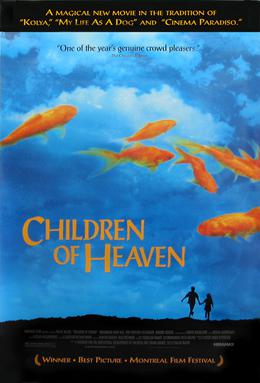
Majid Majidi emerged in the late twentieth century as a defining voice in the Iranian New Wave, though his trajectory diverged significantly from his more formally radical contemporaries. Beginning his career as an actor before transitioning to writing and directing, Majidi cultivated a distinct authorial signature built upon emotional directness and profound humanist empathy. His early directorial efforts, such as the 1996 film The Father, established his foundational interest in portraying the world from a child's perspective. This approach would later crystallize in his breakthrough masterpiece, Children of Heaven.
Unlike many filmmakers who rely on structural subversion to challenge audiences, Majidi grounds his work in traditional narrative frameworks, utilizing them to explore deep socioeconomic divides. His cinematic evolution reflects a deliberate refinement of these classical storytelling techniques. By focusing on the lives of impoverished citizens in modest Iranian neighborhoods, he captures the texture of everyday survival with remarkable authenticity. His films act as a bridge between the insular struggles of marginalized communities and the broader global art house audience.
The historical significance of Majidi lies in his ability to translate hyper-specific cultural nuances into universally resonant cinema. Through a meticulous calibration of tone, he elevated the working-class Iranian experience to the forefront of international critical discourse. His body of work demonstrates a steadfast commitment to portraying grace within destitution, securing his position as a preeminent figure in contemporary world cinema and an indispensable chronicler of the human condition.
Thematic Preoccupations
At the core of Majidi's filmography is a relentless exploration of poverty and the extremes of socioeconomic disparity. He frequently places young, sad-faced characters in situations where they must navigate a harsh adult world, transforming seemingly minor incidents into profound moral crises. In Children of Heaven, the loss of a single pair of shoes serves as a microcosm for broader systemic deprivation. This deceptively simple narrative device allows the director to interrogate class divides, contrasting almost medieval settings with the opulent environments of high-rises and luxury homes.
The innocence of youth is another recurring thematic obsession. Majidi utilizes the child's perspective not merely for sentimental effect, but as a critical lens through which to examine social inequities. By framing institutional and economic failures through the eyes of children, he strips away adult rationalizations of poverty. This vantage point emphasizes self-reliance and the purity of family bonds, illustrating how deeply structural issues impact the most vulnerable members of society.
Furthermore, Majidi's work is celebrated for its emotional clarity and the universality of its themes. While deeply rooted in specific Iranian neighborhoods, his narratives address fundamental human struggles that transcend cultural boundaries. Reviewers frequently note his films contain a serious subtext beneath their gentle surfaces. Through a rigorous comparison of cultures and socioeconomic classes, Majidi questions the moral responsibilities of the privileged few while championing the resilience found in impoverished communities.
Stylistic Signatures
Majidi's visual language is characterized by a pellucid and gentle aesthetic, relying on a simplicity and grace that masks sophisticated technical execution. His films are wonderfully shot, often employing naturalistic lighting and fluid camerawork to capture the raw texture of modest Iranian neighborhoods. He frequently places the camera at a lower height to simulate a child's eye level, formally anchoring the audience in the spatial reality of his young protagonists. This choice reinforces the imposing nature of the adult world and the architectural divides of the city.
Narratively, his stylistic signature involves the accumulation of entertaining vignettes that build toward a profound emotional climax. Majidi eschews the bombastic spectacle associated with commercial entities like Godzilla, Mutant Turtles, or Power Rangers, favoring intimate, everyday stakes. The pacing of his films relies on the quiet rhythms of daily survival, utilizing long takes and patient editing to draw viewers into the immediate present of the characters' struggles. This deliberate pacing highlights the tension inherent in mundane tasks, such as sharing a single pair of shoes.
Sound design and music in Majidi's cinema operate with the same understated elegance as his imagery. He limits intrusive scoring, allowing the ambient noises of the city to provide an authentic auditory backdrop. When music is utilized, it serves to heighten the emotional directness of a scene without veering into melodrama. By balancing gentle humour with stark realism, his stylistic approach achieves a delicate equilibrium, ensuring that the serious subtext of his work is felt rather than explicitly stated.
Recurring Collaborators
A notable aspect of Majidi's filmmaking process is his frequent reliance on non-professional actors and unknown performers, rather than maintaining a stable troupe of famous recurring cast members. This casting philosophy is essential to achieving the documentary-like realism that defines his narratives. By casting individuals whose lived experiences closely mirror those of his characters, he strips away the artifice of traditional performance. This approach demands a highly collaborative and patient directing style, particularly when guiding child actors through complex emotional arcs.
In Children of Heaven, the performance elicited from young Mir Farrokh Hashemian exemplifies this collaborative dynamic. Majidi works intimately with his cast to capture unmannered, spontaneous reactions, blending scripted drama with naturalistic observation. The absence of recognizable stars forces the audience to engage with the characters strictly on the terms of the narrative, reinforcing the immersive quality of his impoverished settings. The director's partnership with his cast is built on mutual trust, allowing for moments of profound vulnerability to translate seamlessly to the screen.
Behind the camera, Majidi's collaborations with cinematographers and production designers are equally crucial. Together, they meticulously construct the visual dichotomies of his films, contrasting the cramped, almost medieval neighborhoods with the expansive luxury of wealthy districts. While individual technicians may vary across his filmography, the resulting aesthetic remains remarkably consistent. The overarching collaborative effort in a Majidi production is fundamentally dedicated to serving the emotional truth of the story, prioritizing authenticity over cinematic flourish.
Critical Standing
Majid Majidi occupies a highly respected, though sometimes debated, position within international film criticism. Upon his emergence, critics inevitably drew comparisons between his work and other prominent Iranian exports. Reviewers frequently evaluated his films alongside Jafar Panahi's The White Balloon, noting similarities in their focus on children navigating urban landscapes. However, critics quickly recognized that Majidi's output must be judged on its own considerable merits, distinct from the broader political allegories of his contemporaries.
Western critics have consistently praised Majidi for his emotional clarity and directness. Publications such as the Los Angeles Times and RogerEbert.com have championed his ability to craft narratives that are simultaneously accessible and intellectually rigorous. His films are celebrated for possessing a universal appeal that speaks directly to adults and children alike. The critical consensus highlights his unique talent for packaging severe socioeconomic critiques within deceptively simple, pellucid children's tales.
Over time, Majidi's reputation has solidified as a master of humanist cinema. While some strict formalists initially scrutinized his gentle tone and reliance on emotional catharsis, contemporary critical discourse overwhelmingly validates his approach. His insistence on highlighting family bonds and self-reliance amidst crippling poverty is now viewed as a radical act of empathy. Today, Majidi is celebrated as a vital cinematic voice whose beautifully crafted vignettes continue to resonate across cultural divides.