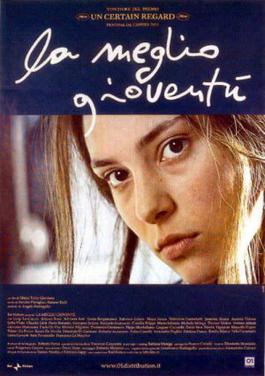
Career Overview
Marco Tullio Giordana occupies a distinct echelon in modern European cinema. His work bridges the gap between intimate human drama and sweeping national history. Best known for his monumental achievement in The Best of Youth, Giordana constructs narratives that function simultaneously as personal chronicles and sociological documents. His cinematic vision is deeply rooted in the tradition of the Italian social novel, translating literary ambition into visual form.
The chronological development of his career demonstrates a persistent fascination with the sociopolitical fabric of Italy. Emerging from a cinematic tradition that includes both neorealist observation and operatic melodrama, Giordana found his definitive voice by mapping the tectonic shifts of Italian society from the 1960s to the dawn of the new millennium. By anchoring these massive historical transitions in the lives of ordinary citizens, particularly through the lens of siblings, he achieved a resonant synthesis of the personal and the political.
Within the broader landscape of cinema history, Giordana is frequently discussed alongside auteurs who favor expansive, novelistic storytelling. His output reflects an enduring commitment to examining the intersection of personal identity and historical destiny. Rather than relying on fragmented, postmodern narrative techniques, Giordana champions a classical, linear progression that accumulates emotional weight over extensive running times, cementing his position as a master of the contemporary cinematic epic.
Thematic Preoccupations
At the core of Giordana's filmography is a profound investigation into the friction between personal identity and sweeping political upheaval. In works like The Best of Youth, he presents Italian history not merely as a backdrop but as an active, sometimes destructive force that shapes the trajectory of his characters. The evolving sociopolitical climate from the 1960s onward dictates the choices, ideological divides, and ultimate fates of his protagonists. This dynamic allows Giordana to ask how individual agency survives amidst massive cultural transformations.
Family dynamics serve as the primary laboratory for these thematic inquiries. Giordana utilizes the familial unit, particularly the diverging paths of brothers, as a microcosm for a divided nation. The sibling relationship becomes an allegorical canvas where differing political ideologies, coping mechanisms, and philosophical outlooks are tested. This intimate character exploration grounds the broader historical context, ensuring that the exploration of national trauma remains deeply human rather than purely didactic.
Furthermore, love and loss operate as the emotional anchors of his narratives. The epic scope of his storytelling allows these motifs to develop organically over decades. Characters experience profound grief and eventual reconciliation, mirroring the resilience required to navigate modern European history. By intertwining these personal heartbreaks with the collective memory of a nation, Giordana achieves a thematic resonance that rivals the literature of Gabriel Garcia Marquez, exploring generational cycles of idealism, disillusionment, and eventual acceptance.
Stylistic Signatures
Giordana's stylistic approach is defined by its ambitious narrative scale and classical visual language. Eschewing the frantic pacing common in contemporary cinema, he opts for a measured, deliberate rhythm that honors the passage of time. This editing strategy allows the emotional depth of the performances to dictate the tempo of the film. The camera observes rather than intrudes, granting the audience the necessary distance to appreciate the historical context while maintaining an intimate connection with the subjects.
His mise en scene is characterized by a precise attention to geographical and architectural shifts. Giordana constructs sequences that leverage significant cultural and natural landmarks to reflect internal emotional states. Memorable set pieces unfold within evocative spaces such as underground temples compromised by floodwater, the Coliseum in Rome, and remote Norwegian waterfalls. These locations are not merely picturesque settings but act as spatial representations of cultural preservation, decay, and personal isolation.
The integration of history and geography is further amplified by his expansive spatial mapping. Giordana frequently relocates his characters across diverse landscapes, tracing journeys from Rome to Norway, Turin, Florence, and Palermo. This geographical mobility reflects the restless search for meaning among a generation unmoored by political instability. Through this deliberate visual strategy, the landscapes of Europe become a psychic map of the characters internal evolution, reinforcing the epic storytelling that defines his cinematic signature.
Recurring Collaborators
The vast, novelistic nature of Giordana's work requires a highly synchronized ensemble of creative partners, even if specific recurring actors are not the defining feature of his public auteur persona. Within the expansive framework of films like The Best of Youth, Giordana relies on sprawling, multigenerational casts capable of sustaining complex emotional arcs over extensive cinematic real estate. This demands an exceptional level of performance continuity and directorial trust.
The casting process for such historical epics focuses on performers who can convincingly age and evolve alongside the shifting political landscape of Italy. The actors tasked with portraying brothers and extended family members must navigate deeply intricate, decades long character developments. Their performances anchor the narrative, ensuring that the philosophical and historical concepts remain grounded in believable human interaction and deeply felt psychology.
Behind the camera, Giordana relies on skilled cinematographers and production designers to build out his ambitious worlds. To authentically recreate the environments of Rome, Turin, and Florence across multiple decades, his creative team must demonstrate rigorous historical accuracy. The collaboration between director, production designer, and location scout is critical in achieving the immersive, lived in quality of the worlds he constructs. This synergy allows the physical environments to speak as loudly as the dialogue, supporting the narrative architecture of his films.
Critical Standing
The critical reception of Marco Tullio Giordana is largely defined by immense respect for his narrative ambition and emotional intelligence. Critics routinely celebrate his ability to craft towering works of narrative fiction that function with the density and structural elegance of a classic novel. Reviewers point to the extraordinary emotional depth of his storytelling, frequently describing his output as a monumental and moving achievement within the landscape of modern European film.
Within academic and critical discourse, Giordana's work invites prestigious comparisons to some of the most celebrated sweeping sagas in global art. His examinations of national identity have drawn direct parallels to Edgar Reitz's Heimat trilogy and Rainer Werner Fassbinder's Berlin Alexanderplatz. Additionally, the generational scope and poetic melancholy of his narratives have prompted critics to compare his thematic depth to Gabriel Garcia Marquez's One Hundred Years of Solitude. These comparisons solidify his reputation as a filmmaker operating at the highest levels of literary and cinematic ambition.
Over time, Giordana's standing has evolved into that of a premier chronicler of the Italian soul. While some filmmakers are praised for formal subversion, Giordana is revered for his mastery of the long form narrative. He proves that classical narratives driven by strong characters still possess the power to dissect complex political histories. His reputation among cinephiles and scholars remains rooted in his profound capacity to humanize history, rendering the macrocosm of national upheaval through the intimate, recognizable lens of family and fractured love.