Career Overview
Masaki Kobayashi stands as a monumental figure in Japanese cinema, celebrated as a clear-eyed social critic who boldly challenged institutional authority. Born in the early twentieth century, his trajectory from a philosophy student to a reluctant soldier deeply informed his cinematic worldview. His wartime experiences instilled in him a profound skepticism of hierarchical power structures, a perspective that would come to define his entire body of work.
His early career was marked by a steady development of these anti-authoritarian sentiments. Critics point to The Human Condition as a colossal achievement that solidified his reputation as a filmmaker unafraid of confronting the darkest chapters of history. This epic undertaking set the foundation for his later period films, where he would distill his sweeping historical critiques into tighter, more claustrophobic narratives.
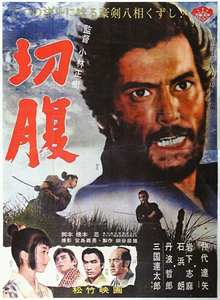
The release of Harakiri in 1962 represented a pivotal moment in his artistic evolution. By subverting familiar genre stories like the traditional samurai film, Kobayashi proved that historical cinema could serve as a razor-sharp instrument for contemporary social critique. He transformed the aestheticized violence of the samurai epic into a rigorous interrogation of traditional values, securing his place as a master of global cinema whose influence remains potent today.
Thematic Preoccupations
The cinema of Masaki Kobayashi is fundamentally consumed by the exploration of human tragedy brought about by rigid, institutional doctrines. He consistently interrogates the Bushido Code, not as a noble standard of conduct, but as an oppressive framework that forces individuals into impossible moral corners. By focusing on concepts like ritual suicide and honor, Kobayashi dismantles the romanticized mythology of the samurai. He exposes a system where human life is casually discarded to preserve the vanity of a ruling class.
Morality and situational ethics form the philosophical core of his narratives. His protagonists often find themselves trapped between their innate humanist values and the absolute obedience demanded by society. The story of destitute samurai Hanshirō Tsugumo seeking to commit seppuku is less about a literal death wish and more about forcing a reckoning with an unjust system. The tragic tale of his son-in-law, Motome Chijiiwa, highlights how blind adherence to tradition results in devastating cruelty.
These intimate tragedies inevitably scale up into broader political debates. Kobayashi uses the historical setting of 17th-century Japan to mirror the fascist ideologies he witnessed during the Second World War. The recurring theme of a lone individual standing against a monolithic, hypocritical authority appears time and again. Critics frequently draw comparisons to Samurai Rebellion, another work that underscores his obsession with the heavy price of maintaining personal integrity in a world governed by corrupt institutional power.
Stylistic Signatures
Kobayashi is celebrated for an aesthetic approach that relies heavily on elegantly composed frames and meticulous cinematography. His films are beautifully photographed, utilizing striking geometric compositions that emphasize order, tradition, and control. However, this formal beauty is deliberately deceptive. By presenting a visually pristine world, Kobayashi heightens the shock of the sudden, brutal violence that inevitably ruptures the pristine surfaces of his sets.
Critics often describe his spatial dynamics as a deathtrap slowly closing around its characters. Kobayashi traps his protagonists within the symmetrical, rigid architecture of feudal estates. The camera movements are deliberate and slow, reflecting the suffocating nature of the societal rules binding the characters. This visual claustrophobia physically manifests the thematic weight of institutional oppression, leaving the audience feeling just as cornered as the desperate samurai on screen.
His narrative structure and editing rhythms are equally vital to his stylistic signature. Reviewers frequently draw a Rashomon comparison when discussing his use of fractured, subjective storytelling. Kobayashi builds tension methodically through deliberate pacing and extended dialogue sequences. The truth is revealed layer by layer, escalating the psychological pressure until the formal restraint finally gives way to explosive, kinetic action sequences that lay bare the savagery of the system.
Recurring Collaborators
While the provided database does not isolate a specific stable of recurring cast members across multiple films, Kobayashi's rigorous directorial vision fundamentally relies on deep, intense collaborations with his performers. His narratives demand a very specific type of acting that bridges theatrical stoicism with profound psychological realism. The portrayal of destitute warriors requires actors who can internalize immense rage and project it outward through the most minimal, controlled gestures.
The director's approach to his leading men serves as a vehicle for his humanist values. In casting actors to play characters like Hanshirō Tsugumo, Kobayashi seeks performers capable of carrying the thematic weight of a human tragedy on their shoulders. These collaborations are defined by an intense focus on dialogue delivery and physical discipline. The actor must hold the center of an elegantly composed frame while simultaneously tearing down the mythological facade of the samurai system.
Behind the camera, Kobayashi operates with a unified artistic vision that demands exactitude from his crew. The stunningly photographed visuals require cinematographers who understand how to light both the oppressive architecture of a feudal courtyard and the anguished micro-expressions of a cornered man. Similarly, the meticulous sound design and haunting scores in his films act in concert with the editing to tighten the narrative deathtrap, proving that his mastery of cinema is a deeply collaborative, albeit heavily guided, triumph.
Critical Standing
Masaki Kobayashi occupies an unshakable position in the pantheon of cinema history, universally recognized as a clear-eyed social critic. Critics revere him for taking familiar genre stories and infusing them with urgent, radical politics. Rather than offering escapism, his work exhorts the viewer to confront systemic cruelty. His reputation was cemented early on by international critics who recognized that his historical epics were actually blistering attacks on modern institutional complicity.
His place within critical discourse is often defined by comparisons to other monumental works of Japanese and global cinema. Reviewers frequently invoke a Rashomon comparison to contextualize his sophisticated, multi-perspective narrative structures. Likewise, a Samurai Rebellion comparison is often used to trace the consistency of his anti-authoritarian themes across his filmography. More modern retrospectives even employ a Mishima: A Life in Four Chapters comparison to discuss the aestheticization of ritual suicide and the collision of art, politics, and extreme ideology.
Over the decades, his standing has only grown in stature among film students, art critics, and cinephiles. Contemporary critics, such as those at Slant Magazine, praise his films for laying bare the violence inherent in the samurai system. As global audiences continue to grapple with questions of morality, honor, and political debates, Kobayashi's uncompromising, elegantly composed cinema remains a vital, deeply relevant touchstone in the study of humanist filmmaking.