Career Overview
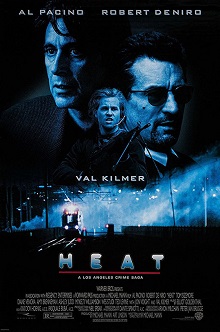
Michael Mann occupies a singular position in contemporary American cinema as a poet of urban alienation and obsessive professionalism. Emerging from the television landscape of the 1980s, Mann developed a rigorous authorial voice that treats genre frameworks not as limitations but as expansive canvases for exploring the human condition. His trajectory from stylish procedural television to sprawling cinematic epics reveals a director consistently refining his thematic preoccupations. With works like Heat, Mann elevated the crime thriller into the realm of modern tragedy, utilizing the narrative engine of the heist film to conduct a profound examination of late capitalist masculinity.
The foundation of Mann's cinematic architecture rests on his unparalleled ability to merge the visceral with the existential. He approaches the crime genre with an almost anthropological precision, mapping the intricate ecosystems of law enforcement and criminal enterprises. This duality is central to his worldview, wherein cops and crooks are not merely opposing forces but mirror images of the same intense drive. They are constituted like armies, complete with hierarchies, tactical doctrines, and specialized skill sets. Mann's background in documentary and television journalism informs this granular attention to procedural detail, grounding his stylized universes in a gritty, palpable reality.
As his career progressed, Mann's critical reputation solidified around his capacity to blend spectacular action with deep emotional resonance. He transformed the American crime film by insisting that the internal landscapes of his characters are just as compelling as their external conflicts. By treating genre tropes with utmost seriousness, Mann transcends the traditional boundaries of the thriller. His enduring legacy lies in his creation of a distinctive cinematic vocabulary that continues to influence a generation of filmmakers, setting a benchmark for narrative complexity and visual sophistication that remains largely unmatched in mainstream Hollywood.
Thematic Preoccupations
The thematic core of Michael Mann's filmography is anchored by a profound fascination with obsession and the psychological toll of ultimate professionalism. His protagonists are defined not by their moral alignments but by an unyielding devotion to their chosen professions. In Heat, this dynamic is vividly dramatized through the parallel lives of a seasoned detective and a master thief, both of whom sacrifice personal stability at the altar of their respective crafts. Mann posits that true mastery in any high stakes arena necessitates a profound, isolating dedication, effectively rendering his characters monks of their trades who must remain detached from traditional domesticity.
Intertwined with this exploration of professionalism is a pervasive sense of loneliness and urban alienation. Mann's characters frequently navigate vast, indifferent metropolitan landscapes that reflect their internal isolation. The gripping and intense storytelling prevalent in his work is often driven by the existential dread that accompanies their solitary pursuits. Rather than focusing on simplistic battles between good and evil, Mann constructs thought-provoking narratives around the thematic complexity of morality. His characters exist in a twilight zone of ethical ambiguity, where the line between lawman and outlaw blurs into a shared psychological depth driven by mutual respect and mirrored neuroses.
Furthermore, Mann utilizes the architecture of epic crime dramas to explore the dynamic character arcs of men grappling with their own obsolescence and the heavy burdens of their choices. He is less interested in moral questions than in professionalism as a code worth adhering to, suggesting that in a chaotic world, one's strict adherence to a personal ethos is the only source of meaning. This philosophical concern elevates his narratives beyond standard procedural beats, transforming tales of crime and obsession into grand, modern myths. The exploration of intense emotions within these rigid, disciplined lives creates a powerful tension that remains a hallmark of his enduring thematic legacy.
Stylistic Signatures
Michael Mann's directorial style is immediately recognizable through its sleek, atmospheric visual language and rigorous formal control. He is a master of utilizing the modern cityscape as both a backdrop and a psychological landscape. His compositions often feature characters dwarfed by modernist architecture or bathed in the neon luminescence of the nocturnal city. This stylish approach serves a narrative purpose, translating the internal alienation of his subjects into tangible visual geometry. The meticulous framing and use of negative space underscore the isolation of his protagonists, creating a visual syntax that emphasizes their detachment from the conventional world.
In the realm of cinematography, Mann is celebrated for his pioneering use of lighting and camera movement to generate a gripping, immersive reality. His transition to high-definition digital filmmaking in his later career allowed him to capture the ambient light of urban environments with unprecedented texture, but even his earlier celluloid work, such as Heat, demonstrates a relentless pursuit of nocturnal authenticity. His camera oscillates between cold, objective wide shots and hyperintimate close-ups, effectively charting the psychological exploration of his characters. This juxtaposition of the macro and the micro forces the audience to engage simultaneously with the grand scale of the narrative and the nuanced, intense emotions of the individuals within it.
Equally vital to Mann's stylistic signature is his sophisticated approach to editing and sound design. The pacing of his films is expertly crafted to balance moments of quiet, brooding introspection with explosive, kinetic action sequences. This rhythmic control keeps viewers on edge, maintaining a taut tension throughout expansive runtimes. Furthermore, his integration of music is never merely complementary but operates as an active narrative force. The sweeping, often synthesized soundscapes merge seamlessly with diegetic noises like the staccato rhythm of gunfire, creating an auditory experience that is as complex and enveloping as his captivating storytelling techniques.
Recurring Collaborators
While Michael Mann is recognized as a definitive auteur with a singular vision, his ambitious projects rely on a network of highly skilled creative partnerships. In front of the camera, his reliance on powerhouse ensemble acting is a cornerstone of his cinematic success. Although specific actors may not appear across multiple films in every phase of his career, his method of casting involves pairing formidable talents to generate palpable onscreen friction. The dynamic interplay between heavyweight actors provides the necessary gravitational pull for his expansive narratives, allowing the in-depth psychological themes to anchor the explosive action.
Behind the camera, Mann demands a level of technical excellence that mirrors the intense professionalism of his fictional characters. His collaborations with visionary cinematographers are essential to realizing his precise visual aesthetic. Together, they have consistently pushed the boundaries of film and digital technology to capture the specific tonal qualities of the nocturnal urban environments that define his work. These partnerships are instrumental in developing the sleek, accomplished visual palette that translates his complex narratives into immersive sensory experiences.
Additionally, Mann's work with sound designers and composers reveals a deep understanding of auditory world-building. The auditory landscapes of his films are meticulously constructed, requiring collaborators who can blend atmospheric musical scores with hyperrealistic sound effects. The resulting sonic environments do not merely accompany the visual elements but actively enhance the psychological depth and gripping tension of the narrative. Through these strategic collaborations, Mann ensures that every technical aspect of his production is flawlessly aligned with his overarching directorial vision, resulting in works that are meticulously controlled and completely involving.
Critical Standing
Michael Mann's critical standing has evolved from his initial reception as a purveyor of stylish genre exercises into widespread recognition as one of the premier American auteurs of his generation. Early in his career, critics occasionally mistook his sleek aesthetics for superficiality, focusing on the stylized surfaces of his films. However, with the release of magnum opuses like Heat, the critical discourse fundamentally shifted. Reviewers began to fully appreciate the in-depth psychological themes and the thematic complexity of morality that underpin his visually arresting set pieces. He is now celebrated for treating the crime thriller with the narrative weight and philosophical rigor of classic tragedy.
Within the broader context of cinematic history, Mann's