Career Overview
Paul Thomas Anderson occupies a singular space in modern American cinema, evolving from a brash chronicler of California subcultures to a chronicler of profound American mythologies. His career arc reflects a transition from the frenetic energy of early projects to the imposing, historical grandeur seen in later works. Critics often view his trajectory as a maturation from precocious homage to an intelligent artistic vision that rivals the titans of twentieth-century filmmaking.
Comparisons to Stanley Kubrick are not unfounded when observing Anderson's structural ambitions and his desire to push the boundaries of cinema. Reviews of his sprawling narratives often invoke Citizen Kane for their sweeping examinations of power, wealth, and the corruption inherent in the American dream. He is frequently described as a filmmaker who brings a complete cinematic vision to his projects, packing a literal film-school-in-a-box for each production.
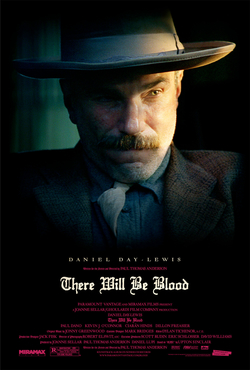
Despite his relatively sparse filmography, Anderson's position in cinema history is cemented by his willingness to take enormous risks. His evolution from the ensemble tapestries of Boogie Nights and Magnolia to the singular, unrelenting focus of There Will Be Blood demonstrates a relentless pursuit of uncompromising intensity. He stands as a central figure for cinephiles who value directorial audacity and a fierce commitment to aesthetic perfection.
Thematic Preoccupations
A core thematic preoccupation across Anderson's mature filmography is the brutal psychodrama that emerges from unchecked ambition. His narratives frequently dissect the dark heart of American capitalism, exploring how greed and the pursuit of power lead to severe moral decay. This is not merely a political critique but a deeply personal exploration of humanity stripped down to its most ruthless instincts, leaving emotional devastation in its wake.
The director continuously returns to the concept of exploitation, particularly the ways individuals leverage belief, natural resources, and familial bonds for personal gain. His protagonists often exist in a state of isolation, driven by a terrifying determination that alienates them from any sense of community. The resulting dynamic provides an exciting human drama that serves as a poignant reflection on the cost of empire-building, focusing on characters who substitute genuine connection for ruthless chicanery.
Furthermore, Anderson is obsessed with the collision of primeval forces, such as the battle between industry and spirituality. The conflicts in his narratives are rarely resolved cleanly, leaning instead into excessive difficulty and moral ambiguity. He forces audiences to confront the terror and poignancy of lives consumed by towering ambition, painting an incendiary portrait of the American pioneer spirit as an engine of both creation and destruction.
Stylistic Signatures
Anderson's visual language is characterized by a sweeping cinematic vision that balances grandiose scope with an obsessive attention to aesthetic minutiae. His camera movements are often described as vivid and overly assertive, asserting a heavy authorial presence that guides the viewer through his dense historical tapestries. This bristlingly ambitious approach results in a visual style that creates considerable heat and light, leaving a lasting aesthetic impact on the audience.
The director is famous for an uncompromising intensity in his mise-en-scene, utilizing meticulously constructed environments that feel both authentic and fabulously cracked. Whether capturing the stark, sunbaked landscapes of early oil fields or the claustrophobic interiors of a burgeoning tycoon's mansion, Anderson frames his subjects to emphasize their isolation and dominance. His compositional choices deliberately overwhelm the viewer, matching the massive scale of the thematic material.
Additionally, the pacing and editing rhythms in Anderson's work contribute to an emotionally searing experience. He does not shy away from sequences of extended silence followed by sudden, driving auditory assaults. While specific technical collaborators vary, the resulting symphony of sound and image is consistently designed to push the boundaries of traditional narrative cinema, resulting in works that demand patient engagement and deep critical reflection.
Recurring Collaborators
While Anderson's broader filmography features a shifting constellation of actors, his approach to collaboration is defined by his ability to extract career-defining performances from his leading men. The database notes a lack of heavily recurring cast members across multiple films in this specific context, yet his dynamic with actors remains a cornerstone of his critical acclaim. He builds environments where performers are encouraged to access reserves of uncompromising intensity, often resulting in towering, monolithic character studies.
The most prominent example of this collaborative alchemy is his work with Daniel Day-Lewis. Anderson provides a sprawling, historical canvas that allows for performances of immense scale, sometimes bordering on what detractors might call industrial-scale ham, yet widely celebrated as cinematic perfection. The director creates the space for actors to inhabit physically demanding and psychologically exhausting roles, transforming eccentric character details, such as a bow-legged walk or a prominent mustache, into iconic cultural touchstones.
Behind the camera, Anderson's requirement for a specific, overly assertive visual style dictates a rigorous collaboration with his cinematographers and production designers. His demand for aesthetic minutiae ensures that every crew member is aligned with his sweeping cinematic vision. This cohesive partnership across departments is what ultimately enables his films to transcend standard period pieces, transforming them into immersive, brutal psychodramas.
Critical Standing
The critical reputation of Paul Thomas Anderson is marked by a fascinating duality, characterized by both rapturous acclaim and vocal accusations of excessive difficulty. For many art critics and cinephiles, his work represents the pinnacle of modern American filmmaking. Supporters point to his intelligent artistic vision and the awe-inspiring scope of his narratives, frequently elevating his projects alongside masterpieces like McCabe & Mrs. Miller and Citizen Kane. In these circles, films like There Will Be Blood are deemed perfect, albeit demanding works that require multiple viewings to fully absorb.
Conversely, a persistent contingent of critics finds his work overrated, pointing to an over the top sensibility that occasionally collapses under its own weight. Detractors have labeled his films as fabulously cracked or even truly awful, arguing that his unrelenting drive for epic drama can result in performances that slip into parody. Some reviewers find his heavy-handed aesthetic choices to be overly assertive, creating an alienating barrier between the audience and the human drama at the core of the narrative.
Despite these polarities, Anderson's place within critical discourse is undeniably central. Even his harshest critics acknowledge that his films do serious aesthetic damage and possess a strange, potent energy that cannot be ignored. His standing has evolved from a celebrated wunderkind to a master of the cinematic form whose failures are often deemed as fascinating as his triumphs. Ultimately, his willingness to push the boundaries of cinema ensures that every release is a major critical event.