Career Overview
Phil Lord, operating almost exclusively in tandem with his creative partner Christopher Miller, occupies a fascinating space in contemporary Hollywood. Initially emerging as a prominent voice in subversive, self-aware studio comedies and boundary-pushing animation, Lord has steadily expanded his canvas to encompass large-scale live-action spectacles. His trajectory from animated features to live-action blockbusters reveals a filmmaker adept at smuggling sincere emotional cores into high-concept commercial properties.
The early phases of Lord's career were defined by a distinct brand of kinetic irreverence. He built his reputation by taking seemingly unpromising intellectual properties, such as a nostalgic television show adaptation or a toy-based movie, and transforming them into critically acclaimed successes. This foundational period established his reputation as an ironic deconstructionist who nonetheless possessed a deep affection for his characters.
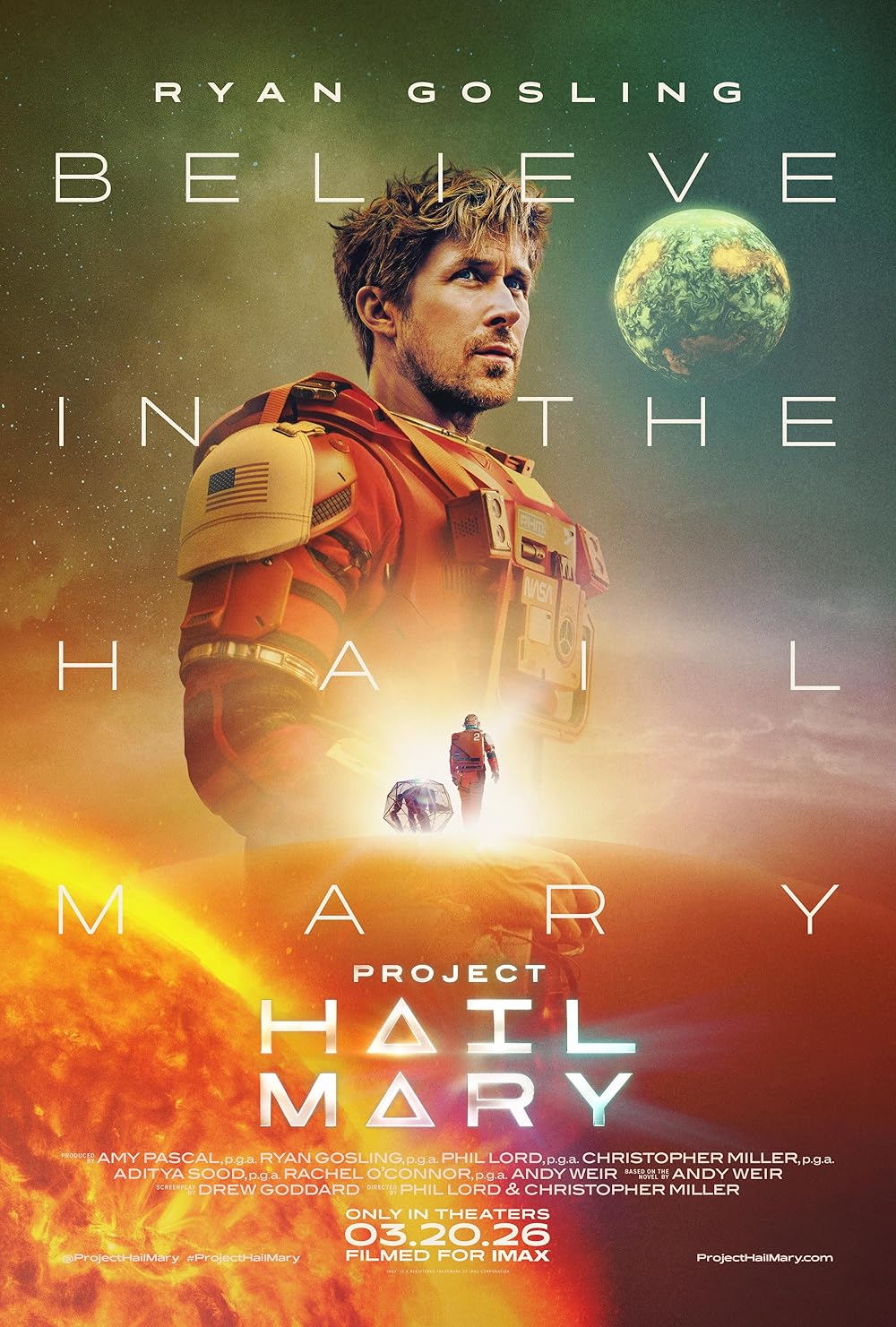
With the release of Project Hail Mary, Lord signals a definitive maturation in his directorial ambitions. Pivoting toward the realm of the lavishly scaled environmental outer-space thriller, he demonstrates an eagerness to tackle existential themes of human survival. This evolution from rapid-fire comedic structures to the methodical tension of hard science fiction adaptations positions Lord not merely as a master of pastiche, but as a versatile architect of the modern cinematic blockbuster.
Thematic Preoccupations
At the center of Lord's cinematic philosophy is an unwavering optimism regarding human resilience and the necessity of teamwork. Even when navigating the terrifying isolation of deep space in Project Hail Mary, his narratives reject the nihilism often found in contemporary science fiction. Instead, he foregrounds the capacity for ingenuity and the fundamental human drive to protect others. His protagonists are rarely chosen ones of destiny, but rather capable, often humble professionals thrust into extraordinary circumstances.
The concept of existential isolation serves as a frequent thematic crucible in his recent work. By isolating a protagonist lightyears from Earth, Lord strips away societal safety nets to examine the core of human identity and morality. Yet, this loneliness is ultimately counteracted by themes of friendship and unexpected fellowship. The narrative trajectory consistently arcs toward connection, whether through the memory of humanity left behind or through unprecedented alliances forged in the void.
Environmentalism and the preservation of existence operate as the macro-stakes in Lord's storytelling. The threat of an extinguishing sun or ecological collapse provides a ticking clock that elevates the intimate, quiet moments of his characters. This juxtaposition of macrocosmic dread and microcosmic, heartwarming interpersonal dynamics forms the thematic engine of his work. Lord asks not just how humanity will survive, but what essential qualities, such as empathy and humor, make that survival worthwhile.
Furthermore, Lord frequently interrogates the archetype of the cinematic hero. Through characters like Ryland Grace, he champions the unassuming, quietly brainy science geek over the traditional, stoic action hero. This thematic focus on intellect, humility, and collaborative problem-solving demystifies the blockbuster protagonist, suggesting that salvation lies not in martial prowess, but in the rigorous application of science and the capacity for cross-cultural, or even cross-species, understanding.
Stylistic Signatures
Stylistically, Phil Lord operates at the intersection of grandiose blockbuster spectacle and intimate, character-driven comedy. His visual language is characterized by a bright, accessible aesthetic that actively avoids the oppressive grimness typical of modern dystopian cinema. Even in the vacuum of space, Lord employs a visual palette that feels strangely inviting, creating what critics have described as a wholesome or even cozy atmosphere within the context of high-stakes science fiction.
A defining hallmark of Lord's directorial approach is his deft control of tonal shifts, seamlessly blending humorous elements with suspenseful, emotional storytelling. He carries over the comedic timing honed in his earlier animated projects into live-action suspense, using lighthearted moments to relieve tension and ground his characters. This puppyish silliness, while occasionally jarring to purists of hard science fiction, serves to humanize his protagonists, making their perilous situations feel more immediate and relatable.
In terms of cinematic pacing, Lord favors a methodical accumulation of small victories, reflecting the scientific method inherent in his source material. The editing rhythms in his science fiction work often mirror the problem-solving process itself, building suspense through the trial and error of engineering and physics. This procedural approach, interspersed with vast, awe-inspiring wide shots of interstellar environments, grounds the fantastical elements in a tactile, grounded reality.
Despite the shift toward massive scale, Lord remains committed to a fundamentally accessible cinematic language. His films are often described as having a television-dinner quality, a descriptor that underscores their comforting, meticulously packaged structure. By wrapping complex scientific concepts and existential dread in a lavish, feel-good package, Lord proves his mastery of the Hollywood vernacular, utilizing the stylistic tools of the populist blockbuster to deliver thought-provoking narratives.
Recurring Collaborators
Any analysis of Phil Lord's directorial profile is inherently incomplete without acknowledging Christopher Miller, his indispensable creative partner and co-director. The Lord and Miller partnership functions as a singular authorial voice in modern Hollywood, characterized by a shared sensibility that marries irreverent humor with profound sincerity. Their collaborative process is defined by an ego-less exchange of ideas, resulting in films that feel incredibly cohesive despite balancing multiple, often competing tones.
While the current database notes a lack of recurring cast members across their entire filmography, the specific casting choices in their individual projects are crucial to their success. In Project Hail Mary, the collaboration with Ryan Gosling is particularly illuminating. By casting an actor known for both brooding intensity and sharp comedic timing, Lord finds a perfect avatar for his unique brand of unassuming heroism. Gosling's performance bridges the gap between the directors' comedic instincts and the dramatic requirements of a survival thriller.
Beyond actors and co-directors, Lord's collaboration with source material authors plays a vital role in his creative output. His adaptation of Andy Weir's hard science fiction novel demonstrates a deep respect for the original text's scientific rigor, even as he filters it through his own populist lens. This synergy between the literary architect of the narrative and the cinematic interpreters ensures that the adaptation retains the intellectual core of the book while gaining the cinematic propulsion necessary for a global audience.
The behind-the-scenes collaborations in Lord's films also point toward a preference for artisans who can balance scale with warmth. While specific cinematographers and composers rotate, the resulting aesthetic consistency suggests strong, unified leadership from Lord and Miller. They consistently surround themselves with visual effects teams capable of rendering vast cosmic phenomena that still feel deeply connected to the intimate, emotional journeys of the human characters at the center of the frame.
Critical Standing
Phil Lord occupies a highly respected, if somewhat anomalous, position within contemporary critical discourse. Reviewers frequently marvel at his ability to consistently deliver high-quality, thought-provoking cinema wrapped in the guise of mainstream, commercial entertainment. Early in his career, critics often expressed surprise at the intelligence and heart of his films, treating each success as a minor miracle. Over time, however, this surprise has evolved into a steady expectation of quality and narrative ingenuity.
With his foray into large-scale science fiction, critical comparisons have inevitably shifted from comedic touchstones to heavyweights of the genre. Reviewers actively place Lord's work in conversation with monumental space epics such as The Martian, Gravity, and 2001: A Space Odyssey. While some critics argue his films possess a more wholesome, populist flavor than the austere classics of the genre, they universally acknowledge his technical proficiency and his mastery of blockbuster mechanics.
There remains a compelling tension in how critics evaluate the tonal balance of his films. Some reviewers celebrate the giddy, wonderfully optimistic nature of his intergalactic epics, praising the infusion of warmth into the cold expanse of space. Others, however, occasionally critique the lingering traces of his comedic past, noting moments of puppyish silliness that may undercut the gravity of the existential stakes. Yet, even his detractors concede that this blend of sincerity and humor is the very engine of his mass appeal.
Ultimately, Phil Lord's critical standing rests on his reputation as one of the most reliable and innovative architects of the modern feel-good blockbuster. He is celebrated for crafting emotional storytelling that honors the intelligence of the audience while providing the sweeping thrills expected of studio tentpoles. By successfully translating dense, scientifically rigorous narratives into lavish, accessible cinema, Lord has secured his legacy as a filmmaker who bridges the gap between cerebral science fiction and undeniable cinematic joy.