Career Overview
Quentin Jerome Tarantino emerged in the early 1990s as a defining auteur of American independent cinema. His arrival signaled a seismic shift in storytelling, introducing audiences to a brash, energetic style that completely revitalized the crime genre. With a background steeped in a boundless love for cult cinema, Tarantino positioned himself as a cinematic curator. He effortlessly translates forgotten pulp fiction influences and marginalized genres into a highly stylized, mainstream cinematic language that continues to captivate global audiences.
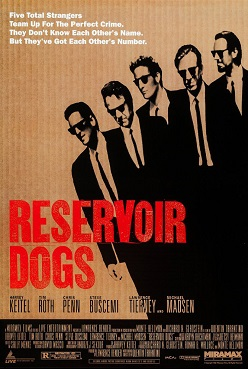
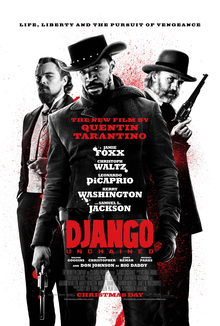
His career arc demonstrates a fascinating evolution from the gritty realism of the contemporary crime thriller to sprawling, historical revisionist epics. Reservoir Dogs introduced his audacious storytelling style on an intimate scale, utilizing a confined setting to maximize tension. Decades later, his ambitions expanded significantly. Films like Django Unchained showcase his transition into grand cinematic mash-ups, where he tackles monumental historical traumas with the same provocative energy that defined his debut.
Within cinema history, Tarantino occupies a rare space where critical acclaim meets immense cultural impact. Any new Quentin Tarantino release is widely considered a major cinematic event. Critics frequently compare his early impact to that of Martin Scorsese and Stanley Kubrick, noting that his debut was an extraordinarily impressive masterclass in tension. He has built a legacy not only as a director but as an influential film historian who shares his encyclopedic knowledge with audiences, never patronizing them and always trusting their capacity to engage with his boldly confrontational visions.
Thematic Preoccupations
Across his filmography, Tarantino constantly returns to provocative themes of revenge, loyalty, and betrayal. His narratives are frequently built around violent confrontations that test the moral boundaries of his characters. In Reservoir Dogs, the focus is on a group of criminals whose operation unravels, leading to a tense exploration of paranoia and loyalty within an inherently untrustworthy criminal underworld. The menacing atmosphere forces the characters to reveal their true nature under extreme duress.
A secondary, yet deeply profound preoccupation is the intersection of history, exploitation, and retribution. In Django Unchained, Tarantino confronts the brutal history of American slavery, utilizing the framework of a genre film to examine unconscionable inhumanity. By transforming a freed slave into an agent of bloody vengeance, he interrogates systemic cruelty while simultaneously delivering engaging revenge narratives. This thematic blending challenges traditional historical discourse, replacing passive victimhood with stylized brutality and triumphant retribution.
Furthermore, the concept of identity and performance acts as a continuous thematic undercurrent. His characters are often defined by the roles they play to survive. The color-coded criminals of his heist film adopt aliases to mask their vulnerabilities, while the bounty hunters of his westerns rely on theatrical deception to infiltrate hostile environments. This performative survival mechanism highlights a recurring philosophical concern regarding how individuals construct their personas in violently chaotic worlds.
Stylistic Signatures
The visual language of Quentin Tarantino is instantly recognizable, characterized by an entertaining visual style that blends gritty realism with highly stylized choreography. His approach to violence is famously unapologetic and intense, yet critics consistently note that it is meticulously choreographed rather than arbitrarily deployed. Whether depicting a jewelry heist gone awry or a bloody shootout on a southern plantation, the stylized brutality functions as an operatic release of carefully constructed narrative tension.
His editorial rhythms are deeply intertwined with his groundbreaking use of nonlinear narrative structures. Tarantino frequently fractures time, presenting events out of chronological sequence to manipulate perspective and heighten suspense. This structural audacity ensures that the pacing remains tense and unpredictable. The fragmented timeline of his debut established a brash storytelling technique that forces the audience to actively piece together the intersecting fates of his ensemble casts.
Auditory elements, specifically stylized dialogue and curated soundtracks, are equally crucial to his stylistic signature. His scripts are celebrated as marvels of invention, filled with prolonged conversational exchanges that build a menacing atmosphere just before violence erupts. Additionally, his mise-en-scene heavily incorporates cinematic homage, utilizing visual references to spaghetti westerns and martial arts cinema. He often makes a spectacle of the human body, such as highlighting bodily markings or framing costume reveals with the slowed-down triumphalism of a superhero origin, cementing his status as a brilliantly audacious visual storyteller.
Recurring Collaborators
While explicit casting crossover is not identified across the specific films in this limited dataset, Tarantino is deeply reliant on strong ensemble casts to execute his demanding, dialogue-heavy scripts. The group dynamic is an essential component of his narrative construction. His films function as theatrical stages where actors must master a brash storytelling tone to sell both the gritty realism of a botched heist and the grandiosity of an operatic western.
In Reservoir Dogs, the ensemble functions as a cohesive unit of tension. The intricate interplay between the surviving criminals drives the central mystery of the undercover cop. This demands a cast capable of delivering stylized dialogue with rhythmic precision while maintaining an intensely menacing atmosphere. The collaborative effort between the director and his actors turns a confined space into a masterclass in psychological warfare.
For Django Unchained, the collaborative scale becomes significantly more operatic. The director relies on masterful actors to navigate the tonal shifts between pitch-black comedy and horrific violence. Performers like Jamie Foxx, Christoph Waltz, Leonardo DiCaprio, and Samuel L. Jackson are tasked with bringing cinematic mash-ups to life, delivering performances that come with guns and metaphors blazing. Samuel L. Jackson, in particular, creates a chilling character masterpiece that highlights the director's ability to extract career-defining work from his ensembles.
The most consistent recurring collaborator in his filmography is arguably the canon of cinema itself. His ongoing dialogue with the cinematic past acts as a silent creative partner, informing every stylistic choice and audacious narrative pivot. By constantly referencing influences like Mandingo and classic spaghetti westerns, Tarantino collaborates with film history to build a wholly unique contemporary vision.
Critical Standing
Tarantino occupies a monumental and highly scrutinized space in contemporary film criticism. Critics routinely hail his work as brilliantly audacious, often comparing his raw directorial energy to that of Martin Scorsese with references to Mean Streets. His debut film was immediately recognized as an extraordinarily impressive entry into the crime thriller canon, earning immense praise for an assured and confident direction that felt entirely unprecedented in American independent cinema.
The critical discourse surrounding his filmography often centers on his controversial, yet masterfully executed, cinematic homage to violence. While a subset of critics occasionally questions the sheer volume of intense violence, the overwhelming critical consensus praises the stylized and choreographed nature of these sequences. Reviewers frequently note that his scripts are marvels of invention, carefully balancing brutal storytelling with an engaging, brutally entertaining experience that never loses its narrative focus.
In his later career, films like Django Unchained have sparked intense, layered discourse regarding his treatment of historical trauma. Critics applaud his audacious approach to slavery and brutal history, blending exploitation references with classical western motifs. These mash-ups are widely considered to defy comparison, resulting in wildly exciting returns to form. Ultimately, his critical standing is that of a groundbreaking provocateur and a passionate cinephile, respected for an uncompromising vision that continues to shape modern cinematic vocabulary.