Career Overview
Éric Toledano occupies a distinct and often polarizing position within modern French cinema, operating as a primary architect of the contemporary populist blockbuster. His career is defined by a remarkable ability to synthesize complex sociological issues into highly accessible, commercially dominant narratives. Unlike auteurs celebrated for formal radicalism, Toledano has built his reputation on the monumental cultural impact of his social comedies. His work consistently bridges the divide between provincial domestic cinema and global export, creating phenomena that demand attention from both mass audiences and academic sociologists.
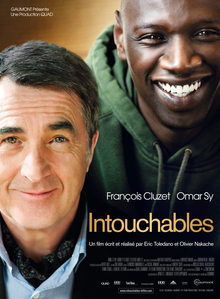
The trajectory of his career was permanently altered by the release of The Intouchables in 2011. The film did not merely achieve commercial success; it became a defining cultural event of the post-2007 French political era. Attracting millions of viewers in a matter of days, the project solidified Toledano as a filmmaker uniquely attuned to the collective anxieties and desires of the French public. This singular achievement elevated him from a director of standard domestic comedies to an international cultural exporter.
Historically, Toledano can be situated within the lineage of directors who prioritize broad resonance over exclusive, highbrow artifice. While his placement in the pantheon of cinematic visionaries is debated by art critics, his status as a pivotal figure in the commercial evolution of European cinema is undeniable. He constructs his filmography in direct conversation with the shifting demographics of France, utilizing mainstream entertainment as a delivery mechanism for conversations about integration, wealth, and systemic disenfranchisement.
Thematic Preoccupations
The thematic bedrock of Toledano's cinema is the rigid class disparity that defines modern society, particularly within the multicultural landscape of contemporary France. He is endlessly preoccupied with the collision of distinct socioeconomic spheres. By forcing characters from vastly different backgrounds into intimate, unavoidable proximity, he interrogates the invisible walls that separate the ultra-wealthy from the marginalized. These collisions serve as the catalyst for his primary narrative engine, which is the forging of unexpected friendships across deep social divides.
Multiculturalism operates not just as a backdrop in his work, but as a central thematic commodity. Critics have noted that Toledano recognizes the inherent value, and occasionally the commercial viability, of exploring racial and cultural intersections. His narratives often function as subversive social comedies that challenge systemic prejudices while simultaneously leaning on recognizable cultural tropes. This duality creates a complex thematic web where inspirational personal growth is sometimes achieved through the utilization of broad racial stereotypes.
Ultimately, Toledano is obsessed with the mechanics of the feel-good narrative and the concept of mutual salvation. His protagonists, regardless of their financial standing or physical capabilities, are inherently broken individuals who find restoration through platonic devotion. While some analytical circles dismiss these themes as predictable or simplistic, the director persistently returns to the restorative power of human connection, asking whether empathy can truly overcome structural inequality.
Stylistic Signatures
The visual language of Éric Toledano is characterized by its functional transparency, actively avoiding dazzling mise-en-scene in favor of immediate narrative clarity. His camera work is designed to remain invisible, serving solely as an unobtrusive window into the lives of his characters. This approach eschews formalist experimentation for a well-mounted, classical style of filmmaking that prioritizes performance and comedic timing over aesthetic audacity. The framing is consistently egalitarian, placing subjects from disparate worlds on equal visual footing to underscore their burgeoning connections.
Despite the reliance on a largely conventional cinematic apparatus, Toledano demonstrates a keen understanding of kinetic pacing. He often utilizes energetic sequences, such as fresh and unpredictable car chases, to inject vitality into otherwise dialogue-heavy, character-driven scenarios. This energetic rhythm is heavily reliant on the interplay of music and editing, which work in tandem to construct an uplifting, forward-driving momentum. The editing rhythms are deliberately tailored to maximize comedic punchlines and emotional payoffs.
Perhaps the most distinct stylistic signature is his unabashed use of emotional manipulation techniques, which he deploys with unapologetic precision. Toledano engineers his films to elicit a highly specific, heartwarming response, relying heavily on the innate chemistry of his lead actors to elevate broad-stroke culture clashes. He crafts environments where audience affection is inextricably linked to the characters on screen, ensuring that the viewer's emotional journey mirrors the triumphs and tribulations of the protagonists.
Recurring Collaborators
While comprehensive database records may not formally flag an extensive troupe of recurring cast members across his wider filmography, the collaborative ethos of Toledano's filmmaking is entirely dependent on the alchemy between his leading performers. His cinematic approach dictates that the director must act as a facilitator of chemistry rather than a rigid dictator of action. The success of his narratives hinges on the symbiotic partnerships he cultivates on set, demanding intense collaboration from the actors who must shoulder the emotional weight of his formulaic scripts.
Toledano relies heavily on casting actors capable of elevating what critics often describe as walking tangles of class signification. His directorial process involves working closely with performers to transcend the clichéd backstories provided by the screenplay. By fostering an environment where natural charisma can flourish, he allows his actors to bring a lived-in authenticity to roles that might otherwise read as simplistic archetypes. This collaborative dynamic is the central engine of his subversive storytelling.
The partnership between the director and his actors ultimately functions as a protective measure against the inherent risks of sentimental filmmaking. It is the raw, unfeigned interactions cultivated between performers that ground the potentially dubious thematic ideas of his projects. Through this collaborative trust, Toledano ensures that the highly orchestrated, emotional beats of his films register as genuine cinematic experiences rather than mere commercial calculations.
Critical Standing
The critical reception of Éric Toledano is marked by a deep schism between phenomenal commercial success and stringent analytical scrutiny. Upon the release of The Intouchables, critics were forced to grapple with a box office juggernaut that shattered attendance records and reshaped the landscape of French cinema. However, this overwhelming public embrace was frequently met with critical reservations regarding his reliance on a predictable and formulaic narrative structure. Reviewers routinely highlight the tension between his undeniable cultural impact and his deployment of clichéd elements.
Within critical discourse, Toledano's work is heavily contextualized through comparisons to Hollywood staples. Reviewers consistently liken his films to sentimental classics such as Driving Miss Daisy and Scent of a Woman, positioning him as a European purveyor of the traditional odd-couple buddy picture. While some critics view this adherence to formula as a detriment that renders deeper analysis redundant, others acknowledge the profound difficulty of successfully executing such widely appealing, heartwarming cinema. His ability to modernize these established tropes for contemporary, multicultural audiences remains a point of grudging respect among even his harshest detractors.
Today, his reputation occupies a complex middle ground. He is recognized not as an avant-garde auteur, but as an exceptionally effective populist storyteller. While segments of the critical establishment dismiss his work as overly sentimental or reliant on broad-strokes culture clashes, others praise the inherently subversive nature of his social comedies. His standing ultimately rests on his unique capacity to translate deep societal divides into an enjoyable cinematic experience, cementing his legacy as a filmmaker who perfectly understands the commercial and emotional mechanics of the modern blockbuster.