Career Overview
Richard Linklater occupies a distinct and revered position within the landscape of American independent cinema. Emerging from the regional filmmaking scene of Texas in the early 1990s, he quickly established himself as a director deeply invested in the passage of time and the nuances of human interaction. His career arc demonstrates a steady evolution from loose, episodic chronicles of youth to rigorously structured explorations of adulthood. By rejecting traditional Hollywood narrative structures, Linklater carved out a niche that privileges conversational authenticity over plot-driven mechanics.
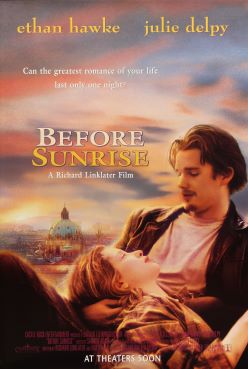
The release of Before Sunrise in 1995 marked a pivotal moment in his chronological development. This film crystallized his fascination with spontaneous romance and serendipitous meetings, introducing audiences to a style that felt simultaneously profound and incredibly grounded. By focusing entirely on a brief encounter in Vienna, Linklater proved that a feature film could sustain itself purely on the intellectual connection and philosophical musings of its protagonists. This breakthrough solidified his reputation as a filmmaker who could capture the ephemeral nature of human relationships.
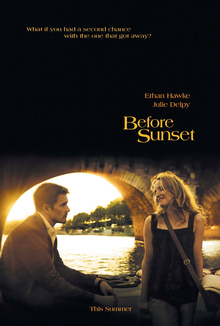
Nine years later, Linklater achieved new heights of maturity with Before Sunset. This continuation of his earlier work signaled a shift from capturing a generational mood to executing a meticulously crafted long-term cinematic experiment. His ongoing project of revisiting the same characters over decades has frequently drawn comparisons to Michael Apted's documentary series. Through this sustained commitment to his subjects, Linklater has secured his legacy as an auteur whose films serve as vital documents of personal growth and the inevitable passage of time.
Thematic Preoccupations
The philosophical core of Richard Linklater's filmography is anchored by a persistent tension between youthful idealism and the sobering realities of adulthood. His narratives frequently return to questions of how time alters personal perspectives and romantic expectations. In Before Sunrise, the themes are defined by a vibrant romanticism and an infectious sense of possibility. The characters are depicted as astronauts of love who float through European streets, engaging in intimate, thought-provoking discussions about their futures. This earlier work celebrates the beauty of a pure, unadulterated intellectual connection that exists outside the pressures of ordinary life.
As his career progressed, Linklater shifted his thematic focus toward nostalgia and introspection. The characters in Before Sunset grapple with the weight of past life choices and the enduring pain of unresolved love. The initial idealism of their youth is replaced by a more complex, melancholy examination of what could have been. Linklater obsesses over the concept of reunion, using it not as a standard romantic trope but as a vehicle to explore how individuals compromise with reality. The narrative asks whether true connection can survive the disillusionment of aging and the accumulation of life experiences.
Furthermore, Linklater consistently explores the concept of authenticity within human relationships. He strips away melodrama and artificial conflict to investigate the genuine mystery of human compatibility. His films often interrogate the ways people perform their identities for one another during early encounters, contrasted with the vulnerability required as time strips those performances away. This idiosyncratic approach to romance creates timeless narratives that resonate deeply, offering a profound philosophical depth that mirrors the existential inquiries found in his other works like Waking Life.
Stylistic Signatures
The visual language of Richard Linklater is defined by a remarkable restraint that elevates character and dialogue above overt cinematic showmanship. His directorial approach often mimics documentary realism, deploying what critics have described as an invisible camera. By minimizing intrusive editing and avoiding flashy cinematography, Linklater creates a seamless, immersive environment where the audience feels like a silent participant in the unfolding conversations. This technique demands extraordinary technical skill, as the apparent simplicity of the framing belies the rigorous blocking required to maintain visual interest.
Central to his mise-en-scène is the reliance on long, unbroken tracking shots that follow characters as they navigate urban landscapes. The walking and talking motif has become a definitive stylistic signature of his work. These extended takes allow the actors to inhabit their roles fully, grounding the spontaneous romance in a tangible physical reality. The real-time or near-real-time pacing of these sequences mirrors the natural rhythm of everyday life. This deliberate pacing choice forces the audience to engage with the subtle shifts in body language and facial expressions that occur during extended periods of unbroken dialogue.
Aurally, Linklater privileges the cadence of natural speech over traditional musical scoring or elaborate sound design. The idiosyncratic rhythm of everyday dialogue serves as the primary soundtrack for his films. He captures the hesitations, interruptions, and overlapping sentences that characterize genuine human interaction. Furthermore, he explicitly avoids the mechanical devices of conventional romantic dramas, such as phony violence or fancy choreography in intimate scenes. This gentleness in character development and audio-visual presentation results in a narrative style of unparalleled beauty and grace.
Recurring Collaborators
The defining creative partnership of Richard Linklater's career revolves around his collaborations with actors Ethan Hawke and Julie Delpy. Their collective work forms the bedrock of his most acclaimed character-driven narratives. Hawke's portrayal of Jesse brings a distinct blend of cynical pragmatism and boyish vulnerability, while Delpy's Celine offers a fierce intelligence paired with emotional rawness. Together, their on-screen chemistry provides the foundation for the compelling, realistic relationships that define Linklater's exploration of modern romance.
Crucially, the collaboration extends far beyond traditional actor and director dynamics. Hawke and Delpy evolved into essential co-authors of the overarching narrative. While Linklater and writer Kim Krizan developed the initial characters and dialogue for Before Sunrise, the actors themselves took on co-writing duties for the sequel. By infusing the screenplay of Before Sunset with their own lived experiences, philosophies, and vocal rhythms, Hawke and Delpy helped craft an incredibly authentic representation of aging and regret.
This unique collaborative process blurred the boundaries between performance and writing, resulting in a remarkable achievement in filmmaking. The willingness of Linklater to cede a degree of authorial control to his lead actors allowed the characters to mature organically over real time. This democratic approach to storytelling not only enriched the specific films they created together but also established a new benchmark for how long-term cinematic partnerships can yield profound psychological insight.
Critical Standing
The critical reception of Richard Linklater has undergone a significant transformation, evolving from appreciation for his keen observation of youth culture to widespread reverence for his formal and thematic mastery. When Before Sunrise debuted, critics celebrated it as an intelligent and insightful departure from the standard romantic comedy. Outlets praised the film as a rare treat that was too intelligent to be soppy, noting that merely five minutes of screen time provided more insight into human relationships than a dozen conventional genre entries. This early acclaim established Linklater as a vital, independent voice capable of crafting deeply engaging narratives.
With the arrival of Before Sunset, Linklater secured his position in the upper echelon of contemporary auteurs. Critics were astonished by the technical skill and profound emotional maturity of the sequel. Reviews noted that the film successfully retained the gentleness and romanticism of the original while replacing its youthful mystery with a rich, melancholy idealism. The sequel was widely heralded as a remarkable achievement, confirming that Linklater's dialogue-driven storytelling could sustain profound critical scrutiny and emotional weight across decades.
Today, his critical standing is often contextualized through comparisons to groundbreaking longitudinal projects. The architectural ambition of revisiting characters over extended periods has drawn favorable comparisons to the legendary 7-Up documentary series. Critics view his character-driven narratives not merely as individual films, but as chapters in a monumental cinematic experiment. Linklater is firmly recognized by art critics and cinephiles as a pioneering filmmaker whose unconventional romance and timeless narratives have forever altered the landscape of modern cinema.