Career Overview
Rob Reiner occupies a unique and revered position in the landscape of late twentieth century American cinema. Emerging as a directorial force during a decade frequently defined by commercial excess, Reiner carved out a distinct niche by prioritizing emotional authenticity and character driven storytelling. His early career arc demonstrates a rapid maturation from television actor to a filmmaker capable of profound narrative economy and mainstream appeal. Rather than succumbing to the era's prevalent stylistic indulgences, Reiner focused on universal human experiences, establishing himself as a reliable auteur of the heart.
His ascendance in the 1980s is intimately tied to his ability to elevate genre conventions into universally resonant art. By the middle of the decade, Reiner had proven his capacity to manage complex tonal shifts, moving effortlessly between gentle humor and gritty tragedy. His work during this period is frequently characterized by a compassionate storytelling ethos, standing in stark contrast to the neon aesthetics and hedonistic pursuits that dominated much of the decade's studio output. He provided a cinematic sanctuary for audiences seeking truthful narratives and emotional depth.
Today, Reiner is widely recognized as a master of the American coming-of-age film. His cinematic adaptations, particularly his transformations of popular literature into timeless classics, rival the cultural impact of authors like Mark Twain. By consistently delivering masterclass performances from his ensembles and maintaining a perfectly paced narrative rhythm, Reiner has secured a legacy as a director who bridges the divide between popcorn entertainment and rigorous cinematic art.
Thematic Preoccupations
The core of Rob Reiner's thematic exploration rests upon the fragile, ephemeral nature of youth and the inevitable loss of innocence. His narratives consistently interrogate the exact moment when childhood illusions shatter against the harsh realities of the adult world. This coming-of-age transition is frequently mapped onto a physical journey or adventure, transforming local explorations into profound psychological odysseys. Through these grubby adventures, Reiner examines the bittersweet realization that youthful innocence is a temporary state, inevitably replaced by the burdens of maturity.
A secondary, yet equally vital, preoccupation in Reiner's filmography is the profound exploration of love and the intricate dynamics of friendship. He approaches camaraderie not as a simple alliance, but as a complex web of mutual dependence, fear, powerlessness, and shared trauma. The nostalgic friendship depicted in his work often serves as a survival mechanism against neglectful or abusive family structures. Reiner refuses to sanitize these relationships, instead portraying them with all the profanity, rivalry, and intense loyalty characteristic of authentic young adult development.
Furthermore, Reiner is obsessed with the mechanics of memory and nostalgic reminiscence. His films often employ a retrospective framing device, utilizing the perspective of an older narrator looking back at pivotal childhood events. This dual perspective allows Reiner to infuse dreamy escapism with illuminating pathos, as the older voice acknowledges the tragic trajectories that some childhood friends will eventually follow. The quest narrative, often centered around a confrontation with mortality, becomes a philosophical meditation on grief, survival, and the enduring power of memory.
Stylistic Signatures
Rob Reiner's stylistic signature is defined by an invisible, highly economical storytelling technique that completely serves the narrative and the actors. He pointedly rejects the flashy, neon aesthetics and frantic editing rhythms that characterized much of the 1980s cinema. Instead, Reiner employs a classical, perfectly paced narrative structure that allows emotional beats to breathe. His camera work is intimate and unobtrusive, designed to capture the subtle facial expressions and nonverbal communications of his quirky characters without drawing attention to the directorial hand.
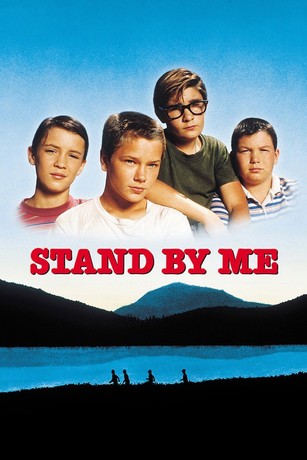
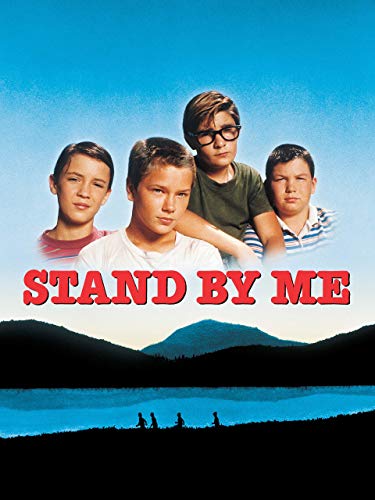
The utilization of natural landscapes is another critical component of Reiner's visual language. In works like Stand by Me, the heavily forested Oregon surroundings and small town environments are not merely backdrops but active participants in the narrative. Reiner captures a quiet, lyrical odyssey through these spaces, using the untamed wilderness to mirror the internal, chaotic emotions of his adolescent protagonists. The transition from safe, manicured neighborhoods into the deep woods visually underscores the thematic journey from safety to danger, mirroring the leap from childhood to adulthood.
Tonal balancing stands as Reiner's greatest technical achievement. He seamlessly weaves humorous undertones with moments of profound, saddest reflection. The rhythm of his scenes often mimics the erratic emotional state of youth, transitioning from superb wit and popcorn worthy moments to illuminating pathos within a single sequence. This delicate auditory and rhythmic balance ensures that the films never veer into pure melodrama, maintaining a grounded, truthful atmosphere that maximizes the emotional depth of the cinematic experience.
Recurring Collaborators
Reiner's most significant creative partnerships have often been with his ensemble casts, particularly the young actors who bring his coming-of-age visions to life. The synergistic collaboration between actors like Wil Wheaton, River Phoenix, Corey Feldman, and Jerry O'Connell forms the emotional bedrock of his most celebrated work. By fostering an environment of trust and genuine camaraderie on set, Reiner extracts masterclass performances that capture the precise vulnerability and bravado of adolescence.
Each frequent cast member contributes a specific emotional resonance to the overarching narrative. River Phoenix and Wil Wheaton typically anchor the emotional weight, providing the intelligence and sensitivity required to convey a profound exploration of love and loss. Meanwhile, Corey Feldman and Jerry O'Connell inject the necessary gentle humor and quirky character dynamics, balancing the inherent tragedy with vibrant life. Their collective interplay creates a believable, lived-in world that remains the gold standard for youth ensemble acting.
On the antagonist side of the spectrum, collaborators like Kiefer Sutherland provide the essential friction that drives the narrative forward. Sutherland's recurring presence acts as a physical manifestation of the cruel, unforgiving adult world. His performances introduce an element of genuine danger and threat, sharply contrasting with the comparative innocence of the younger protagonists.
Beyond the screen, Reiner's collaboration with source material, particularly the literature of Stephen King, is paramount. Reiner possesses a unique ability to adapt complex, often dark prose into accessible, mainstream cinema without losing the source's thematic integrity. This partnership allows Reiner to channel King's nostalgic reminiscence and intricate character studies into a visual medium, resulting in narratives that resonate deeply with both literary enthusiasts and general audiences.
Critical Standing
Upon its initial release, Rob Reiner's work in the mid-1980s was hailed by critics as a necessary corrective to the decade's cinematic excesses. Reviewers celebrated his films as rare masterpieces that offered compassionate, perfectly performed looks at the real heart of youth. During an era dominated by producers and high concept spectacles often dismissed as neon colored popcorn schlock, Reiner was championed by critics for delivering an economical, gentle, truthful tale that appealed to the thinking audience. His ability to craft a timeless classic out of a simple boyhood adventure earned him immediate critical respect.
As the decades have passed, Reiner's critical reputation has only solidified, evolving from contemporary praise into historical reverence. Works like Stand by Me are now firmly entrenched in the cinematic canon, frequently compared by scholars to the foundational American literature of Mark Twain and noted for capturing the comparative innocence of Tom Sawyer. The film is continually cited as a staple of youthful nostalgia, lauded for its deft straddling of the line between childhood and adulthood. Critics point to his work as a masterclass in directing, emphasizing how perfectly paced and emotionally resonant his narratives remain.
However, Reiner's reception has not been entirely without controversy. Some contemporary detractors, particularly those focused on moral instruction, criticized his truthful narratives for depicting incorrect values. Certain reviews highlighted the profanity, trespassing, and juvenile delinquency as problematic, arguing that the films endorsed cruel behavior. Yet, the overwhelming consensus of film scholars dismisses this moral panic, arguing that Reiner's true goal was far more important than teaching correct values. His objective was to illuminate a complex range of human emotions, a feat he accomplished with unparalleled sensitivity and enduring grace.