Career Overview
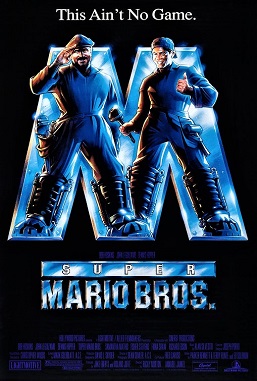
Rocky Morton's career is inextricably linked to the dawn of digital cinema and corporate intellectual property adaptations. He stands as a fascinating case study in the friction between visionary ambition and studio mandates. His trajectory is defined by a singular, spectacular collision with Hollywood machinery, most notably crystallized in Super Mario Bros., a film that secured his complicated place in cinema history.
Morton emerged during a period of intense technological transition, bringing a cyberpunk sensibility to mainstream cinema. Critical comparisons to Max Headroom highlight his roots in subversive, technologically mediated storytelling. When tasked with bringing a massive video game property to the screen, Morton attempted to infuse commercial dictates with an anarchic, dystopian edge, creating a chaotic parallel universe that alienated traditional audiences.
Ultimately, Morton occupies a unique, highly contested space in cinema history. His primary contribution serves as both a cautionary tale of production challenges and a pioneering effort in genre blending. He is remembered not as a traditional auteur, but as the architect of a fascinating cinematic artefact that bridges the gap between independent artistic eccentricity and massive corporate franchising.
Thematic Preoccupations
Throughout his scrutinized output, Morton demonstrates a profound preoccupation with dystopian settings and insidious political subtext. Even when working within the ostensible boundaries of family friendly adventure, he subverts expectations by constructing parallel universes that reflect the decay and commercialization of our own world. His narratives often grapple with the consequences of authoritarian rule and the absurdity of unchecked corporate power.
The tension between individual agency and overwhelming systems of control forms the thematic backbone of Morton's cinematic explorations. By utilizing a villainous antagonist who seeks to conquer multiple dimensions, Morton explores the mechanics of totalitarianism. This approach transforms a simple rescue mission into a critique of systemic oppression, layered beneath a primary colored aesthetic that belies its darker philosophical questions.
Furthermore, Morton is obsessed with the concept of mutation and the blending of disparate genres. He forces the audience to navigate a queasy jumble of genre tropes, mixing science fiction, comedy, and fantasy into a volatile brew. This refusal to adhere to traditional narrative boundaries reflects a deep seated interest in how identity and society are destabilized in a heavily commercialized, technologically advanced era.
Stylistic Signatures
Morton's stylistic signature is defined by a bright and clamorous aesthetic that assaults the senses while offering breathtaking wonders. His visual language leans heavily into maximalism, utilizing dense, cluttered framing to create worlds that feel both expansive and claustrophobic. This approach draws frequent critical comparisons to the textured, dystopian environments of Blade Runner and Brazil, blending futuristic decay with vibrant, neon lit excess.
The mise en scene in a Morton production is characterized by its reliance on practical and early digital visual effects, creating a distinct, tactile reality. He constructs parallel dimensions that are intricately detailed, favoring grimy, industrial textures offset by primary colored lighting schemes. This visual dichotomy serves to heighten the surrealism of his narratives, ensuring that every frame is packed with visual information and Easter egg filled background elements.
Cinematically, Morton employs a hectic and often shrill pacing, driven by an urgent editing rhythm that mirrors the chaotic energy of his subject matter. His films are loud, kinetic experiences that prioritize visceral impact over subdued character development. The resulting sensory overload is intentional, designed to disorient the viewer and immerse them fully into the bizarre, high stakes environments his characters are forced to navigate.
Recurring Collaborators
While many filmmakers rely on a stable troupe of recurring actors or cinematographers, Rocky Morton's brief and tumultuous tenure in the Hollywood studio system prevented the formation of long term collaborative partnerships. The nature of his most prominent work, defined by immense production challenges and studio interference, meant that his creative relationships were often forged in the crucible of a chaotic set rather than sustained over a multi film career.
In the absence of recurring cast members, Morton's primary collaboration was arguably with the machinery of the studio system itself, albeit an adversarial one. The lack of a consistent ensemble forces the focus onto the sprawling, high concept nature of his projects. Actors working under his direction often reported polarized experiences, resulting in performances that range from deeply committed eccentricity to bewildered detachment.
This isolation from a dedicated creative family underscores the anomalous nature of Morton's filmography. Without a recurring team of writers or editors to refine his vision over time, his output remains a raw, unvarnished testament to a specific moment in cinema history. The absence of long term collaborators highlights his status as a singular, if embattled, visionary who fought to impose his unique aesthetic onto unyielding corporate properties.
Critical Standing
The critical standing of Rocky Morton is one of the most volatile and fascinating subjects in contemporary film discourse. Upon the initial release of his major studio effort, the reception was overwhelmingly hostile. Critics subjected his work to the kind of critical mauling normally reserved for Nazi propaganda films, dismissing his ambitious genre blending as a shrill, tiresome fantasy with no imaginable audience. He was widely castigated for delivering a poor imitation of a 1990s blockbuster that stumbled from the start.
However, as time has passed, Morton's critical reputation has undergone a radical, unforeseen rehabilitation. The initial shock at his bizarre directorial choices has mellowed into a genuine appreciation for his audacity. Contemporary critics now frequently reassess his work as a bizarre but worthy anomaly on the resumes of its stars, viewing the very elements that once repelled audiences as evidence of a visionary, if flawed, genius. Comparisons to disastrous but legendary productions like Heaven's Gate underscore the scale of both his ambition and his failure.
Today, Morton is celebrated within specific cinephile circles as the creator of a fascinating and rich artefact. His work has achieved an undeniable cult status, studied for its chaotic production history and its uncompromising, dystopian aesthetic. Rather than being remembered merely as a purveyor of a bad cinematic experiment, Morton is now recognized as a fearless pioneer of the video game adaptation, whose noble failures are infinitely more interesting than the safe successes of his contemporaries.