Career Overview
Ron Howard occupies a distinct space in contemporary cinema as a consummate Hollywood craftsman, specializing in high-profile biographical dramas that translate complex true stories into accessible entertainment. Transitioning from his early roots as an actor to a director of prestige studio pictures, Howard has built a filmography defined by its sweeping emotional ambition and classical narrative structure. His work often seeks to capture the zeitgeist of specific historical moments, filtering them through the lens of individual exceptionalism.
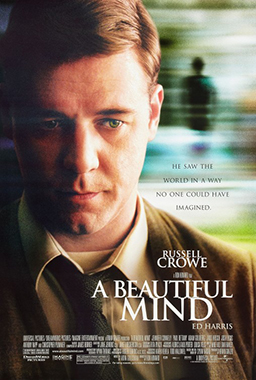
The trajectory of his career demonstrates a reliable pivot toward prestige filmmaking, specifically leaning into stories of real-world figures who overcome extraordinary odds. Films like A Beautiful Mind secured his reputation as an awards-season heavyweight, positioning him as a director capable of navigating the intersecting demands of critical prestige and mass audience appeal. This era of his career solidified his status as a purveyor of glossy, life-affirming cinema that champions the human spirit.
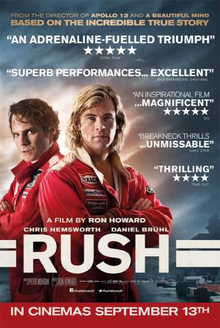
In his later projects, Howard demonstrated a willingness to adapt his classical sensibilities to more kinetic, fast-paced environments. With Rush, he shifted his focus to the visceral world of competitive sports, proving his capability to orchestrate intense, high-octane spectacles. Despite this shift in tempo, his core identity remains tethered to biographical storytelling, cementing his legacy as a reliable, if sometimes safe, steward of the Hollywood biopic tradition.
Thematic Preoccupations
A central preoccupation of Ron Howard is the intricate dynamics of rivalry and the relentless pursuit of excellence. Across his biographical works, he examines how intense competition shapes identity and pushes individuals beyond their perceived limitations. In Rush, this is externalized through the thrilling, high-stakes battle between Formula One drivers, where dangerous sportsmanship becomes a crucible for character development. The determination to win operates as both a destructive force and a profound motivator, driving men to the brink of their physical and psychological endurance.
Equally significant in his thematic repertoire is the exploration of mental fragility and resilience in the face of profound adversity. Howard frequently isolates a genius character, probing the isolating nature of extraordinary intellect. In A Beautiful Mind, the narrative grapples with the terrifying onset of mental illness, framing schizophrenia not merely as a medical crisis but as a profound challenge to a brilliant mathematician's identity. The film explores the delicate balance between academic life challenges and deeply personal trauma.
These distinct thematic threads converge on a singular philosophical concern regarding the human capacity for endurance. Whether his protagonists are navigating the gruesome details of insulin shock therapy or surviving explosive crashes on the racetrack, Howard highlights an underlying resilience. His narratives are fundamentally life-affirming, structured to guide audiences through harrowing trials toward eventual triumph and reconciliation.
However, this dedication to life-affirming messages often invites a critique of his biographical storytelling methods. Howard is frequently drawn to the mythmaking apparatus of the Hollywood adaptation, sometimes prioritizing an engaging narrative over strict historical accuracy. The complexities of real human lives, including divorce and shifting sexual identities, are often streamlined to fit a redemptive arc, raising questions about the ethics of historical representation in popular cinema.
Stylistic Signatures
The visual language of Ron Howard is characterized by a slick, polished production value that prioritizes emotional engagement over avant-garde experimentation. His direction relies on a robust, conventional cinematic grammar, utilizing sweeping camera movements and glossy cinematography to elevate his subjects. In Rush, this approach manifests in exhilarating racing sequences, where hyper-kinetic editing and aggressive sound design immerse the viewer in the visceral thrill of the track. The stylistic emphasis is on speed and danger, even if the technique occasionally relies on a repetitive formula to maintain momentum.
Conversely, when dealing with internal, psychological landscapes, Howard employs distinct stylistic motifs to externalize abstract concepts. In A Beautiful Mind, the complexities of mathematics and the terrifying onset of delusions are rendered through specific visual cues, such as glowing, complex algorithms scribbled across Princeton windowpanes. These sequences, while sometimes literal, serve to make the unfilmable nature of academic genius comprehensible to a broad audience. He occasionally leans into disturbing imagery, utilizing hollow-eyed character studies and jarring visual shifts to convey the subjective horror of affliction.
Sound and music play a critical, often heavy-handed role in shaping the tone of his films. Howard frequently collaborates with high-profile composers to provide potent, emotionally directive scores. The tinkly, swelling orchestrations of James Horner in A Beautiful Mind serve to guide the audience through the narrative peaks and valleys, reinforcing the crowd-pleasing elements of the script. This reliance on manipulative soundscapes underscores his commitment to traditional Hollywood melodrama.
Pacing in a Ron Howard film is heavily dictated by the genre he is operating within, revealing a functional rather than auteurist approach to rhythm. While Rush boasts a fast-paced narrative appropriate for its subject matter, critics have noted that his more prestige-oriented dramas can suffer from a plodding, pedestrian pace. Nevertheless, his overarching stylistic signature remains one of high competence and deliberate, polished craftsmanship tailored to maximize mainstream emotional resonance.
Recurring Collaborators
While a consistent troupe of actors does not define the films in this specific cross-section of his career, Ron Howard demonstrates a crucial reliance on formidable leading performers to anchor his biographical narratives. His directorial method heavily depends on the central performance to carry the emotional weight of his often conventional scripts. By casting actors capable of intense, transformative character studies, such as Russell Crowe in A Beautiful Mind, Howard ensures that the slick production values are grounded by palpable human vulnerability.
The absence of a deeply established repertory cast across his broader historical epics speaks to his chameleon-like role as a studio director, assembling specialized ensembles tailored to the specific historical era of each project. However, his partnership with top-tier below-the-line talent remains a vital component of his collaborative process. He consistently surrounds himself with acclaimed cinematographers, editors, and production designers who can execute his vision of polished, high-octane entertainment or solemn prestige drama.
Music is perhaps the area where his collaborative instincts are most deeply felt. His work alongside renowned composers, notably James Horner on A Beautiful Mind, highlights a synergistic partnership aimed at maximizing the emotional potency of the narrative. These musical collaborations are essential to the Howard formula, providing the sweeping, evocative soundscapes necessary to elevate his stories of determination and resilience into grand Hollywood spectacles.
Critical Standing
The critical reputation of Ron Howard is defined by a sharp dichotomy between popular adulation and stringent academic skepticism. Among mainstream audiences and industry voting bodies, his work is often celebrated as the pinnacle of potent, crowd-pleasing Hollywood craftsmanship. A Beautiful Mind stands as a testament to this mainstream success, capturing the Academy Award for Best Picture and securing his status as a premier architect of the modern American prestige film. Critics frequently praise his ability to construct an engaging narrative and deliver genuinely exhilarating cinematic experiences.
Yet, within more rigorous critical discourse, Howard is frequently the subject of lacerating commentary. Reviewers often target his tendency to produce dumbed-down, sexed-up biopics that sanitize the messy realities of history for mass consumption. Critics have pointed out that his films, while glossy and well-acted, often function as lie-opics, coyly excising complex adult themes (such as the marital discord and hidden private lives of his subjects) in favor of comforting, formulaic resolutions. His reliance on sentimental tropes has led some detractors to describe his prestige efforts as plodding, pedestrian hagiography.
In the realm of sports cinema, his critical standing is somewhat more buoyant, though still subject to genre comparisons. Reviews of Rush frequently juxtapose his work against defining genre benchmarks like Senna, Ford v Ferrari, and Days of Thunder. While critics sometimes knock his racing sequences as a repetitive formula, they largely concede that the execution is highly effective, yielding a genuinely thrilling ride that captures the intense rivalry of the 1970s Formula One circuit.
Ultimately, Ron Howard occupies a polarized position in film history. He is widely respected as a highly competent, traditionalist filmmaker who can reliably deliver a good, nostalgic ride and elicit powerful performances. However, for cinephiles and critical purists seeking daring formal innovation or unflinching historical accuracy, his filmography often represents the safe, calculated center of studio filmmaking.