Career Overview
Sergio Leone occupies a monumental space in the history of cinema, primarily recognized for fundamentally reinventing the Western genre. Born into an Italian filmmaking family, his early career involved working on peplum films and serving as an assistant director on international productions shot in Italy. This foundational experience with large-scale epics deeply informed his eventual directorial vision, leading him to craft narratives that tested the boundaries of scope and duration.
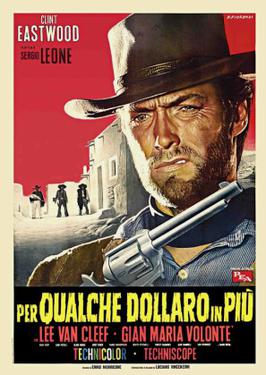
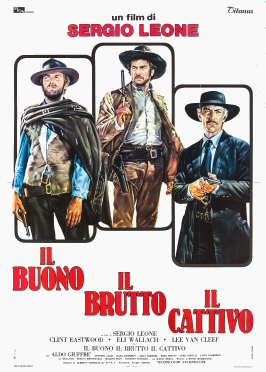
Leone catapulted to international prominence by essentially forging the spaghetti Western. With his trilogy that includes For a Few Dollars More and The Good, the Bad and the Ugly, he took American mythology and filtered it through a distinctly European sensibility. This era of his career was defined by working within tight budgetary constraints to produce highly profitable, globally resonant genre pictures that utilized previously unknown American actors.
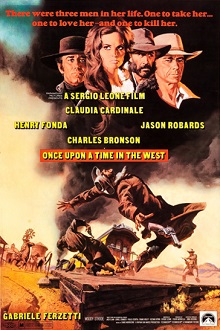
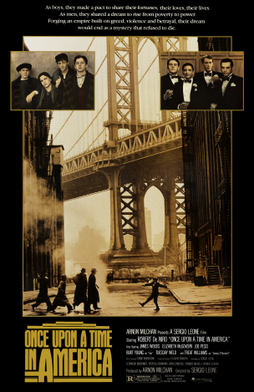
As his career progressed, Leone transitioned from the taut thriller structures of his early successes to sweeping historical tapestries. His subsequent masterworks, Once Upon a Time in the West and Once Upon a Time in America, demonstrated a maturation into long-form epic storytelling. Bankrolled by major Hollywood studios, these later films allowed Leone to synthesize his lifelong fascination with American cinematic archetypes, culminating in a legendary body of work that cemented his status as a visionary auteur.
Thematic Preoccupations
A central thematic pillar of Leone's filmography is the demythologization of American history, specifically focusing on the intersection of capitalism, greed, and the fading frontier. In Once Upon a Time in the West, he dramatizes the fatal collision between the old romanticized West and the new West defined by manifest destiny and railroad expansion. The encroaching industrialization brings with it an inherent corruption, replacing the solitary gunslinger with the ruthless corporate baron.
Throughout his narratives, Leone continuously explores the corrosive nature of extreme violence and amoral self-interest. The protagonists in The Good, the Bad and the Ugly and For a Few Dollars More are driven primarily by financial gain, whether through bounty hunting or the pursuit of hidden Confederate gold. Yet beneath this superficial amorality lies a profound examination of survival amidst widespread societal collapse, often carrying subtle antiwar sentiments that condemn systemic hypocrisy.
In his final masterpiece, Once Upon a Time in America, Leone shifts his focus to the complex dynamics of gangster life, intertwining profound meditations on memory, time, and cultural legacy. The film meticulously charts the unraveling loyalty and inevitable betrayal among childhood friends across five decades. By elongating time and fracturing the narrative structure, Leone asks enduring questions about the nature of regret and the tragic cost of ambition in the pursuit of the American Dream.
Stylistic Signatures
The cinematic style of Sergio Leone is instantly recognizable, characterized by a grandiloquent visual language that oscillates between sprawling panoramas and extreme, sweat-drenched closeups. His compositions frequently isolate faces to capture psychological tension, allowing withering stares to perform the heavy lifting of narrative exposition. This juxtaposition of vast desert landscapes or gritty urban streets with microscopic facial details creates an unsettling, highly operatic tone.
Leone is also celebrated for his revolutionary approach to cinematic time and pacing. He notoriously elongates moments of anticipation, stretching seconds into agonizing minutes before erupting into brief spasms of nasty, heavy violence. His editing cuts almost pathologically on screams, gunshots, and physical impacts, creating a stark contrast with the slow, deliberate buildup that precedes them. This manipulation of time became a defining characteristic, establishing a distinct rhythm that challenged traditional Hollywood continuity.
Equally vital to Leone's aesthetic is his revolutionary integration of sound and music. Rather than using the score as mere background accompaniment, he treated music as a primary narrative force, frequently playing themes on set to dictate the actors' rhythms. The diegetic sounds of a squeaking windmill, ticking watches, or natural ambient noise are amplified and woven directly into the musical fabric, rendering his films as much auditory experiences as visual ones.
Recurring Collaborators
Leone's artistic legacy is inextricably linked to his legendary collaboration with composer Ennio Morricone, whose iconic scores defined the emotional and atmospheric landscapes of the films. Morricone's innovative use of unconventional instruments, such as whistling, electric guitars, and cracking whips, broke away from the traditional orchestral arrangements of classic Hollywood Westerns. This partnership elevated the material from standard genre fare to mythic, operatic heights.
On screen, Leone frequently utilized a specific stable of actors who perfectly embodied his gritty, morally ambiguous universe. Clint Eastwood, who anchored For a Few Dollars More and The Good, the Bad and the Ugly, became the definitive icon of the Leone protagonist. Eastwood's minimalist performance style, characterized by a poncho, a chewed cigar, and impenetrable stoicism, provided the ideal blank canvas for the director's intense visual scrutiny.
Similarly, Lee Van Cleef and Luigi Pistilli proved to be essential fixtures in Leone's cinematic world. Van Cleef brought a refined, predatory menace to his roles in both For a Few Dollars More and The Good, the Bad and the Ugly, transitioning effortlessly between rival bounty hunter and outright villain. Leone frequently cast against type or relied on these weather-beaten, expressive faces to communicate complex character dynamics without the need for extensive dialogue, forging a definitive ensemble for the spaghetti Western subgenre.
Critical Standing
Initially dismissed by contemporary American critics as purveyors of excessive violence and cheap imitation, Leone's films experienced a dramatic critical reevaluation over the decades. During the original release of his early Westerns, traditionalists balked at the grisly realism and cynical tone, often viewing the low budget Italian productions as inferior to the mythic purity of John Ford. However, as the boundaries of cinematic language evolved, so too did the appreciation for Leone's transgressive vision.
Today, Leone's work is universally embraced by cinephiles and academic critics, elevating his filmography to the status of high art. The restoration and rerelease of his longer cuts, particularly the original three-hour version of The Good, the Bad and the Ugly and the fully restored Once Upon a Time in America, have allowed modern audiences to appreciate the full metaphysical depth of his storytelling. Critics now regularly compare his formal mastery to European modernists like Michelangelo Antonioni, recognizing his meticulous control over spatial awareness and pacing.
His influence on subsequent generations of filmmakers is immeasurable, effectively establishing a genre unto itself. Contemporary critical consensus views his cinematic legacy as a profound meditation on American myths, effectively bridging the gap between entertaining genre pictures and rigorous arthouse cinema. Rather than being seen merely as a stylist, Leone is now canonized as a great director whose final statements on capitalism, violence, and time remain fiercely relevant in modern critical discourse.