Career Overview
Tatsuya Yoshihara stands as a pivotal figure in the evolution of modern anime, steering the medium away from conventional action tropes toward a more transgressive, psychologically complex cinematic language. Emerging from the grueling trenches of television animation production, he honed a kinetic and highly expressive directorial voice. This background instilled in him a rigorous understanding of visual pacing and character dynamics, skills that seamlessly translated to his feature film endeavors.
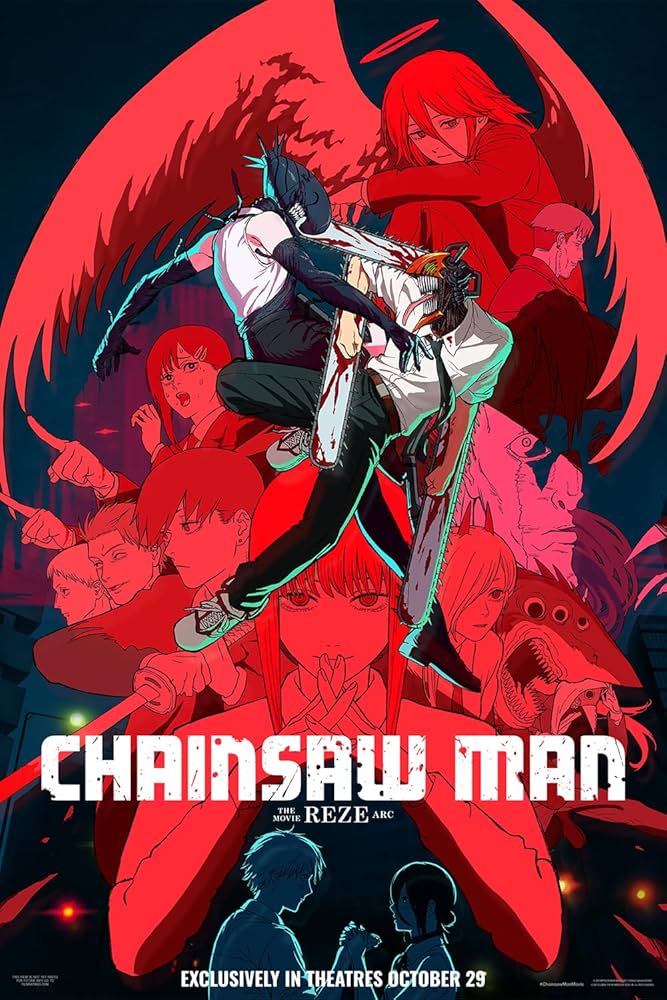
His cinematic breakthrough, Chainsaw Man - The Movie: Reze Arc, cemented his reputation as a director capable of balancing massive franchise expectations with deeply idiosyncratic artistry. In an era where anime theatrical releases often serve as mere narrative bridges, Yoshihara elevated the format into a standalone aesthetic triumph. He approached the source material not just as an adaptation, but as an opportunity to explore the boundaries of the medium, utilizing the expanded theatrical canvas to deepen the psychological resonance of the text.
Within the broader context of Japanese cinema history, Yoshihara occupies a fascinating middle ground. He is frequently compared to live-action provocateurs like Tobe Hooper and Shinya Tsukamoto, filmmakers who similarly used extreme genre frameworks to dissect the human condition. By merging these visceral, often grueling sensibilities with the pristine possibilities of ultra-photorealistic animation, Yoshihara has carved out an entirely new niche for himself, proving that animated features can participate in serious cinematic discourse.
Thematic Preoccupations
A central preoccupation in the work of Tatsuya Yoshihara is the intersection of body horror and coming-of-age narratives. His films frequently utilize supernatural frameworks to externalize the chaotic, often grotesque realities of adolescent transformation. In Chainsaw Man - The Movie: Reze Arc, the integration of demonic influences and physical mutation serves as a potent metaphor for the loss of innocence. His protagonists are typically thrust into hostile worlds where their physical bodies are as volatile as their emotional states, forcing a brutal but necessary evolution.
Beyond visceral physical transformations, Yoshihara is deeply invested in identity exploration and self-discovery arcs. The action-driven plots that propel his narratives are rarely just spectacles of violence, they are crucibles through which his characters forge their true selves. Romantic elements are frequently weaponized in this process, complicating the protagonist's journey with layers of betrayal, desire, and vulnerability. The romantic entanglement in his feature work highlights a tendency to intertwine affection with existential danger, portraying intimacy as a force equally as destructive as any supernatural threat.
Furthermore, Yoshihara demonstrates a remarkable emotional maturity in storytelling, often subverting the inherent juvenile nature of his dark fantasy premises. He grapples with complex themes like revenge, trauma, and the toxic underpinnings of masculinity, occasionally touching upon modern societal concepts like the manosphere. Rather than reveling in pure nihilism, his films seek out the tender, understated moments of connection amidst the carnage. This juxtaposition of gleeful perversity with profound poignancy allows him to ask enduring philosophical questions about what it means to remain human in an increasingly dehumanizing world.
Stylistic Signatures
The stylistic signature of Tatsuya Yoshihara is defined by a jarring yet masterful oscillation between extreme gore-soaked visuals and moments of serene, ultra-photorealistic animation. He treats the animated frame with the same spatial awareness as a live-action cinematographer, utilizing deep focus and meticulously constructed urban environments. In Chainsaw Man - The Movie: Reze Arc, his artful direction is evident in how he renders cityscapes with a hyper-detailed realism that grounds the supernatural elements. This aesthetic choice creates a palpable sense of unease, as the impossible and the mundane exist in uncomfortable proximity.
Yoshihara is also known for his unapologetic integration of lurid humor and risqué imagery, stylistic choices that serve to disorient the viewer and punctuate the pervasive dread. He employs these tonal shifts deliberately, utilizing the jarring juxtaposition to mirror the chaotic headspace of his youthful protagonists. His editing rhythms are similarly erratic, cutting rapidly during moments of frenetic action before slowing to a deliberate, contemplative pace for character-driven beats. This control over tempo allows the tender, understated moments of the narrative to land with maximum emotional impact.
Another crucial component of his visual language is his handling of ensemble cast dynamics within the mise-en-scene. Yoshihara frequently crowds the frame during scenes of domestic or social interaction, emphasizing the complex web of relationships that define his characters. When the action inevitably erupts, he isolates his subjects, emphasizing their vulnerability and the solitary nature of their struggles. The influence of classic cinema is palpable in these moments of isolation, where precise, symmetrical framing is used to heighten the psychological tension and highlight the inherent absurdity of the violence on screen.
Recurring Collaborators
While Tatsuya Yoshihara operates as a distinct auteur, his cinematic achievements are intrinsically linked to a network of vital creative partnerships. Foremost among these is his relationship with the source material of original manga author Tatsuki Fujimoto. The translation of Fujimoto's erratic, boundary-pushing panels to the screen requires a director capable of interpreting rather than merely transcribing. Yoshihara treats this collaboration not as an act of subordination, but as a dynamic dialogue between mediums, honoring the unique voice of the creator while expanding upon its cinematic potential.
The technical execution of Yoshihara's vision relies heavily on his animation production team, a collective responsible for realizing the ultra-photorealistic urban environments and complex action sequences that define his work. Animation is inherently a collaborative medium, and Yoshihara excels at marshaling vast teams of animators, background artists, and compositors to achieve a unified aesthetic. This synergy is particularly evident in the scrupulous attention to detail present in his films' quieter moments, requiring animators who can render nuanced human emotion just as effectively as explosive, supernatural gore.
Finally, Yoshihara's reliance on ensemble cast dynamics necessitates a deep collaboration with his voice actors. The characters he puts on screen are highly complicated and compelling, demanding performances that can pivot from lurid humor to profound tragedy within a single scene. By fostering a collaborative environment in the recording booth, Yoshihara ensures that the vocal performances anchor the surreal, bizarre imagery in genuine human emotion. This synergy between director, animators, and cast is what ultimately elevates his films from mere spectacle to poignant, emotionally resonant cinema.
Critical Standing
The critical standing of Tatsuya Yoshihara has evolved significantly as he transitioned into feature film direction, earning him a reputation as a prominent visionary in contemporary animation. Critics have frequently lauded his ability to transcend the typical limitations of anime arc feature films. Publications like The A.V. Club have noted that his work represents an artful instance within a crowded marketplace, highlighting his capacity to elevate franchise material into standalone cinematic art. His willingness to embrace gleeful perversity, as observed by The Guardian, has endeared him to critics seeking a more provocative edge in mainstream animation.
Within the broader critical discourse, Yoshihara's work is routinely positioned against industry titans like Demon Slayer: Kimetsu no Yaiba, The Movie: Infinity Castle and Jujutsu Kaisen. However, reviewers often emphasize that his films possess a darker, more idiosyncratic texture that sets him apart from his peers. This has led to highly flattering comparisons with live-action auteurs. Critics have drawn parallels between his bleak, visceral violence and the works of Tobe Hooper and Shinya Tsukamoto, while comparing his atmospheric dread to the stark fatalism found in No Country for Old Men. These comparisons underscore his ability to bridge the gap between animated entertainment and serious, challenging cinema.
Ultimately, Yoshihara's critical legacy is defined by his synthesis of disparate tones. Reviewers from outlets like RogerEbert.com have praised his films as beautiful, bizarre, and poignant adaptations that remain worthy of their complex source material. As his career progresses, he continues to be recognized for his emotional maturity and his scrupulous attention to detail. By refusing to compromise his singular vision, Yoshihara has solidified his place as a director who not only shapes the current landscape of animated features but also demands recognition alongside the most daring filmmakers working today.