Career Overview
Terry Gilliam occupies a highly specific and revered place in the history of cinema. His origins are inextricably linked to the famed British comedy troupe Monty Python. Within this collective environment, Gilliam transitioned from an animator to a fully realized filmmaker. His early directorial efforts, marked by a palpable youthful energy, demonstrated an unparalleled capacity to merge cinematic artistry with anarchic humor. The underfunded nature of these initial projects did not hinder his development. Instead, limited resources fostered an environment of absolute creative freedom where determination and fearlessness reigned supreme.
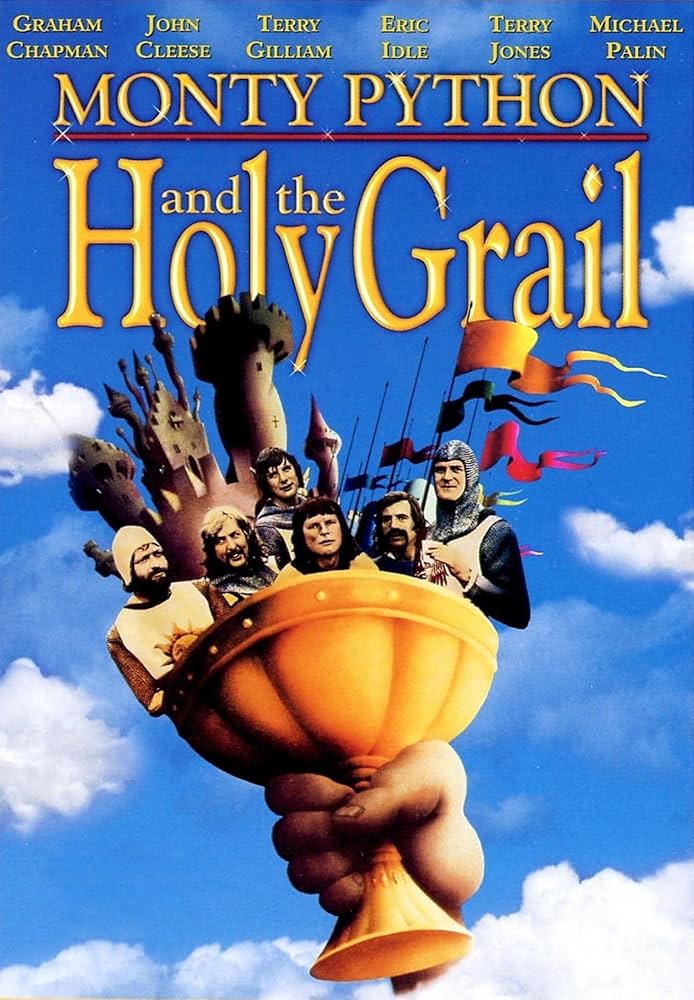
By the time he directed Monty Python and the Holy Grail, Gilliam had firmly established himself as a distinct cinematic voice. This period of his career is frequently characterized by what critics describe as an almost collegiate effort. Yet, beneath this seemingly amateurish veneer lies a highly sophisticated understanding of film mechanics. He managed to translate the sketch comedy stylings of his television background into a cohesive narrative structure. His work during this era captures the raw vitality of artists operating without the burden of studio interference or censor boards constantly peering over their shoulders.
The trajectory of his career is ultimately defined by this transition from a subversive television animator to a visionary director. While his later career would explore vast dystopian landscapes, this foundational era is celebrated for its wonderful charm and accessible nature. The resulting cinematic artifacts are singular works that stand apart from traditional British comedy. Gilliam proved that a filmmaker could harness inspired absurdity not just as a comedic tool, but as a legitimate method of exploring and dismantling established cinematic conventions.
Thematic Preoccupations
The thematic nucleus of the director's early work relies heavily on the concept of inspired lunacy. Throughout Monty Python and the Holy Grail, the narrative cherishes nonsense for its own sake. However, this dedication to absurdity is rarely hollow. It serves as a sharp, deliberate instrument to skewer stupidity, ignorance, and an unquestioning acceptance of conventional pieties. By utilizing medieval parody as a framework, the filmmaker dismantles the romanticized myths of King Arthur and chivalric tradition, replacing them with a universe governed by total irrationality.
Another central preoccupation is the subversion of authority and the persistent questioning of societal norms. The characters on their quest are constantly undermined by illogical obstacles, ranging from fiercely defiant French soldiers to a seemingly innocuous killer rabbit. These confrontations strip away the dignity of traditional heroism. The satirical elements present in these encounters highlight the fundamental ridiculousness of power structures and arbitrary rules. The humor arises precisely from the friction between the solemnity of the quest and the deeply unserious nature of the world the characters inhabit.
Ultimately, this thematic dedication to anarchic humor operates as a manifesto for creative freedom. The director uses timeless comedy to interrogate the mechanics of storytelling itself. By constantly breaking the fourth wall and leaning into the inherent artifice of the medium, the film asks audiences to reflect on why they accept conventional wisdom both in history and in cinema. This sustained obsession with unmasking the ridiculousness of human endeavor remains a defining philosophical concern, cementing his reputation as a master of accessible yet deeply layered satire.
Stylistic Signatures
The visual language developed by Terry Gilliam during this era is defined by its masterful integration of killer lines and physical sight gags. His approach relies on juxtaposing grand mythic framing with inherently ridiculous actions. The mise en scene often mimics the authentic, grimy texture of medieval historical epics. This commitment to visual realism makes the sudden insertions of anachronistic humor or absurd behavior exponentially more effective. It is a stylistic signature that demands a rigorous attention to atmospheric detail, even when the subject matter is profoundly silly.
A crucial component of this aesthetic is the inventive use of limited resources. The cinematic artistry of Monty Python and the Holy Grail is perhaps best exemplified by the legendary use of coconut shells in place of actual trusty steeds. What began as a budgetary constraint was brilliantly repurposed into a continuous diegetic joke that perfectly aligned with the overarching theme of medieval parody. This pragmatic approach to filmmaking transformed financial limitations into enduring iconic moments that define his early visual style.
Furthermore, his background as an animator heavily influences his live action editing rhythms and visual transitions. Critics routinely praise his animations as timelessly brilliant. These animated interludes serve a dual purpose. They function as narrative connective tissue while simultaneously injecting bursts of pure unfiltered surrealism into the text. The seamless blending of standard cinematography with these wildly imaginative two dimensional cutouts creates a completely unique, disjointed pacing that keeps the audience continually off balance.
Sound design and music also play an essential subversive role in his cinematic framework. The tremendous musical contributions of figures like Neil Innes amplify the satirical elements of the narrative. Pompous, sweeping orchestral scores are often deployed to underscore fundamentally ridiculous situations, such as a misguided wedding guest massacre. By weaponizing the traditional auditory cues of the adventure genre, the filmmaker creates an audiovisual dissonance that perfectly complements his anarchic comedic sensibilities.
Recurring Collaborators
Although the database highlights no specific recurring cast members across multiple independent films, the foundational creative engine of Terry Gilliam's early career is the Monty Python troupe itself. This collaborative ensemble operated with a unified comedic vision that blurred the lines between acting, writing, and directing. Performers like Michael Palin contributed significantly to the onscreen anarchy, delivering memorable turns such as the bolshy peasant who ridicules the Lady of the Lake. The synergistic relationship among the troupe members allowed for a uniquely shared authorial voice.
Beyond the core performers, the influence of musical collaborators cannot be overstated. The tremendous contributions of Neil Innes provided an essential layer of auditory satire that perfectly matched the visual tone. The original songs and musical cues functioned not merely as background accompaniment but as active participants in the comedic structure. This partnership highlights the director's reliance on artists who understood how to parody genre conventions with absolute precision and musical sincerity.
Ultimately, the defining characteristic of these early collaborations is the shared embrace of an underfunded rebellious ethos. The collective determination of these British artists generated an inviting, accessible environment. By operating outside the traditional studio system without censor boards to pacify, the troupe fostered a culture of fearlessness. This tightly knit collaborative unit provided the crucial support system Gilliam needed to experiment with his distinct visual stylings and develop his identity as a filmmaker.
Critical Standing
The critical reception of Terry Gilliam's early directorial output has evolved from an appreciation of collegiate comedy to an acknowledgment of his superb anarchic daring. Upon its initial release, Monty Python and the Holy Grail was frequently viewed as an inspired, highly amusing extension of a popular television series. Critics noted its tendency to cherish nonsense, categorizing the film as a medieval laff riot more often amusing than entirely flawless. However, decades of retrospective analysis and anniversary rereleases have significantly elevated its standing in the cinematic canon.
Within contemporary critical discourse, the film is frequently analyzed alongside other seminal satires like Life of Brian and The Meaning of Life. While some publications suggest it falls just short of the absolute comic masterpiece status attributed to Life of Brian, it remains universally celebrated for its tremendous cultural impact and timeless comedy. The enduring popularity of stage adaptations like Spamalot further underscores the foundational brilliance of the original material and its profound influence on modern comedic sensibilities.
Moreover, the work is increasingly analyzed through the lens of serious cinematic history. Modern critics frequently place his medieval parody in direct conversation with prestigious dramatic interpretations of the Arthurian legend, such as John Boorman's Excalibur and Ingmar Bergman's Lancelot of the Lake. This comparative analysis validates the film not merely as an assembly of killer lines and sight gags, but as a structurally sound cinematic text. It proves that inspired absurdity, when executed with genuine visual artistry, possesses the same enduring power as the most somber dramatic epics.