Career Overview
Todd Phillips occupies a fascinating and highly polarized position in contemporary cinema. He initially built his reputation as a purveyor of studio comedies, most notably directing The Hangover trilogy. These early works established a distinct brand of male-centric, cynical humor that dominated the box office but rarely engaged highbrow critical discourse. However, his career trajectory underwent a dramatic evolution with a sharp pivot toward grim, psychological drama, marking one of the most unexpected genre shifts in modern Hollywood.
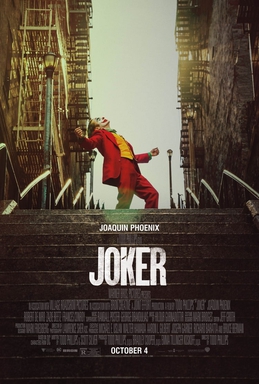
The release of Joker signaled a profound reimagining of Phillips as a filmmaker. Leaving behind the raucous antics of his comedic background, he embraced a tone of brutal realism and nihilism. This transition was not merely a change in subject matter but a complete aesthetic overhaul, challenging the conventions of blockbuster filmmaking by applying a deeply serious, character-driven approach to popular intellectual property.
Historically, this pivot places Phillips at the intersection of commercial viability and arthouse provocation. By stripping away the fantastical elements typically associated with comic book adaptations, he attempted to craft a cinematic experience more closely aligned with the gritty character studies of the 1970s. His evolution from directing broad comedies to helming culturally explosive dramas underscores a complex ambition to challenge audiences and redefine his legacy within the cinematic landscape.
Thematic Preoccupations
At the core of Phillips's dramatic work is a relentless exploration of societal decay and the alienation of the individual. Joker serves as a focal point for these obsessions, interrogating how systemic neglect and public cruelty can catalyze devastating psychological breakdowns. He frequently returns to questions of mental health, positioning his protagonist as a tragic byproduct of a broken social infrastructure. This focus on marginalized figures transforms the traditional supervillain origin story into a bleak commentary on urban isolation.
A pervasive cynical tone and nihilistic outlook dominate his thematic canvas. Phillips appears deeply preoccupied with the moral rot of contemporary society, utilizing the fictionalized metropolis as a stand-in for real-world urban decay. The narrative thrust often hinges on public reaction, exploring how a fractured society either ignores its most vulnerable members or inadvertently elevates them to dangerous icons. This dynamic exposes a deep-seated anxiety regarding class warfare and the fragility of social order.
Furthermore, his work critically engages with the concept of violence as both a symptom and a chaotic release. The violent themes present in his narratives are inextricably linked to the intense emotional experience of his characters. Rather than depicting violence as heroic or sanitized, Phillips uses it to provoke uncomfortable feelings, forcing the audience to witness the brutal consequences of societal failure and untreated mental illness.
Stylistic Signatures
Phillips's visual language in his dramatic phase is heavily indebted to the New Hollywood era, deliberately evoking a gloomy aesthetic and a decayed atmosphere. Critics frequently note the stylistic lineage connecting his work to the urban nightmares depicted in Taxi Driver and The King of Comedy. His cinematography relies on harsh, sickly color palettes and oppressive framing to externalize the internal psychological turmoil of his characters, immersing the viewer in a suffocating, hyper-realistic environment.
The pacing and rhythm of his editing are engineered to cultivate anxiety and dread. Often characterized by deliberate, sometimes tedious pacing, his films prioritize simmering tension over rapid-fire plot progression. This slow-burn approach allows for an intense emotional experience, emphasizing the agonizingly slow descent of the protagonist into madness. The deliberate rhythm contrasts sharply with the kinetic energy of traditional genre films, establishing a tone of brutal realism that aligns with the tradition of uncompromising character studies like You Were Never Really Here.
Sonically and performatively, Phillips relies on visceral, shocking expressions of distress. He allows the camera to linger on the physical manifestations of psychological unraveling, capturing erratic dancing, manic laughter, and unsettling bodily contortions. When violence inevitably erupts, it is staged to maximize shock value rather than spectacle. This commitment to an abrasive, confrontational style echoes the unsettling atmosphere of A Clockwork Orange, demonstrating a willingness to prioritize raw, uncomfortable emotion over passive entertainment.
Recurring Collaborators
While Phillips has not cultivated an extensive ensemble of recurring cast members across his dramatic and comedic divides, his collaboration with Joaquin Phoenix on Joker stands as the defining creative partnership of his recent career. Phoenix's total immersion into the role of Arthur Fleck provided the crucial raw power necessary to ground Phillips's ambitious vision. The actor's physical and psychological commitment became the central pillar upon which the film's thematic and stylistic weight rested.
The synergy between director and actor in this instance allowed for an unprecedented level of character exploration. Phillips provided a bleak, uncompromising framework, while Phoenix filled that space with a mesmerizing, unpredictable performance. This partnership was essential in translating the director's cynical tone and nihilistic outlook into a deeply human, albeit deeply disturbing, on-screen reality. The characterization quality praised by critics is a direct result of this intense collaborative focus.
By centering his narrative so heavily on a singular, commanding lead rather than an ensemble, Phillips stripped away the distractions of complex plotting to focus purely on the anatomy of a breakdown. This focused collaboration enabled the director to transcend the typical limitations of the genre, transforming a highly anticipated commercial project into an intimate, unsettling character study that demands full attention from its audience.
Critical Standing
Todd Phillips occupies a highly divisive and controversial place within modern critical discourse. The reception to Joker generated an enormous amount of pre-release anxiety, conversation, and controversy, establishing him as a filmmaker capable of capturing the cultural zeitgeist. Reviews were sharply polarized. Some critics heralded the film as a mesmerizing reimagining of the comic villain with profound social commentary elements, while others dismissed it as a cynical exercise and the year's biggest disappointment.
Much of the critical debate centers on the moral implications of his nihilistic outlook and the intense violence depicted on screen. The film became the focus of a significant moral backlash, with detractors arguing that it irresponsibly empathized with a dangerous outsider. This divisiveness highlights Phillips's ability to provoke intense uncomfortable feelings, placing him at the center of ongoing conversations regarding media influence, audience interpretation, and the responsibilities of a filmmaker handling volatile themes.
His standing is also frequently evaluated through the lens of his cinematic influences. Critics constantly draw comparisons to the works of Martin Scorsese and the somber tone of Christopher Nolan in The Dark Knight trilogy. While some reviewers admire his ambition in striving for such high cinematic benchmarks, others argue that his work is derivative, suggesting it mimics the aesthetic of past masterpieces without achieving their thematic depth. Regardless of these divided opinions, Phillips has undeniably secured a prominent, if contentious, position in contemporary cinema, forcing critics to engage seriously with his dark, uncompromising visions.