Career Overview
Tom McCarthy began his career navigating the industry as a versatile character actor, a background that fundamentally shaped his intensely performer focused directorial style. His transition to the director's chair marked the arrival of a distinctly American humanist, one who prioritized subtle emotional truths over grandiose cinematic posturing. Throughout his early career, he honed an ability to extract profound meaning from the seemingly mundane interactions of everyday people.
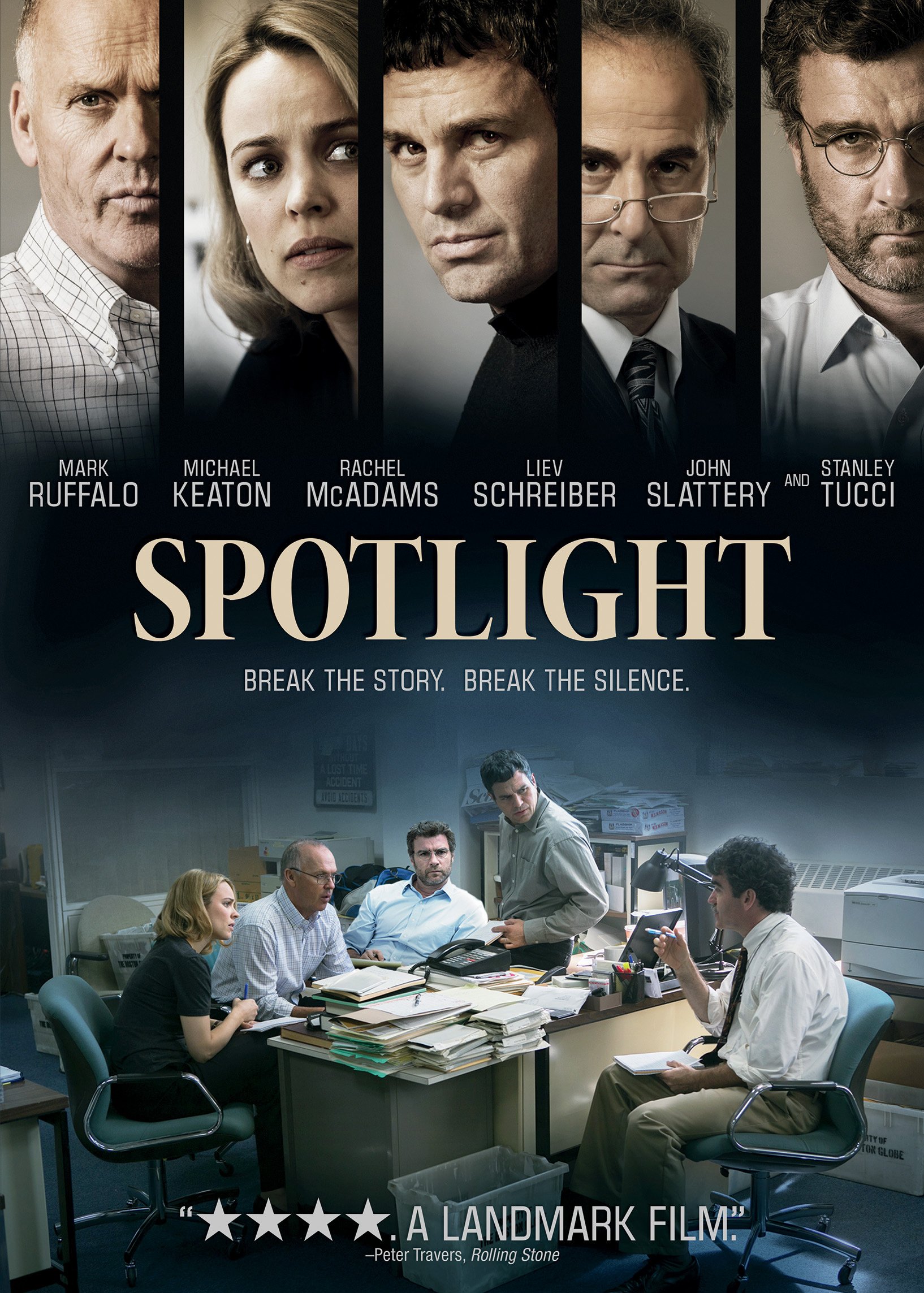
With the release of Spotlight, McCarthy underwent a significant critical elevation, transitioning from a respected independent filmmaker into a major cinematic voice capable of managing sweeping historical and social narratives. This pivot demonstrated a maturation in his artistic scope, proving he could orchestrate large scale ensemble casts and complex procedural timelines without sacrificing the intimate character work that defined his earlier efforts.
Today, McCarthy occupies a vital position in modern cinema history as a classicist. He operates within a tradition of robust, narrative driven filmmaking that trusts the intelligence of its audience. By reviving and modernizing the journalistic procedural, he has cemented his legacy as a director who values clarity, integrity, and the meticulous accumulation of detail over fleeting stylistic trends.
Thematic Preoccupations
A central preoccupation of McCarthy's most significant work is the devastating reality of systemic abuse and the architecture of complicity that allows it to thrive. He is fascinated by the mechanics of institutional silence, interrogating how powerful organizations, such as the Catholic Church in Spotlight, maintain their authority by suppressing damning truths. His films serve as autopsies of societal failure, examining the profound moral compromises made by communities to protect their most revered institutions.
In counteracting this institutional rot, McCarthy consistently champions the theme of investigative journalism as a vital democratic utility. He portrays the honourable character not as a traditional action hero, but as a diligent laborer of truth. The pursuit of facts in his narratives is a grueling, unglamorous philosophical quest where justice is achieved through sheer persistence, methodical research, and a refusal to look away from uncomfortable realities.
Beneath the procedural mechanics, a deep engagement with psychological trauma runs through his filmography. While his narratives are highly informative and focused on the mechanics of investigation, the emotional core is always anchored to the lingering effects of exploitation. The intense emotional impact of his storytelling derives from this balance, as the relentless pursuit of verifiable facts is constantly weighed against the devastating human cost of the crimes being uncovered.
Stylistic Signatures
The visual and rhythmic language of McCarthy's filmmaking is defined by a highly cautious approach and an unwavering commitment to patient storytelling. Rather than relying on rapid fire editing or expressionistic camera movements, his films often adopt a plodding pace that mirrors the exhaustive, step by step reality of real world investigations. This deliberate pacing allows the audience to experience the gradual, thrilling accumulation of evidence, resulting in a gripping narrative built on structural integrity rather than cheap suspense.
His mise-en-scène is heavily oriented toward naturalism and convincing portrayal, particularly in his attention to regional specificity. As critics have noted regarding his ability to capture the authentic atmosphere of Boston, McCarthy relies on a hyper realistic aesthetic. From the cluttered desks of newspaper bullpens to the drab interiors of municipal buildings, he creates a grounded visual foundation that authenticates the highly informative content of his scripts.
While his aesthetic restraint is widely praised, it has also sparked specific critical debates. Some analysts argue that his style occasionally prioritizes the delivery of complex information over bold visual expression, risking a somewhat utilitarian cinematic form. However, this lack of overt stylization is a deliberate directorial signature. By employing an unvarnished, invisible style, McCarthy ensures that the intense emotional impact of the subject matter remains central, unclouded by intrusive auteurist flourishes.
Recurring Collaborators
While McCarthy does not maintain a rigidly fixed repertory company of actors across all his films, his creative process relies heavily on specific, high level collaborations behind the camera. His partnership with co-writer Josh Singer on Spotlight represents a pinnacle of his collaborative methodology. Together, they forged a screenplay that masterfully balanced overwhelming factual research with compelling narrative momentum, earning prestigious critical accolades for their rigorous structural engineering.
The authenticity of McCarthy's cinematic worlds is also the direct result of intense collaboration with location scouts, production designers, and casting directors. His insistence on a convincing portrayal of specific milieus requires a highly synchronized technical crew. By empowering his below the line collaborators to focus on obsessive regional accuracy, he ensures that the environmental details of his films reinforce the underlying thematic realism.
In front of the camera, McCarthy's background as an actor informs a deeply democratic approach to casting and performance. Rather than structuring his films as vehicles for singular movie stars, he builds sprawling, egoless ensembles. His collaborators on screen are tasked with blending seamlessly into the fabric of the narrative, resulting in a collective synergy where every performer contributes to the overarching procedural machinery with unflashy dedication.
Critical Standing
McCarthy's critical reputation is firmly established as a master of the old school narrative model, a status permanently solidified by the overwhelming reception of Spotlight. The film triggered a wave of critical consensus, sweeping major awards from critics societies in New York, Los Angeles, and Boston. This sustained adulation positioned him at the forefront of the Oscar race and transformed his standing from a respected independent auteur into an essential voice in prestige American cinema.
Within critical discourse, reviewers consistently elevate McCarthy by placing his work in direct conversation with the titans of the procedural thriller genre. Citations of his work frequently include highly favorable comparisons to cinematic landmarks such as All the President's Men, The Insider, and David Fincher's Zodiac. Furthermore, the rapid fire dialogue and newsroom dynamics of his work have even drawn mentions of classic screwball journalism films like His Girl Friday, illustrating his adept handling of complex, overlapping dialogue.
Although the majority of critical commentary is highly laudatory, his work is sometimes subject to mild formal critique. Certain circles in publications like Slant Magazine have noted that his films can devote excessive time to delivering information, occasionally struggling to establish a truly dynamic visual foundation for their accounts. Nevertheless, the prevailing critical consensus views McCarthy as a capable, decent, and vitally important storyteller, one whose patient methods yield undeniable historical and emotional resonance.