Career Overview
Tony Kaye emerged from the world of commercial advertising and music videos to make a seismic impact on late twentieth century American cinema with his debut feature. His arrival was marked by an intense focus on visceral storytelling and a provocative engagement with the deepest fractures in American society. Kaye positioned himself as a filmmaker unwilling to shy away from volatile subject matter, choosing instead to confront cultural tensions head on.
Although his feature filmography is remarkably sparse, his position in cinema history is cemented by the sheer cultural force of American History X. Kaye operates as a visual provocateur. He built a reputation on his uncompromising aesthetic demands and his notoriously volatile relationship with the studio system. This friction between an auteurist vision and institutional control defined his early career, turning his directorial debut into a legendary battleground over creative ownership.
Despite the behind the scenes conflicts that famously surrounded his work, Kaye undeniably demonstrated a mastery of cinematic form. He is viewed as a brilliant but mercurial talent, a director who brings an almost documentary style grit to highly stylized narratives. His career arc serves as a fascinating case study in the tension between singular artistic obsession and the collaborative machinery of Hollywood filmmaking.
Thematic Preoccupations
The central thematic preoccupation of Kaye is the destructive cycle of ideological extremism and the grueling, often violent path toward personal redemption. In American History X, he interrogates the mechanics of radicalization, laying bare the ways in which systemic disenfranchisement and personal grief are weaponized into hatred. He does not merely depict racism but dissects it as a learned behavior, one passed down through complex family dynamics and entrenched community loyalties.
This exploration of cultural tensions requires a fearless engagement with the most toxic elements of American society. Kaye asks profound philosophical questions about the possibility of rehabilitation for those who have committed heinous acts. The narrative architecture of his work suggests that redemption is never a clean or absolute process but a harrowing ordeal fraught with tragic consequences. The past, in the vision of Kaye, is an inescapable gravity well that constantly threatens to pull characters back into darkness.
Furthermore, Kaye frequently examines the disintegration of the nuclear family as a microcosm of broader societal decay. The vulnerability of youth is a recurring motif, particularly how impressionable minds are molded by charismatic but malevolent father figures or surrogate mentors. By focusing on these intimate familial tragedies, Kaye elevates impactful social commentary into the realm of intense personal drama, crafting narratives that resonate with profound emotional depth.
Stylistic Signatures
The visual language employed by Kaye is characterized by a striking fusion of gritty realism and operatic stylization. As a director who frequently acts as his own cinematographer, he crafts brilliant compositions that are as beautiful as they are disturbing. His lens captures the urban decay of Los Angeles with a documentary style immediacy, yet he elevates these mundane spaces through meticulous lighting and stark contrast, rendering them almost mythic in their desolation.
A defining signature of his style is the bold use of monochrome cinematography interspersed with vibrant color sequences. This temporal and emotional mapping utilizes stark black and white to depict the rigid and hateful past, while utilizing color to represent a present attempting to heal, albeit a present still bleeding from old wounds. This approach provides a clear visual dichotomy that underscores the thematic exploration of redemption, though some critics have argued it occasionally borders on an overbearing narrative style.
Kaye also relies heavily on intense dramatic scenes propelled by authentic character portrayals and thought provoking dialogue. His editing rhythms often build toward explosive violence, contrasting long and agonizingly tense dialogue sequences with sudden bursts of kinetic brutality. The heavy-handed messaging sometimes attributed to his work is inextricably linked to this aggressive and uncompromising formal approach, forcing the audience to confront provocative subject matter without the comfort of aesthetic distance.
Recurring Collaborators
Because the provided database highlights a distinctly singular entry in the filmography of Kaye, identifying a stable troupe of recurring onscreen collaborators is difficult. Instead, the most crucial partnership to analyze is the intense, albeit highly combative, relationship between the director and his leading actors. Kaye demands an exhaustive level of emotional commitment from his performers, pushing them to access profoundly dark psychological spaces to ensure authentic character portrayals.
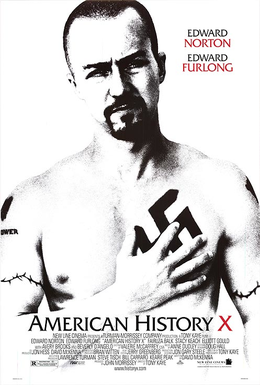
The defining collaboration of his career remains his work with Edward Norton in American History X. Despite the well documented friction that erupted between director and star during the post production process, the results of their on set partnership are undeniable. Kaye provided the rigorous visual framework and unyielding atmosphere that allowed Norton to deliver a performance of remarkable depth and conviction. The alchemy between the meticulous visual design of the director and the explosive emotional reality of the actor generated a staggering piece of cinema.
Beyond his actors, the true recurring collaborator for Kaye is his own multifaceted artistic persona. By frequently taking on the roles of director, cinematographer, and camera operator, he creates an insular and deeply controlled creative environment. This consolidation of creative roles allows him to maintain a tight grip on the brilliant cinematography that defines his aesthetic, ensuring that every frame aligns perfectly with his exacting and uncompromising vision of the world.
Critical Standing
The critical standing of Tony Kaye is as complex and polarized as his provocative subject matter. Upon the release of American History X, critics were unanimous in their praise for the sheer visceral power of the work. Reviewers consistently highlighted the convincing performances and the undeniable emotional depth of the narrative. The film was frequently discussed alongside seminal works of youth radicalization like Romper Stomper and Made in Britain, establishing Kaye as a formidable voice in examining cultural tensions.
However, critical consensus has frequently pointed to a tension within his directorial approach. While widely praised for his brilliant visual sensibilities, his work is sometimes critiqued for heavy-handed messaging and an overbearing narrative style. Some scholars argue that the desire of the director to make impactful social commentary can occasionally overwhelm the subtle nuances of his storytelling. Nevertheless, even his detractors concede that his direction is remarkably assured and formally daring.
Over time, the reputation of Kaye has morphed into that of a brilliant cinematic maverick. The stories of his battles with studios and his unorthodox methods have occasionally overshadowed his actual filmography, yet American History X remains a staple of modern film studies. He occupies a unique place in critical discourse as a fiercely talented visualist whose uncompromising nature produced one of the most blistering and unforgettable examinations of American racism and redemption in contemporary cinema.