Career Overview
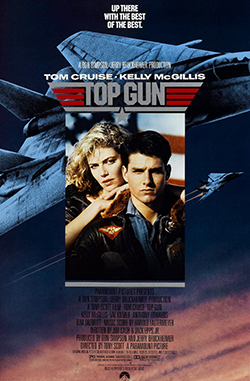
Tony Scott emerged as a defining force in American commercial cinema during the 1980s. His early career trajectory is indelibly linked to Top Gun, a film that cemented his position as a master of high-octane spectacle. Scott arrived at a moment when Hollywood was transitioning toward highly polished, MTV-inspired aesthetics. He capitalized on this shift to create works that were visually arresting and culturally dominant.
The historical significance of his work during this period cannot be overstated. As critics from Empire Magazine have noted, assessing his foundational 1986 feature strictly as a traditional work of art might be a brave or reckless endeavor. However, evaluating it as a historical artifact reveals a peerless achievement in popular filmmaking. Scott captured the zeitgeist of 1980s American exceptionalism, packaging it within a gleaming, kinetic framework.
Scott established a career arc characterized by a rigorous commitment to structured military narratives and high-stakes action. His placement in cinema history is that of an architect of the modern blockbuster. He synthesized sleek visual advertising techniques with classical Hollywood genre structures. This synthesis birthed a new era of cinematic commercialism, profoundly influencing a generation of action directors who sought to replicate his distinct blend of glossy populism and kinetic energy.
Thematic Preoccupations
A rigorous thematic examination of Scott reveals a persistent preoccupation with personal rivalry and the crucible of military training. In Top Gun, these elements form the core of his narrative architecture. Scott frequently explores how institutional environments, specifically elite military academies, serve as pressure cookers for masculine identity and competition. The tension in these military settings forces characters to confront their own limitations while simultaneously battling their peers.
While critics often point to the conventional storytelling and predictable plot mechanisms in his work, these structures serve a specific philosophical purpose. Scott uses familiar frameworks, such as the journey of a talented but reckless protagonist, to explore the emotional stakes in rivalry. The predictable beats of failure, tragic loss, and eventual triumph allow Scott to focus heavily on the sensory experience of the narrative rather than labyrinthine plot twists. This approach echoes the structured military narratives found in films like An Officer And A Gentleman, though Scott accelerates the pacing to match a modern sensibility.
Furthermore, Scott consistently threads romantic subplot elements through his central conflicts. The romance amidst conflict provides a necessary emotional counterweight to the aggressive masculine posturing of his protagonists. Even when critical consensus, such as reviews from RogerEbert.com, suggests that these love stories might sometimes feel like a washout, they remain essential to the thematic fabric of his cinema. These developed personal connections are designed to humanize the hyper-competent figures that populate his world, ensuring that the resolved conflicts carry both professional and deeply personal resonance.
Stylistic Signatures
The stylistic signatures of Tony Scott are defined by an unrelenting commitment to visual gloss and action-packed sequences. His camera work and lighting design prioritize a hyper-real aesthetic, famously described by Los Angeles Times critics as resembling a Calvin Klein ad. This distinct visual language transforms everyday environments, from class spaces and shower rooms to local bars, into meticulously crafted tableaux of idealized human forms. Scott treats the vast playground of the air with the same glamorous, high-contrast lighting that he applies to his terrestrial scenes.
At the heart of his cinematic technique is the execution of well-choreographed action. Scott excels in spatial geometry and kinetic editing, particularly within his dynamic aerial sequences. Critics have rightfully compared his electrifying aerial scenes to the groundbreaking work seen in Firefox, noting that Scott pushed the boundaries of what was technically possible in aviation cinematography. His pacing relies on an exciting narrative momentum that rarely allows the audience to disengage, utilizing rapid cuts and propulsive sound design to maintain constant visceral engagement.
Beyond the explosive set pieces, Scott demonstrates a unique rhythm in blending action and romance. His mise-en-scene often isolates characters in stylized, backlit environments that emphasize their mythic qualities over grounded realism. The dynamic character development is thus communicated less through extensive dialogue and more through visual motifs and editing rhythms. By elevating conventional plotlines with an uncompromising, glossy aesthetic, Scott forged a distinct stylistic identity that remains instantly recognizable and deeply influential in the realm of action cinema.
Recurring Collaborators
While the available database records do not identify a stable of recurring cast members across multiple films, the nature of Tony Scott and his collaborative process remains a critical point of analysis. Scott operates as a singular visionary who shapes his projects around specific, towering central performances rather than relying on a traditional repertory company. His approach to casting often involves finding actors who can embody the highly stylized, archetypal figures that populate his narratives.
In the context of his foundational work, the collaboration with Tom Cruise in Top Gun stands as a defining partnership, even if strictly isolated within this specific dataset. Scott utilizes the inherent charisma and intense screen presence of his leading men to anchor his vast, kinetic spectacles. The director relies on actors who can project immense confidence and navigate the demanding physical requirements of well-choreographed action. This symbiosis between director and star is crucial for grounding the high-stakes emotional reality of his predictable yet thrilling plots.
Furthermore, the lack of recurring collaborators in this specific analytical cross section highlights his focus on the immediate, contained universe of each individual film. Scott builds bespoke worlds, drawing upon specialized stunt coordinators, aerial cinematographers, and technical advisors to achieve his exacting vision. The cinematic triumph of his aerial sequences requires a massive, coordinated effort from unseen technical teams, proving that his most vital recurring collaborations often occur behind the camera, driving the innovative techniques that define his cinematic legacy.
Critical Standing
The critical standing of Tony Scott is characterized by a fascinating dichotomy between populist success and highbrow skepticism. Upon initial release, films like Top Gun were often met with mixed reviews from traditional art critics. Many reviewers pointed to his conventional storytelling and predictable plots as evidence of a commercial, rather than artistic, sensibility. Critics from Empire Magazine famously noted that defending his work purely as art requires a certain bravery or recklessness, highlighting the initial reluctance of the critical establishment to embrace his glossy, action-packed ethos.
Despite these early reservations, Scott maintained a formidable reputation as an undeniable master of the cinematic spectacle. His films were frequently praised for their technical prowess, with critics universally lauding the electrifying aerial scenes and well-choreographed action. While some elements, such as the romantic subplots, were dismissed by reviewers like RogerEbert.com as ineffective, the sheer visceral impact of his exciting narratives forced critics to acknowledge his unparalleled skill in generating tension and adrenaline. Comparisons to acclaimed films like Firefox underscore the respect he commanded for his technical execution.
Over time, the critical discourse surrounding Scott has evolved significantly. What was once dismissed as superficial gloss, famously likened to high fashion advertisements by the Los Angeles Times, is now frequently reevaluated as a profound influence on modern visual grammar. His place within cinema history is increasingly recognized not just as a commercial hitmaker, but as a pioneering visual stylist. Today, his meticulously structured military narratives are studied for their dynamic character development and aesthetic precision, securing his legacy as a deeply influential, if historically polarizing, cinematic auteur.