Career Overview
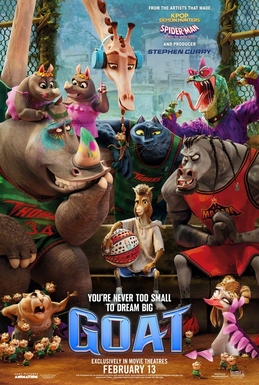
Tyree Dillihay occupies a peculiar space within contemporary studio animation. As a director navigating the high-stakes ecosystem of corporate franchise filmmaking, his career trajectory reflects the broader tensions of modern commercial cinema. Dillihay emerged into the spotlight with the animated sports feature GOAT, a film that attempts to synthesize the kinetic energy of professional athletics with the familiar beats of anthropomorphic animal narratives.
Operating under the Sony banner, Dillihay positions himself as a filmmaker attempting to thread the needle between studio mandates and authentic cultural touchstones. Critics have noted that his work demonstrates a genuine understanding of sports mechanics, drawing explicit inspiration from real-life athletic icons like Stephen Curry. This grounding in authentic basketball culture suggests a filmmaker interested in translating the visceral thrill of the court into the animated medium.
However, Dillihay's position in cinema history remains heavily contested. While he attempts to channel the innovative energy of groundbreaking contemporary animation, his reliance on established tropes often places him at odds with critical purists. He stands as a fascinating case study of the modern studio director, caught between the desire for vibrant aesthetic expression and the gravitational pull of algorithmic, risk-averse storytelling.
Thematic Preoccupations
At the core of Dillihay's cinematic project is a persistent fascination with the underdog narrative and the concept of teamwork. In GOAT, the protagonist's quest to conquer the fictional sport of roarball serves as a vehicle to explore the limits of individual ambition against the necessity of collective effort. Dillihay repeatedly asks how a marginalized figure can assimilate into a highly structured, fiercely competitive arena without losing their fundamental identity.
Beneath the surface of these conventional sports aspirations, however, lies a darker and more complex interrogation of brotherhood and fraternity culture. Critics have pointed out that Dillihay attempts to tackle themes of toxic masculinity within the framework of a family-friendly sports comedy. The locker room and the athletic institution are depicted as spaces of intense tribalism, echoing the social dynamics found in films like Full Metal Jacket and Old School.
Unfortunately, his exploration of these heavier concepts is frequently cited as a point of thematic friction. The transition from a sweet-natured narrative to a harrowing emotional journey detailing the brittleness of fraternal traditions often feels disjointed. Dillihay seems obsessed with the shadows of institutionalized male bonding, yet he struggles to seamlessly integrate these philosophical concerns with the broader, more commercial demands of his anthropomorphic narratives.
Stylistic Signatures
Dillihay's visual language is characterized by a loud, chaotic atmosphere that prioritizes kinetic momentum over quiet introspection. Influenced heavily by the groundbreaking aesthetics of recent animated projects (frequently drawing direct comparisons to Spider-Man: Into the Spider-Verse), his cinematic approach embraces a vibrant and dynamic style. His camera is rarely static, mirroring the high-intensity, full-contact nature of the fictional sports he depicts.
This reliance on hyper-active cinematography aims to create an immersive and entrancing experience for the audience. By utilizing sweeping camera movements and rapid editing rhythms, Dillihay attempts to translate the physical exhaustion and adrenaline of professional sports into a visual medium. Reviewers frequently highlight his dynamic camera work as his most successful stylistic signature, praising its ability to elevate otherwise standard sequences into thrilling athletic set pieces.
Conversely, this overwhelming visual noise is often contrasted with surprisingly generic elements in his mise-en-scène. While the environmental design and camera choreography pulse with energy, his character designs frequently rely on derivative, easily marketable templates reminiscent of standard anthropomorphic properties like Zootopia and Sing. This juxtaposition creates a distinct stylistic dissonance, where inventive and dynamic cinematography clashes with aesthetically uninspired character models.
Recurring Collaborators
In the highly compartmentalized world of modern studio animation, Dillihay operates without the traditional repertory company of actors or a fixed stable of independent creative partners. Instead, his collaborative footprint is defined by his interactions with massive corporate animation pipelines. The sheer scale of his productions necessitates a reliance on rotating armies of animators, storyboard artists, and visual effects technicians rather than intimate, recurring partnerships.
The most significant collaborative influence on his work comes from the realm of producers and real-world athletic consultants. For GOAT, the guiding presence of basketball star Stephen Curry served as a foundational partnership, injecting a necessary degree of authentic athletic mechanics into the animation process. This type of collaboration highlights Dillihay's tendency to partner with subject matter experts to ground his fantastical visual sequences in tangible reality.
The absence of a recurring voice cast further underscores the nature of his cinematic output. Rather than building a recognizable troupe of performers, Dillihay relies on the casting choices dictated by studio marketing algorithms. This revolving door of talent forces him to focus his directorial energy on the visual and kinetic aspects of his films, leaving the vocal performances to function more as commercial assets than as deep, evolving artistic partnerships.
Critical Standing
The critical reception of Tyree Dillihay is intensely polarized, reflecting a deep divide in how contemporary audiences and critics evaluate studio animation. On one end of the spectrum, populist reviewers praise his work for being a sweet-natured and fun entertaining experience. These critics appreciate his ability to deliver basic underdog sports team stories that satisfy the foundational requirements of the genre, bolstered by a commendable understanding of athletic mechanics.
Conversely, rigorous critical institutions frequently view his filmography through a lens of profound skepticism. Prominent publications have lambasted his work as an utterly unoriginal narrative exercise, with some critics suggesting his aesthetic borders on algorithmically generated content. The recurring comparisons to established properties highlight a critical consensus that views Dillihay as a director highly reliant on derivative storytelling structures.
Despite the praise for his vibrant artwork and dynamic camera techniques, Dillihay's standing within critical discourse remains that of a technically proficient but conceptually shallow filmmaker. His attempts to tackle weighty subjects like toxic masculinity and fraternity culture are often dismissed as unpersuasive and superficial. Ultimately, he occupies a contested space in cinema history, recognized for his visual kineticism but widely critiqued for failing to transcend the generic constraints of corporate animation.