Career Overview
Wes Anderson has established himself as a savant virtuoso of American independent cinema, crafting an unmistakable aesthetic that bridges midcentury European art film influences with a distinctly modern sensibility. His career arc is defined by a relentless pursuit of formal perfection, evolving from the grounded, character driven comedies of his early years into the highly stylized, sprawling tapestries of his later masterpieces. He is widely recognized for building immersive cinematic worlds that are as visually vibrant as they are emotionally complex.
His chronological development reveals a director who continually refines his own idiosyncratic obsessions. Films like The Royal Tenenbaums and The Darjeeling Limited laid the groundwork for his signature blend of quirky narratives and poignant character studies. By the time he directed The Grand Budapest Hotel, his approach had crystallized into an ever more rarefied aesthetic. He sweats the details to an extent that can be maddening for some, yet this exactitude is precisely what makes his work so historically significant.
Today, Anderson occupies a unique position in cinema history. He is both a populist entertainer capable of delivering magnificently cockeyed entertainment and a rigorous formalist who commands immense respect from film scholars. His meticulously constructed filmography serves as a testament to the power of auteur theory in the twenty first century, proving that a singular, uncompromised vision can resonate universally.
Thematic Preoccupations
A profound exploration of loss and the persistent ache of nostalgia sit at the very center of Wes Anderson's thematic preoccupations. His characters are frequently trapped in a longing for an idealized past, clinging to outdated institutions and fading eras. In The Grand Budapest Hotel, this nostalgic adventure is masked by whimsical elegance, yet the narrative is fundamentally driven by a mourning for a civilized world that is rapidly vanishing under the boot of authoritarianism.
Parallel to this sense of loss is a deep fascination with friendship dynamics and themes of loyalty. Anderson continuously interrogates the concept of found family, bringing together disparate, often broken individuals who forge unbreakable bonds. The relationship between a celebrated hotel concierge and a lowly lobby boy serves as a prime example. Their partnership defies class and background, grounded instead in a shared commitment to an elegant code of conduct and mutual respect.
Furthermore, adventurous themes provide the structural framework for his philosophical inquiries. His films frequently employ old movie tropes, elaborate chases, and hairs breadth escapes to propel the narrative forward. However, these playful elements never overshadow the emotional core of the work. The whimsical quests ultimately force his characters to confront their own vulnerabilities, resulting in a poignant synthesis of high comedy and deep existential melancholy.
Stylistic Signatures
The visual design of a Wes Anderson film is universally recognized as a marvel of contemporary cinema. His stylized visuals are characterized by meticulously composed shots, rigorous symmetry, and a vibrant color palette that transforms the physical world into a meticulously curated dollhouse. This precise control over the mise-en-scene ensures that every prop, costume, and backdrop contributes directly to the elegant storytelling, creating a deeply pleasurable immersion into his singular cinematic universe.
Narratively, Anderson constructs quirky narratives that often function as delirious operetta farces. He delights in nested storytelling and Victorian plot devices, such as the second copy of the second will, which add layers of structural complexity to the viewing experience. His pacing relies on rapid, deadpan dialogue layered over highly choreographed camera movements, blending the kinetic energy of early cinema with the sophistication of modern literary fiction.
The auditory and performance elements are equally stylized. Actors are directed to deliver performances of immense comic precision and surprising emotional depth, carefully avoiding outright melodrama. This restraint, combined with eclectic musical scores that often blend folk music with classical orchestration, heightens the nostalgic atmosphere. The resulting tone is a delicate balance of playful absurdity and sincere emotional resonance.
Recurring Collaborators
While the overarching stylistic trends of his career are entirely his own, the realization of Wes Anderson's singular cinematic world is heavily dependent on a dedicated ensemble of recurring collaborators. His ability to maintain such a rarefied aesthetic across multiple projects stems from deep, ongoing partnerships with actors and artisans who intuitively understand his exacting rhythms. This collaborative continuity is essential to the intricate construction of his whimsical cinematic universes.
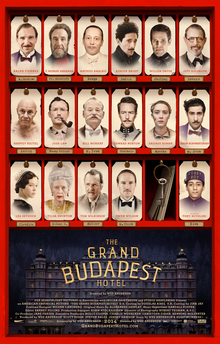
In the context of The Grand Budapest Hotel, Ralph Fiennes emerges as a defining presence, anchoring the film with a knockout performance. As Monsieur Gustave, Fiennes delivers a masterclass in comic precision and emotional depth, perfectly calibrating his delivery to match the director's unique frequency. Fiennes proves instrumental in navigating the film's complex shifts in tone, grounding the delirious operetta farce in a deeply human reality.
Beyond the cast, the meticulously composed shots and vibrant color palettes imply the critical involvement of dedicated behind the scenes artisans. The highly specific production design and cinematography required to execute his vision demand a crew capable of sweating the details alongside the director. These vital technical collaborations ensure that his playful yet poignant scripts translate flawlessly into visually breathtaking realities.
Critical Standing
Wes Anderson's critical reputation has undergone a fascinating evolution, maturing from a cult favorite of American independent cinema into a globally revered auteur. Early comparisons to his own works, such as The Royal Tenenbaums and The Darjeeling Limited, often focused on his eccentricities. However, with the release of tightly woven masterpieces like Moonrise Kingdom and The Grand Budapest Hotel, critical discourse shifted to fully embrace his genius, recognizing him as a true savant virtuoso of the medium.
Reviewers consistently praise his ability to balance formal rigidity with overwhelming emotional warmth. Critics from esteemed publications frequently highlight how his familiar style blends with unexpected factors to create profoundly moving experiences. The detailed visual execution, once occasionally dismissed by detractors as mere surface level quirk, is now widely celebrated as an essential, deeply expressive component of his elegant storytelling.
Within contemporary film scholarship, Anderson is championed for his unique ability to breathe new life into old movie tropes while conducting a serious exploration of loss and loyalty. His standing as one of the most distinctive voices in modern cinema is secure. Cinephiles and critics alike view his filmography as an extraordinary achievement in stylized world building, cementing his legacy as a master of nostalgic adventure and whimsical elegance.