Career Overview
William Friedkin emerged as a pivotal and uncompromising architect of the New Hollywood movement during the 1970s. His career arc is defined by a rigorous commitment to visceral storytelling and a desire to push the boundaries of cinematic intensity. By bridging the gap between documentary realism and genre thrills, he reshaped the American cinematic landscape. His background in nonfiction television heavily informed his feature film approach, allowing him to ground extraordinary events in a gritty, believable reality.
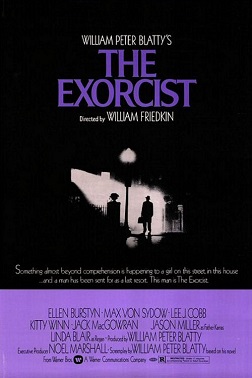
The monumental cultural and critical impact of The Exorcist secured his position as a master of tension and psychological terror. The film redefined the horror genre, elevating it from exploitation status to a global blockbuster phenomenon while maintaining rigorous artistic standards. By treating sensationalist material with absolute gravity, Friedkin proved that mainstream entertainment could also function as profound artistic expression.
His development as a filmmaker reveals a consistent obsession with the extremes of human behavior and the fragility of societal norms. He approached storytelling not merely as a vehicle for escapism, but as a mechanism to challenge audiences. This confrontational methodology became a hallmark of his career, establishing him as a director who refused to coddle his viewers.
In the broader context of cinema history, Friedkin is remembered as a fiercely independent auteur who possessed immense technical prowess. His groundbreaking storytelling techniques and unflinching directorial vision laid the groundwork for generations of filmmakers who sought to marry commercial viability with uncompromising thematic depth.
Thematic Preoccupations
At the core of Friedkin's most celebrated work is a profound exploration of faith and the limits of human endurance. He utilizes the horror framework to conduct a rigorous examination of belief systems, particularly the collision between modern secularism and ancient, unexplainable evil. The battle for a young girl's soul in The Exorcist serves as a terrifying microcosm for this broader existential crisis.
The possession narrative operates as a vehicle for exploring bodily violation and the corruption of innocence. By showcasing the physical and spiritual degradation of a child, Friedkin forces audiences to confront fundamental human vulnerabilities. This thematic preoccupation echoes the paranoia and domestic dread seen in films like Rosemary's Baby, yet Friedkin amplifies the terror through direct, unavoidable physical confrontation rather than mere psychological suggestion.
Friedkin repeatedly returns to the concept of the triumph of endurance under extreme duress. The priests in his narrative are not depicted as infallible holy figures, but rather as deeply flawed, doubting men who must undergo immense psychological and spiritual trials. Their ultimate sacrifices underscore a serious undertone that grounds the supernatural elements in authentic human tragedy.
Furthermore, his films often interrogate the inadequacy of modern science when faced with the metaphysical. Before introducing purely supernatural solutions, Friedkin meticulously exhausts every rational and medical explanation. This procedural approach to horror themes makes the eventual leap of faith significantly more thought-provoking, as the characters are left with no choice but to confront the divine and the demonic.
Stylistic Signatures
Friedkin constructs a terrifying atmosphere not through traditional gothic tropes, but by anchoring his narratives in banal, everyday settings. His groundbreaking storytelling relies on a documentary aesthetic, demanding an appropriate depiction of the mundane before unleashing extraordinary terror. This visual language creates a false sense of security, making the subsequent descent into horror exponentially more shocking.
The use of disturbing imagery is a defining characteristic of his stylistic approach. Friedkin is an unflinching observer of degradation, forcing the audience to bear witness to profound physical and psychological trauma. His diabolically inspired plot mechanics are executed with a clinical precision that refuses to look away from the grotesque, cementing the visceral impact of his visual compositions.
Critics frequently praise his work as a triumph of special effects, yet these technical achievements are never deployed merely for spectacle. Friedkin integrates practical effects seamlessly into the narrative architecture, ensuring that every supernatural manifestation feels organically tied to the environment. The tactile, grounded nature of these effects remains a benchmark in horror cinema.
Finally, his ability to elicit powerful performances under extreme cinematic duress is legendary. Friedkin pushes his actors to their absolute emotional and physical limits, resulting in performances that are uniformly excellent. His precise framing often traps characters within claustrophobic spaces, using the camera to amplify the inescapable tension of the narrative.
Recurring Collaborators
William Friedkin operates fundamentally as an auteur whose singular vision often supersedes the establishment of a traditional repertory company. Across the immediate database entries concerning his work, no recurring cast members are identified. This absence reflects his tendency to cast specifically for the unique, often grueling demands of each isolated project rather than relying on a familiar stable of actors.
Instead of maintaining a continuous on-screen ensemble, Friedkin seeks out performers who possess the specific emotional resilience required for his demanding production methods. The performances in The Exorcist are noted by critics as being uniformly excellent, which stands as a testament to his ability to extract profound, deeply committed work from his ensembles regardless of their prior working relationship with him.
Behind the camera, his collaborations are heavily focused on technical innovation and rigorous execution. Because his films are frequently hailed as a triumph of special effects, his partnerships with makeup artists, cinematographers, and practical effects technicians are essential to realizing his terrifying visions. These behind the scenes collaborations are the true recurring foundations of his cinematic output.
By avoiding a predictable cast of recognizable faces across multiple projects, Friedkin enhances the documentary realism of his narratives. Audiences are less likely to carry the baggage of an actor's previous roles into the viewing experience, allowing the immersive and thought-provoking elements of his cinema to take center stage.
Critical Standing
The critical reception of Friedkin's cinematic output is characterized by both intense division and profound, lasting admiration. As noted by The Guardian, his cinema continues to excite, divide, and disturb audiences and critics alike. His unique ability to provoke such visceral, polarized reactions has permanently cemented his status